

What Are the Phase Verification Precautions After Split-Phase Maintenance and Parallel Connection
Learn the key precautions for phase verification after split-phase maintenance, including induced voltage risks, anti-interference testing, and safe parallel reconnection methods.
Split-phase maintenance is common in substations, power plants, and industrial electrical systems. During this type of maintenance, only one phase or part of the system is disconnected and repaired while the remaining phases continue operating.
After maintenance is completed, accurate phase verification is extremely important before reconnecting the system in parallel. Incorrect phase connection may cause severe electrical faults and equipment damage.
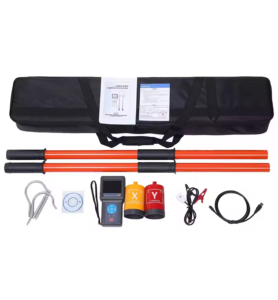
What Is Split-Phase Maintenance?
Split-phase maintenance means maintenance work is performed on only one phase or one section of electrical equipment while the rest of the system remains energized.
This method is commonly used to:
- Reduce power interruption
- Improve maintenance efficiency
- Maintain partial system operation
- Support continuous industrial production
However, because some circuits remain energized, testing conditions become more complicated.
Why Is Phase Verification Important After Split-Phase Maintenance?
After maintenance, the repaired phase must match the operating system correctly before reconnection.
If phase verification is incorrect, problems may include:
- Short circuits
- Large circulating currents
- Protection relay operation
- Equipment damage
- System instability
Accurate phase comparison is essential for safe parallel connection.
What Makes Split-Phase Maintenance Different From Normal Maintenance?
Split-phase maintenance has several special characteristics.
Why Is the Electrical Environment More Complicated?
During split-phase maintenance:
- Some phases remain energized
- Electromagnetic interference increases
- Induced voltage may appear
- Nearby equipment may affect measurements
This makes accurate phase verification more difficult.
Why Is Induced Voltage More Common During Split-Phase Maintenance?
Because adjacent energized phases continue operating, induced voltage may appear on disconnected circuits.
This may cause:
- False voltage readings
- Incorrect phase judgment
- Testing confusion
Operators must carefully distinguish actual voltage from induced voltage.
Why Is Higher Testing Accuracy Required?
In split-phase systems, even small phase errors may create dangerous conditions during reconnection.
Accurate testing is critical for:
- Parallel operation safety
- Equipment protection
- Stable power restoration
Modern phase verification equipment is often recommended.
What Is the Simplified Phase Verification Process After Split-Phase Maintenance?
Below is a simplified testing process.
How Should Operators Prepare Before Testing?
Before phase verification:
- Wear insulating protective equipment
- Confirm maintenance completion
- Review system diagrams
- Inspect testing equipment
- Verify grounding condition
Safety preparation is always necessary.
How Is the Phase Verification Device Connected?
The tester is connected between:
- The repaired phase
- The operating system phase
Operators should carefully confirm:
- Terminal positions
- Polarity
- Stable connections
Incorrect connection may cause false results.
How Are the Phase Relationships Compared?
The tester measures:
- Phase sequence
- Voltage relationship
- Phase angle difference
If the measured results match system requirements, parallel reconnection can proceed safely.
What Should Be Confirmed Before Parallel Reconnection?
Before reconnecting the repaired phase, operators should confirm:
- Correct phase relationship
- Stable voltage readings
- No abnormal alarms
- Proper protection settings
- Safe operating conditions
Double-checking results is very important.
What Are the Most Important Phase Verification Precautions?
Several precautions help improve safety and accuracy.
Why Is Anti-Interference Capability Important?
Strong electromagnetic interference may affect ordinary testing devices.
Using professional anti-interference phase testers helps reduce:
- False indications
- Signal instability
- Incorrect phase judgment
This improves testing reliability.
Why Should Operators Avoid Relying on a Single Measurement?
One measurement alone may not be enough in complex environments.
Operators should:
- Repeat measurements
- Compare multiple readings
- Confirm results from different positions if necessary
Multiple checks improve accuracy.
Why Is Proper Grounding Important During Testing?
Poor grounding may create unstable readings and increase safety risk.
Operators should ensure:
- Reliable grounding connection
- Clean grounding points
- Safe testing environment
Grounding quality directly affects testing stability.
Why Are Modern Phase Testers Better for Split-Phase Maintenance?
Modern phase verification devices provide important advantages.
| Traditional Method | Modern Phase Tester |
|---|---|
| Complex manual testing | Simplified operation |
| Easily affected by interference | Strong anti-interference ability |
| Higher human error risk | Improved accuracy |
| Slower testing | Faster response |
| Difficult field operation | Portable and convenient |
Modern testers help maintenance teams work more safely and efficiently.
How Wrindu Testers Stand Out
Wrindu provides professional phase verification solutions for substations, industrial power systems, and utility maintenance applications.
High Accuracy Measurement
Wrindu testers provide reliable phase comparison results even in complex electrical environments.
This helps reduce incorrect parallel connection risks.
Strong Anti-Interference Technology
Wrindu devices are designed with advanced anti-interference capability for split-phase maintenance environments with strong electromagnetic fields.
Easy and Fast Field Operation
Wrindu testers feature:
- Lightweight design
- Clear indication display
- Simple operation
- Fast testing response
This improves maintenance efficiency.
Suitable for Multiple Maintenance Applications
Wrindu phase verification solutions are suitable for:
- Split-phase maintenance
- Transformer maintenance
- Substation commissioning
- Generator synchronization
- Cable system inspection
How Can Engineers Improve Split-Phase Phase Verification Safety?
Recommended practices include:
- Use calibrated testing equipment
- Follow standard operating procedures
- Verify wiring carefully
- Repeat measurements when necessary
- Maintain safe operating distance
- Record testing results completely
Careful operation greatly reduces system risk.
FAQs
What is split-phase maintenance in electrical systems?
Split-phase maintenance means repairing one phase or section while the remaining system continues operating.
Why is phase verification important after split-phase maintenance?
It ensures the repaired phase matches the operating system before reconnection and prevents electrical faults.
Can induced voltage affect split-phase phase verification?
Yes. Nearby energized phases may create induced voltage that causes false readings.
Why are anti-interference phase testers important during split-phase maintenance?
Strong electromagnetic interference may affect ordinary testers. Anti-interference devices improve accuracy and reliability.
What happens if phase verification is incorrect during parallel reconnection?
Incorrect phase connection may cause short circuits, equipment damage, and system instability.
How can operators improve phase verification accuracy after split-phase maintenance?
Operators should use reliable testing equipment, repeat measurements, confirm wiring carefully, and follow safety procedures.
Conclusion
Phase verification after split-phase maintenance is a critical safety procedure in modern power systems. Because some circuits remain energized during maintenance, testing conditions become more complex and accurate phase comparison becomes even more important.
By using professional testing equipment and following proper operating procedures, engineers can improve safety, reduce operational risks, and ensure reliable system reconnection. Wrindu testing solutions provide accurate, stable, and efficient support for split-phase maintenance applications.
