

What Happens Inside a Circuit Breaker During a Fault
Understand how a circuit breaker works internally during overload, short circuit, and arc formation. Learn about thermal and magnetic tripping mechanisms, internal protection structure, and how Wrindu testing equipment helps evaluate breaker performance.
Circuit breakers are widely used in electrical systems to protect equipment and ensure safe power distribution. But many people only see the result—a sudden power cut—without understanding what actually happens inside the breaker during a fault.
This article explains the internal operation of a circuit breaker during overload, short circuit, and other electrical faults, helping engineers and technicians better understand protection mechanisms.
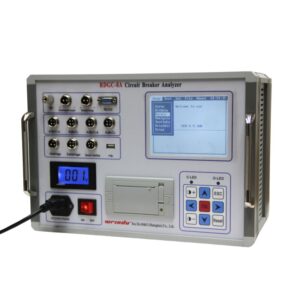
Click the image to know more about Circuit Breaker Comprehensive Tester.
What Is the Basic Function of a Circuit Breaker?
A circuit breaker is an automatic switching device designed to:
- Detect abnormal current conditions
- Interrupt electrical flow quickly
- Protect wiring and equipment from damage
- Prevent fire and electrical hazards
It acts as a self-resetting or manually resettable safety switch in power systems.
What Happens Inside a Breaker During Normal Operation?
Under normal conditions, current flows through:
- Input terminal
- Fixed contact
- Moving contact
- Output terminal
The contacts remain tightly closed, allowing uninterrupted power flow. No triggering mechanism is activated at this stage.
What Happens During an Overload Condition?
When current slowly exceeds the rated value, the breaker reacts through its thermal protection system.
Internal Process:
- Current passes through a bimetallic strip
- Excess heat causes the strip to bend
- The bending gradually activates the trip mechanism
- Contacts open and disconnect the circuit
This process is not instant—it depends on how severe the overload is.
What Happens During a Short Circuit?
A short circuit creates extremely high current in a very short time. This activates the magnetic protection system inside the breaker.
Internal Process:
- Sudden high current generates a strong magnetic field
- The magnetic coil pulls a trip lever instantly
- Contacts separate within milliseconds
- Arc is formed between contacts and quickly extinguished in arc chamber
This rapid response prevents fire and equipment damage.
How Does a Circuit Breaker Handle Electrical Arcing?
When contacts open under load, an electric arc forms due to ionized air.
Arc Control Mechanisms:
- Arc runners guide the arc into arc chute
- Arc splitter plates divide and cool the arc
- Magnetic forces stretch and weaken the arc
- The arc is extinguished safely inside the chamber
Without arc control, severe damage would occur inside the breaker.
What Role Does the Trip Unit Play?
The trip unit is the “brain” of the breaker protection system.
It monitors current conditions and triggers protection based on:
- Thermal response (overload)
- Magnetic response (short circuit)
- Electronic sensing (advanced breakers)
In modern breakers, electronic trip units provide higher accuracy and adjustability.
What Happens After the Breaker Trips?
Once a fault is detected and cleared:
- Contacts remain open
- Mechanical latch holds the open position
- Power supply is interrupted
- Manual or automatic reset is required
The breaker will not close again until the fault condition is resolved.
Can Circuit Breakers Wear Out Internally?
Yes. Repeated fault interruptions can degrade internal components.
Common Wear Factors:
- Contact erosion from arc energy
- Spring fatigue in mechanical parts
- Thermal aging of insulation
- Dust and contamination buildup
This is why periodic inspection and testing are essential.
How Is Internal Breaker Performance Tested?
Engineers use specialized equipment to verify internal performance without opening the device.
Common tests include:
- Contact resistance measurement
- Trip time testing
- Insulation resistance testing
- Thermal imaging
- Functional switching tests
These tests help ensure the breaker responds correctly under fault conditions.
How Wrindu Testers Stand Out
Wrindu provides professional electrical testing instruments designed to analyze circuit breaker performance and internal condition.
Key Advantages:
- High-precision fault detection
- Stable performance in field environments
- Fast and accurate measurement results
- Supports preventive maintenance strategies
- Easy operation for engineers and technicians
Wrindu testing solutions are widely used for:
- Circuit breaker performance analysis
- Contact resistance testing
- Insulation and leakage testing
- Electrical fault diagnosis
- Power system maintenance
These tools help engineers better understand breaker behavior and improve system reliability.
FAQs
Why does a circuit breaker trip so quickly during a short circuit?
Because the magnetic protection system responds instantly to extremely high current levels.
What is the difference between thermal and magnetic tripping?
Thermal tripping responds to overload slowly, while magnetic tripping reacts instantly to short circuits.
Can a breaker fail to trip during a fault?
Yes, if internal components are damaged or maintenance is neglected.
What causes arc inside a breaker?
Arc is formed when contacts separate while current is still flowing.
Do all circuit breakers use the same internal mechanism?
No. Different types (MCB, MCCB, ACB) use different designs and protection technologies.
How long does a breaker last internally?
Typically 10–20 years, depending on usage and maintenance conditions.
Can internal damage be detected without opening the breaker?
Yes, using electrical testing instruments such as contact resistance and insulation testers.
Why is breaker testing important in power systems?
It ensures the breaker can safely interrupt faults when needed, preventing system failures and hazards.
