

What Is PQ in Electrical Engineering
Learn what PQ (Power Quality) means in electrical engineering, including voltage sags, harmonics, transients, flicker, and frequency variations. Discover common power quality problems, their effects on electrical systems, and solutions for improving power reliability and equipment protection.
In electrical engineering, PQ stands for Power Quality. Power quality describes how stable, clean, and reliable the electrical power is within a power system.
Good power quality means:
- Voltage remains stable
- Frequency stays at the rated value (50Hz or 60Hz)
- Current and voltage waveforms maintain a smooth sine wave shape
When power quality becomes poor, electrical equipment may not operate correctly and system reliability can decrease.
A simple way to understand what is PQ is to compare it to a water supply system:
- Good PQ is like clean water with stable pressure.
- Poor PQ is like water pressure constantly changing or dirty water containing sand and impurities.
Similarly, unstable or distorted electrical power can damage sensitive equipment and affect industrial operations.
Why Is Power Quality Important?
Modern factories, data centers, hospitals, substations, and commercial buildings rely heavily on stable electrical power.
Poor power quality can lead to:
- Equipment shutdowns
- Production downtime
- Overheating of transformers and motors
- Data loss or computer crashes
- Increased maintenance costs
- Higher energy consumption
- Shorter equipment lifespan
Even a small voltage disturbance may interrupt automated production lines or damage sensitive electronic devices.
Because of this, power quality monitoring has become a critical part of electrical system maintenance and energy management.
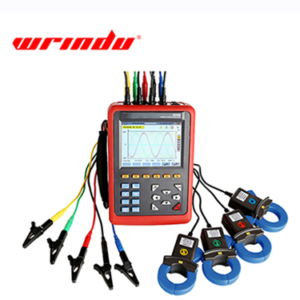
Click to know more about Wrindu Digital Power Quality Tester.
Main Types of Power Quality Problems
Power quality issues can appear in different forms. Below are the most common PQ problems found in electrical systems.
1. Voltage Variations
Voltage variations occur when the supply voltage rises or falls outside the normal range.
Voltage Sag (Dip)
A voltage sag is a short-term drop in voltage, usually caused by:
- Starting large motors
- Heavy electrical loads
- Short circuit faults
Voltage sags are one of the most common PQ problems and may cause industrial equipment to stop unexpectedly.
Voltage Swell
A voltage swell is a temporary increase in voltage level. Although less common, it can still damage electrical devices.
Power Interruptions
An interruption happens when the voltage disappears completely for a short or long period. This includes power outages and blackouts.
Overvoltage and Undervoltage
These are long-duration voltage problems caused by:
- Incorrect transformer tap settings
- Heavy or light system loading
- Distribution system issues
Long-term abnormal voltage can reduce equipment efficiency and lifespan.
2. Harmonics and Waveform Distortion
One important topic when discussing what is PQ is harmonics.
Harmonics are unwanted electrical frequencies created by non-linear loads such as:
- Variable frequency drives (VFDs)
- Computers and servers
- LED lighting
- UPS systems
Instead of drawing smooth sinusoidal current, these devices draw current in pulses, which distorts the waveform.
Problems Caused by Harmonics
Harmonics may result in:
- Transformer overheating
- Motor overheating
- Circuit breaker nuisance tripping
- Increased power losses
- Reduced system efficiency
- Malfunction of sensitive electronics
As modern facilities use more electronic equipment, harmonic control becomes increasingly important.
3. Transient Voltage Spikes
Transients are very fast voltage spikes or sudden dips that last only microseconds or milliseconds.
Common Causes
- Lightning strikes
- Switching operations
- Capacitor bank switching
- Turning off inductive loads
Effects of Transients
Transients can:
- Damage circuit boards instantly
- Reduce insulation life
- Cause unexpected equipment failure
Surge protection devices are commonly used to reduce transient damage.
4. Frequency Variations
Power systems normally operate at a stable frequency of 50Hz or 60Hz.
Frequency changes are rare in large utility grids but may happen during major power generation imbalances or system disturbances.
Large frequency deviations can affect motors, generators, and synchronization equipment.
5. Voltage Flicker
Voltage flicker refers to repeated small voltage changes that cause lights to visibly flicker.
Common sources include:
- Arc furnaces
- Welding machines
- Large cyclic industrial loads
Although flicker may seem minor, it can create discomfort and indicate instability in the electrical system.
Who Is Responsible for Power Quality?
Power quality responsibility is usually shared between the utility company and the end user.
Utility Responsibilities
The utility provider is generally responsible for maintaining stable voltage up to the point of common coupling, typically the customer connection point or electricity meter.
Customer Responsibilities
Facility owners must control the power quality inside their own systems.
For example:
- Industrial equipment generating excessive harmonics may affect the utility grid
- Customers may need to install filters or protection devices
- Sensitive equipment should be protected from voltage disturbances
Proper PQ management requires cooperation between both parties.
How Is Power Quality Measured?
Engineers use specialized Power Quality Analyzers to monitor and record:
- Voltage
- Current
- Harmonics
- Frequency
- Transients
- Power factor
- Waveform distortion
These instruments help identify the source of electrical problems and improve system reliability.
Common Power Quality Solutions
Several technologies are used to improve power quality and protect equipment.
Uninterruptible Power Supply (UPS)
UPS systems protect against:
- Voltage sags
- Power interruptions
- Short outages
- Transients
Voltage Regulators
Voltage regulators maintain stable output voltage during long-term overvoltage or undervoltage conditions.
Surge Protection Devices (SPD)
SPDs divert high-voltage transients safely to ground and help protect electronic equipment.
Harmonic Filters
Harmonic filters reduce unwanted harmonic frequencies and improve waveform quality.
Active Power Conditioners
These advanced systems can dynamically correct:
- Harmonics
- Voltage fluctuations
- Reactive power problems
in real time.
Why Power Quality Matters More Today
As industries become more automated and electronic equipment becomes more sensitive, understanding what is PQ is more important than ever.
Poor power quality can lead to major financial losses, unexpected downtime, and equipment failure. Monitoring and improving PQ helps businesses:
- Increase system reliability
- Reduce maintenance costs
- Improve energy efficiency
- Protect critical equipment
- Extend equipment lifespan
How Wrindu Supports Power Quality Testing
Wrindu provides professional electrical testing equipment for power quality monitoring, transformer testing, insulation diagnostics, and power system maintenance.
Wrindu testing solutions help engineers accurately identify voltage disturbances, harmonic problems, and electrical faults, improving the safety and reliability of industrial and utility power systems.
