

What Is Transformer Winding Resistance and Why Is It Important in Power Systems
Learn what transformer winding resistance is, why winding resistance testing is important, and how to measure transformer winding resistance accurately. Discover common winding faults, temperature correction methods, testing procedures, and advanced transformer DC resistance testers like the Wrindu RDZR-350X for power system maintenance.
Transformer winding resistance refers to the resistance that opposes current flow inside transformer windings. It is mainly caused by the natural resistance of copper or aluminum conductors. Winding resistance directly affects transformer efficiency, heat generation, energy loss, and long-term reliability.
Accurate winding resistance testing helps engineers identify hidden problems early, reduce power losses, and maintain stable transformer operation in substations, industrial plants, and power grids.
What Causes Transformer Winding Resistance?
Transformer winding resistance depends on several factors, including conductor material, wire length, wire size, and operating temperature.
Longer windings and smaller conductor sizes create higher resistance. Temperature also has a major effect because resistance increases as the winding becomes hotter.
For copper windings, resistance increases by about 0.4% for every 1°C temperature rise.
Loose connections, poor manufacturing, oxidation, or damaged winding turns can also increase resistance values.
| Factor | Effect on Resistance | Recommended Solution |
|---|---|---|
| Copper or Aluminum Material | Aluminum has higher resistance | Use copper for better efficiency |
| Temperature Increase | Resistance rises with heat | Improve cooling systems |
| Longer Windings | Higher resistance | Optimize winding design |
| Smaller Wire Diameter | More resistance | Use larger conductors |
| Loose Connections | Unstable readings | Perform maintenance checks |
How Is Transformer Winding Resistance Measured?
Transformer winding resistance is usually measured using a DC winding resistance tester or micro-ohmmeter.
Basic Testing Process
- Disconnect and de-energize the transformer
- Connect Kelvin four-wire test leads
- Inject stable DC current into the winding
- Measure voltage drop
- Calculate resistance using Ohm’s Law
Most tests use low-voltage DC current between 1A and 10A depending on transformer size.
Testing each phase normally takes 30 to 60 seconds after current stabilization.
Why Is Temperature Correction Important?
Winding resistance changes with temperature, so engineers correct results to a standard reference temperature, usually 75°C.
The temperature correction formula is:
R_t = R_m \times [1 + \alpha (T_t – T_m)]
Where:
- (R_t) = corrected resistance
- (R_m) = measured resistance
- (\alpha) = temperature coefficient
- (T_t) = target temperature
- (T_m) = measured temperature
Temperature correction helps technicians compare current readings with factory test data accurately.
Why Is Transformer Winding Resistance Testing Important?
Winding resistance testing is essential for checking transformer health and detecting early faults.
The test helps identify:
- Loose connections
- Shorted turns
- Tap changer problems
- Overheating
- Poor contact points
- Manufacturing defects
High resistance creates extra heat and increases copper losses inside the transformer.
Routine testing supports preventive maintenance programs and helps avoid unexpected failures.
Common Transformer Winding Resistance Problems
Several problems can cause abnormal winding resistance readings.
Inter-Turn Short Circuits
Shorted winding turns reduce transformer efficiency and increase heat generation.
Loose Connections
Bad connections at bushings or tap changers create unstable resistance values.
Tap Changer Faults
Worn or damaged tap changer contacts increase resistance and create imbalance between phases.
Oxidation and Moisture
Corrosion and humidity slowly increase resistance over time.
Phase Imbalance
Large differences between phase readings often indicate internal winding problems.
As a general rule:
- 1–2% deviation may indicate connection issues
- More than 5% deviation may suggest serious faults
How Does Temperature Affect Winding Resistance?
Temperature has a direct effect on conductor resistance.
As winding temperature rises:
- Atomic vibration increases
- Electron flow becomes more difficult
- Resistance increases
For copper windings, engineers often use the following correction formula:
R_2 = R_1 \times \frac{234.5 + (T_2 – 20)}{234.5 + (T_1 – 20)}
Without temperature correction, test results may appear inaccurate or misleading.
What Test Current Should Be Used?
The selected DC test current depends on transformer size and winding design.
Typical ranges include:
- Small transformers: 1A–5A
- Medium transformers: 5A–10A
- Large power transformers: 10A–20A or higher
The current must remain below core saturation levels to prevent measurement errors.
Higher current usually improves accuracy, but excessive current may cause heating.
Wrindu Expert Opinion
According to Wrindu technical specialists, winding resistance testing is one of the most important transformer diagnostic procedures.
Small resistance changes can reveal early-stage faults before major failures occur. Accurate measurements help engineers reduce downtime, improve energy efficiency, and extend transformer service life.
Wrindu develops precision transformer testing equipment designed for utilities, substations, renewable energy systems, and industrial power applications worldwide.
Best Tools for Transformer Winding Resistance Testing
Several professional instruments are commonly used for winding resistance measurement.
| Tester Model | Channels | Maximum Current | Main Advantage | Best Application |
|---|---|---|---|---|
| Megger MWA330A | 3 | 10A per phase | Automated three-phase testing | Power utility maintenance |
| Raytech WR50-12 | 2 | 15A | Simultaneous HV/LV testing | Factory and field service |
| Vanguard WRM-10 | 1 | 10A | Lightweight and portable | Routine onsite testing |
| Omicron CTRest | Automated | 50A | Built-in demagnetization | Large power transformers |
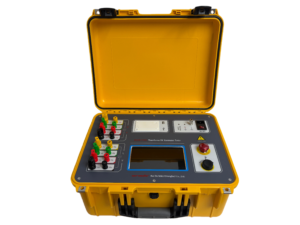
| Wrindu RDZR-350X Transformer DC Resistance Tester | 3 | 50A single-phase / 25A+25A three-phase | Three-phase simultaneous testing, magnetic-assisted measurement, demagnetization, and advanced protection functions | Manufacturing, commissioning, preventive maintenance, and transformer handover testing |
Modern testers often include:
- Automatic temperature correction
- Data storage
- Trend analysis
- Multi-channel testing
- Fast stabilization
Choosing the right tester depends on transformer rating and testing requirements.
How to Troubleshoot High Winding Resistance
If resistance readings are higher than normal:
- Inspect all external connections
- Tighten loose bolts and terminals
- Repeat phase-to-phase measurements
- Compare readings with factory records
- Check tap changer contacts
- Analyze historical test trends
Persistent abnormal values may require internal inspection of the transformer winding.
Key Benefits of Winding Resistance Testing
Transformer winding resistance testing helps:
- Improve transformer efficiency
- Reduce copper losses
- Detect early faults
- Prevent overheating
- Extend equipment life
- Support predictive maintenance
- Improve power system reliability
Regular testing is critical for safe and efficient transformer operation.
Frequently Asked Questions About Transformer Winding Resistance
What is transformer winding resistance?
Transformer winding resistance is the electrical resistance inside transformer coils caused by the conductor material, wire length, and temperature.
Why is winding resistance testing important for transformers?
It helps detect loose connections, damaged windings, overheating, and internal faults before transformer failure occurs.
How do you measure transformer winding resistance?
Technicians use a DC winding resistance tester with Kelvin connections to inject current and measure voltage drop accurately.
What causes high transformer winding resistance?
Common causes include loose connections, oxidation, damaged windings, overheating, and tap changer problems.
What is the acceptable difference between transformer phase resistance readings?
Most engineers consider deviations above 2% abnormal and requiring further inspection.
Why is temperature correction necessary during winding resistance testing?
Resistance changes with temperature, so correction allows accurate comparison with factory reference values.
Which current is used for transformer winding resistance testing?
Most tests use stable DC current between 1A and 20A depending on transformer size and application.
Can winding resistance testing detect shorted turns?
Yes. Abnormal resistance imbalance may indicate inter-turn short circuits or winding damage.
How often should transformer winding resistance testing be performed?
Testing is commonly performed during commissioning, scheduled maintenance, after repairs, and after fault events.
What happens if transformer winding resistance becomes too high?
High resistance increases heat generation, energy loss, and the risk of transformer failure.
Which industries use transformer winding resistance testing?
Power utilities, substations, renewable energy plants, railways, industrial factories, and transformer manufacturers all use this testing method regularly.
