

How Can a Transformer DGA Analyzer Help Prevent Costly Power Outages
Learn how transformer DGA analyzers prevent costly power outages through real-time gas monitoring. Discover fault detection methods, AI-based analysis, advantages over traditional DGA, and applications in power systems, substations, and renewable energy grids.
Transformer failures caused by undetected internal faults lead to billions of dollars in losses every year across the global power industry. Dissolved Gas Analysis (DGA) has become one of the most important diagnostic technologies for early fault detection.
Advanced online DGA solutions from Wrindu enable real-time gas monitoring in transformer oil, helping utilities adopt predictive maintenance strategies, extend asset life, and reduce unexpected downtime.
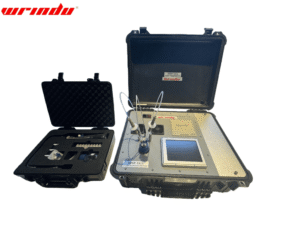
Click the image to know more about Portable DGA Insulation Oil Tester.
What Is the Current Condition of Power Transformers in the Industry?
Many power transformers worldwide are operating under aging conditions. A large percentage of units have exceeded 25 years of service life, which increases the risk of internal failure.
Industry reports show that transformer-related outages account for a significant share of global power interruptions. This risk is especially high in regions with rapidly growing electricity demand and aging grid infrastructure.
Data center expansion and renewable energy projects further increase pressure on transformers, where even short outages can cause major financial losses.
Why Are Traditional DGA Methods Not Enough Today?
Conventional laboratory-based DGA relies on periodic oil sampling and manual analysis. This approach often causes delays in fault detection.
Key limitations include:
Slow response time (days or weeks)
High testing cost per sample
Risk of human interpretation errors
Missing faults between scheduled tests
As a result, early-stage transformer failures can go unnoticed.
How Does Wrindu Transformer DGA Analyzer Improve Monitoring?
Modern DGA systems from Wrindu provide automated detection of key fault gases, including:
Hydrogen (H₂)
Methane (CH₄)
Ethane (C₂H₆)
Ethylene (C₂H₄)
Acetylene (C₂H₂)
Carbon monoxide (CO)
Carbon dioxide (CO₂)
These systems deliver fast results, real-time monitoring, and AI-based fault interpretation, helping operators identify problems before failure occurs.
What Are the Main Advantages Compared to Traditional DGA?
| Feature | Traditional Lab DGA | Modern Wrindu DGA System |
|---|---|---|
| Analysis time | 2–7 days | < 30 minutes |
| Accuracy | 85–90% | Up to 99% |
| Monitoring type | Periodic offline | Continuous online |
| Cost per test | High | Lower long-term cost |
| Fault detection | Reactive | Predictive |
These improvements significantly reduce maintenance workload and improve decision-making speed.
How Is a DGA Analyzer Installed and Used?
Typical installation and operation steps include:
Mount the sensor on the transformer oil valve
Connect power and communication system
Run automatic calibration
Start real-time monitoring dashboard
Set gas alarm thresholds
Receive alerts and analyze fault data
The full setup process is usually completed within one hour.
Who Benefits Most From Transformer DGA Monitoring?
How does it help aging substations?
Early gas detection identifies thermal or electrical faults, preventing transformer failure and avoiding costly replacement.
How is it used in wind power systems?
Remote monitoring allows operators to detect abnormal gas trends even in offshore or hard-to-access locations.
How does it support industrial factories?
Real-time alarms help prevent production shutdowns caused by transformer overheating or internal faults.
How does it improve new grid projects?
Continuous monitoring improves commissioning quality and reduces hidden insulation risks.
Why Is Real-Time DGA Important for Modern Power Grids?
Modern power systems are becoming more complex due to renewable energy integration and digital transformation.
Real-time DGA monitoring helps:
Reduce unexpected outages
Extend transformer lifespan
Improve predictive maintenance accuracy
Lower operational risk in critical infrastructure
This makes it an essential tool for smart grid development.
What Faults Can a DGA Analyzer Detect Early?
A transformer DGA system can identify:
Partial discharge activity
Thermal overheating
Arcing faults
Insulation degradation
Moisture-related issues
Early detection helps prevent severe transformer damage.
How Does AI Improve DGA Analysis?
Modern systems use AI algorithms to:
Analyze gas trends over time
Detect abnormal patterns early
Reduce false alarms
Provide fault classification codes
This improves reliability and reduces manual interpretation errors.
What Are Real-World Benefits of Using DGA Systems?
Utilities and industrial users report:
Reduced unplanned outages
Lower maintenance costs
Longer transformer lifespan (up to 30%)
Faster fault response time
In many cases, early detection has saved millions in equipment replacement costs.
Expert Insight from Wrindu
“Transformer failures rarely happen suddenly—they develop over time through gas formation inside oil. Continuous DGA monitoring allows operators to see these changes early and take action before serious damage occurs.”
— Engineering Team, Wrindu
FAQs About Transformer DGA Analyzer (Long-Tail Questions)
What gases does a transformer DGA analyzer detect in real operation?
It detects hydrogen, methane, ethane, ethylene, acetylene, carbon monoxide, and carbon dioxide.
How accurate is modern online DGA compared to laboratory testing?
Modern systems can reach up to 99% accuracy when properly calibrated and maintained.
Can a DGA analyzer monitor multiple transformers at the same time?
Yes, centralized systems can monitor multiple units across a grid network.
How long does it take to install a DGA monitoring system?
Most systems can be installed and configured within 30–60 minutes.
Is DGA suitable for renewable energy installations?
Yes, it is widely used in wind farms and solar substations with harsh environmental conditions.
Why is continuous DGA better than periodic sampling?
Because it detects faults in real time instead of waiting for scheduled laboratory tests.
Conclusion
Transformer DGA analyzers are essential tools for preventing costly power outages. By detecting fault gases early and enabling real-time monitoring, they significantly improve transformer reliability and system safety.
With advanced online solutions and AI-driven analysis, modern utilities can shift from reactive maintenance to predictive asset management, ensuring stronger and more stable power networks.
