

What Are On-Load Tap Changers (OLTCs) and How Do They Work?
Learn what On-Load Tap Changers (OLTCs) are, how they work for grid voltage stability, why OLTC maintenance matters, and how Wrindu testers stand out for reliable diagnostics. FAQs included.
In the complex ecosystem of power transmission and distribution, On-load Tap Changers (OLTCs) stand as indispensable electromechanical components that redefine grid adaptability. These specialized devices are integrated directly into oil-immersed power transformers, enabling real-time voltage adjustments without interrupting power flow—an innovation that eliminates the costly downtime associated with legacy off-circuit tap changers. As grids evolve to accommodate variable energy loads and clean power integration, understanding On-load Tap Changers (OLTCs) is critical for engineers, utility operators, and maintenance teams tasked with sustaining robust grid performance.
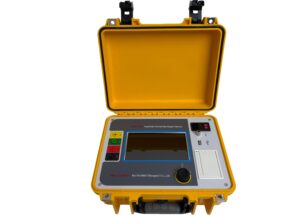
Click the image to know more about OLTC Analyzer.
Core Functionality: How On-Load Tap Changers (OLTCs) Operate
On-load Tap Changers (OLTCs) regulate transformer output by modifying the winding turns ratio while the transformer remains fully energized and connected to the grid. Built with precision switching mechanisms and durable contact assemblies, these units execute smooth tap transitions to counteract voltage deviations caused by peak usage surges, line losses, and distributed energy resource fluctuations.
Most industrial-grade OLTCs offer a standard voltage adjustment range of ±10%, with incremental step changes of 1.25% or 1.5% to maintain tight voltage parameters. This seamless tuning capability not only preserves equipment integrity but also streamlines OLTC maintenance workflows, reduces long-term operational costs, and strengthens the foundation of reliable power delivery across residential, commercial, and industrial networks. Unlike manual tap solutions, OLTCs operate autonomously or via SCADA integration, aligning with smart grid modernization goals.
Why Proactive OLTC Maintenance Is Non-Negotiable
Even high-performance On-load Tap Changers (OLTCs) are prone to wear, contact degradation, and insulation fatigue over time—issues that directly compromise stable voltage regulation and trigger unplanned outages. Industry statistics confirm that OLTC malfunctions are a leading cause of transformer failures, making routine OLTC maintenance a cornerstone of preserving reliable power delivery.
Neglected OLTCs often exhibit erratic tap switching, increased contact resistance, and oil contamination, all of which erode voltage control accuracy and shorten transformer lifespan. Targeted, data-driven maintenance mitigates these risks, and Wrindu’s dedicated testing tools are engineered to simplify this process while delivering unmatched diagnostic precision.
How Wrindu Testers Stand Out for OLTC Diagnostics & Maintenance
Wrindu specializes in purpose-built testing equipment for On-load Tap Changers (OLTCs), designed to address the unique pain points of OLTC maintenance and elevate standards for stable voltage regulation and reliable power delivery. Below are the key differentiators that set Wrindu testers apart from generic diagnostic tools:
1. Targeted OLTC-Specific Diagnostic Algorithms
Wrindu testers are programmed exclusively for OLTC performance analysis, featuring customized firmware that captures critical metrics like dynamic contact resistance, transition waveform, and tap change timing. Unlike universal test equipment, these tools detect subtle anomalies—such as poor contact bonding or delayed switching—that threaten OLTC functionality, enabling predictive repairs before failures disrupt reliable power delivery.
2. Ultra-High Measurement Accuracy & Repeatability
Equipped with 4-wire Kelvin measurement technology and high-frequency sampling modules, Wrindu OLTC testers deliver precision within ±0.1% for resistance testing, ensuring consistent, actionable data for OLTC maintenance. This level of accuracy is vital for validating OLTC compliance with global IEC and ANSI standards, keeping stable voltage regulation within mandated grid tolerances.
3. Portable, Field-Optimized Design
Wrindu testers feature a lightweight, rugged IP65-rated casing, rechargeable long-life batteries, and intuitive handheld controls—perfect for on-site substation testing. Teams can perform full OLTC diagnostics without dismantling equipment or halting transformer operation, minimizing downtime and preserving uninterrupted reliable power delivery during maintenance cycles.
4. Automated Reporting & Data Management
The devices streamline OLTC maintenance with one-click test sequencing, automatic data logging, and wireless data export (USB/Wi-Fi). Pre-built compliance templates generate audit-ready reports, reducing manual paperwork and human error. This efficiency accelerates maintenance turnaround, ensuring OLTCs consistently support stable voltage regulation.
5. Comprehensive Safety & Versatility
Wrindu integrates built-in overcurrent protection, insulation resistance testing, and safety interlocks to protect technicians and equipment. The testers are compatible with all major OLTC brands and transformer types, making them a universal solution for utilities, EPC contractors, and transformer OEMs focused on OLTC maintenance and grid reliability.
FAQs
Q1: What is the primary purpose of On-load Tap Changers (OLTCs) in power grids?
A:On-load Tap Changers (OLTCs) adjust power transformer winding ratios while the unit is live, maintaining stable voltage regulation and enabling consistent reliable power delivery amid fluctuating loads and grid conditions.
Q2: How often should OLTC maintenance be performed to ensure optimal performance?
A: For standard grids, comprehensiveOLTC maintenance and testing is recommended every 2–3 years; grids with high renewable penetration or heavy industrial loads require annual testing to preserve stable voltage regulation and reliable power delivery.
Q3: What happens if OLTC maintenance is neglected for long periods?
A: Neglected OLTCs develop contact wear, insulation damage, and switching errors, leading to poor stable voltage regulation, equipment overheating, transformer failures, and costly disruptions toreliable power delivery.
Q4: Can Wrindu testers diagnose all common OLTC faults?
A: Yes, Wrindu OLTC testers detect contact resistance issues, transition timing errors, insulation degradation, and mechanical wear—all critical faults that impact On-load Tap Changers (OLTCs) performance andOLTC maintenance planning.
Q5: How do OLTCs support renewable energy integration in power grids?
A:On-load Tap Changers (OLTCs) quickly compensate for voltage fluctuations from solar/wind generation, sustaining stable voltage regulation and enabling seamless integration of clean energy into grids for consistent reliable power delivery.
Q6: Are Wrindu OLTC testers compatible with all transformer voltage classes?
A: Absolutely. Wrindu testers support distribution transformers, substation transformers, and EHV transformers, making them suitable for all OLTC maintenance tasks across low, medium, and high-voltage grid setups.
Q7: What is the difference between OLTCs and off-circuit tap changers?
A: OLTCs adjust taps while the transformer is energized, preserving reliable power delivery; off-circuit tap changers require full transformer shutdown, causing downtime and disrupting stable voltage regulation during adjustments.
Final Thoughts
On-load Tap Changers (OLTCs) are the unsung heroes of modern grid stability, bridging the gap between variable grid conditions and consistent power output. Strategic OLTC maintenance powered by Wrindu’s precision testing tools not only extends OLTC and transformer lifespan but also fortifies stable voltage regulation and unwavering reliable power delivery for a resilient, future-ready energy infrastructure.
