

Transformer Bushing Testing: How to Detect Insulation Problems Before Failure
Learn how transformer bushing testing helps detect insulation degradation, aging, and potential failure risks. Discover advanced diagnosis methods using dielectric response technology.
Transformer bushings are small but critical components in high-voltage power systems.
They provide the connection between internal transformer windings and external transmission lines while maintaining electrical insulation under high voltage stress.
Because bushings operate continuously under electrical, thermal, and mechanical stress, insulation degradation can gradually develop during service.
A damaged transformer bushing may cause:
- Partial discharge
- Insulation breakdown
- Transformer outage
- Equipment damage
- Safety risks
Unlike some transformer problems that develop slowly and produce measurable warning signs, bushing failures can occur suddenly when insulation deterioration reaches a critical level.
Therefore, regular transformer bushing testing is an important part of preventive maintenance programs.
Advanced diagnostic methods such as dielectric response analysis provide additional information beyond conventional electrical measurements, helping engineers identify insulation problems at an early stage.
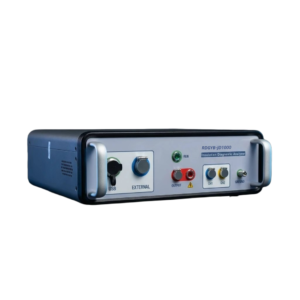
Click the image to know more about Wrindu Frequency Domain Dielectric Response Insulation Diagnostic Analyzer.
Why Are Transformer Bushing Failures Dangerous?
A transformer bushing is responsible for maintaining insulation between:
- High-voltage conductor
- Grounded transformer tank
- External electrical connections
During operation, bushings experience:
- High electric field stress
- Temperature fluctuations
- Environmental influence
- Mechanical vibration
If internal insulation performance decreases, several failure mechanisms may appear.
Insulation Breakdown
When insulation strength decreases, the electric field may exceed the withstand capability of the material.
This can result in:
- Internal flashover
- Breakdown channels
- Sudden transformer shutdown
Partial Discharge Development
Small defects inside bushing insulation may generate partial discharge activity.
Continuous discharge can accelerate:
- Insulation deterioration
- Local heating
- Material damage
Moisture and Aging Effects
Oil-paper bushings are sensitive to:
- Moisture accumulation
- Paper aging
- Oil deterioration
These factors gradually change the dielectric characteristics of insulation.
What Are the Common Causes of Transformer Bushing Deterioration?
Understanding failure causes helps engineers select appropriate testing methods.
Moisture Contamination
Moisture can enter the insulation system through:
- Aging seals
- Poor storage conditions
- Environmental humidity
It can reduce insulation reliability and accelerate aging processes.
Thermal Stress
Long-term operation at elevated temperatures causes:
- Insulation material degradation
- Increased dielectric losses
- Reduced mechanical strength
Oil Aging
Insulating oil provides electrical insulation and cooling.
As oil deteriorates, its electrical characteristics may change, affecting overall bushing performance.
Mechanical Damage
Transportation, installation, or operational vibration may affect internal structures.
What Tests Are Used for Transformer Bushing Condition Assessment?
Engineers normally use several testing methods to evaluate bushing condition.
Capacitance and Power Factor Testing
This is one of the most common bushing diagnostic methods.
It can identify:
- Capacitance changes
- Increased dielectric loss
However, results from a single test point may not fully describe internal insulation conditions.
Insulation Resistance Testing
Insulation resistance measurement provides basic information about insulation performance.
It is useful for:
- Detecting severe insulation problems
- Comparing historical test results
However, environmental conditions such as temperature and humidity may influence the measurement.
Partial Discharge Testing
Partial discharge measurement helps identify localized insulation defects.
It is commonly applied for:
- Factory testing
- Condition monitoring
- Fault investigation
Frequency Domain Dielectric Response Testing
Frequency Domain Dielectric Response (FDS) provides a broader evaluation by analyzing insulation characteristics under different frequencies.
It can help identify:
- Aging trends
- Moisture influence
- Abnormal dielectric behavior
The RDGYB-JD1000 combines dielectric response analysis technologies to support detailed insulation condition assessment of transformers and bushings.
Why Is Traditional Bushing Testing Sometimes Not Enough?
Conventional bushing tests mainly focus on specific electrical parameters.
However, insulation deterioration is a complex process.
Two bushings may have similar capacitance values but different internal conditions.
For example:
- One may have normal insulation aging
- Another may contain moisture or localized degradation
A complete condition assessment requires more information about insulation behavior.
This is where dielectric response analysis provides additional diagnostic value.
How Does Dielectric Response Technology Improve Bushing Diagnosis?
Dielectric response testing analyzes how insulation materials behave under different electrical frequencies.
The measurement results create characteristic curves that reflect insulation condition.
Engineers can evaluate:
- Changes in dielectric properties
- Abnormal insulation response
- Possible degradation trends
Compared with only checking one electrical parameter, dielectric response analysis provides a more comprehensive view of insulation performance.
Field Application Example: 220kV Transformer Bushing Diagnostic Test
A field comparison test was performed on a 220kV transformer bushing at Hongtang Substation.
The tested bushing used:
- Oil-paper insulation structure
- 220kV transformer application
- Frequency response measurement method
The testing conditions included:
| Parameter | Value |
|---|---|
| Test Frequency Range | 1mHz–1000Hz |
| Test Voltage | 200V |
| Insulation Type | Oil-paper insulation |
The evaluation focused on:
- Capacitance characteristics
- Dielectric loss behavior
- Insulation condition analysis
The comparison results showed consistent diagnostic conclusions between different measurement systems, confirming the effectiveness of dielectric response analysis for transformer bushing assessment.
How Does RDGYB-JD1000 Support Transformer Bushing Testing?
The RDGYB-JD1000 is designed for advanced insulation diagnosis applications.
Key capabilities include:
Comprehensive Condition Evaluation
The system supports:
- Dielectric response measurement
- Insulation condition analysis
- Data comparison and diagnosis
Suitable for High Voltage Equipment Diagnosis
Applications include:
- Power transformers
- Bushings
- Current transformers
- Other insulation systems
Field-Friendly Design
The compact structure supports on-site testing.
Technical characteristics:
- Frequency range: 0.1mHz–10kHz
- Weight: 6.2kg excluding test leads
Transformer Bushing Testing Best Practices
To improve diagnostic reliability, utilities should consider:
Establish Historical Test Records
Comparing results over time helps identify gradual deterioration.
Perform Testing Under Stable Conditions
Environmental factors should be considered during measurement.
Combine Multiple Diagnostic Methods
Using different testing technologies provides a more complete understanding of equipment condition.
Prioritize High-Risk Equipment
Older transformers and heavily loaded equipment require more frequent assessment.
Frequently Asked Questions About Transformer Bushing Testing
How often should transformer bushings be tested?
Testing frequency depends on equipment age, operating conditions, manufacturer recommendations, and maintenance strategy.
What causes transformer bushing failure?
Common causes include moisture, insulation aging, oil deterioration, electrical stress, and mechanical damage.
Which test is best for transformer bushing diagnosis?
No single test can identify every problem. A combination of capacitance, dielectric loss, partial discharge, and dielectric response testing provides better assessment.
Can dielectric response testing detect aging problems?
Yes. Dielectric response analysis can reveal changes in insulation characteristics associated with aging and degradation.
Why is bushing condition monitoring important?
Because early detection allows maintenance teams to repair or replace components before catastrophic failure occurs.
Conclusion
Transformer bushing failure is one of the important risks affecting transformer insulation reliability.
Because insulation deterioration often develops gradually, regular condition assessment is essential for preventing unexpected breakdowns.
Traditional electrical tests remain valuable, but advanced diagnostic technologies provide deeper information about insulation behavior.
By applying dielectric response analysis, utilities can better understand transformer bushing condition, identify potential risks, and optimize maintenance decisions.
The Wrindu RDGYB-JD1000 Frequency Domain Dielectric Response Insulation Diagnostic Analyzer provides an effective solution for transformer and bushing insulation assessment, helping improve power equipment reliability and extend service life.
