

How Does a Frequency Domain Dielectric Response Analyzer Work?
Learn how a Frequency Domain Dielectric Response Analyzer works for transformer insulation diagnosis. Discover FDS testing principles, measurement process, and how RDGYB-JD1000 improves moisture and aging assessment.
Power transformers are critical assets in modern electrical systems. The reliability of transformers directly affects power grid safety and operational stability.
However, transformer insulation gradually deteriorates due to moisture, thermal stress, electrical stress, and aging. Since insulation problems usually develop slowly, early detection is essential to prevent unexpected failures.
A Frequency Domain Dielectric Response Analyzer is an advanced diagnostic instrument used to evaluate transformer insulation conditions by measuring dielectric characteristics across a wide frequency range.
Unlike traditional insulation tests that provide only limited information, Frequency Domain Dielectric Response (FDS) technology creates a complete insulation response profile. It helps engineers identify hidden problems such as moisture contamination, oil deterioration, and insulation aging.
The Wrindu RDGYB-JD1000 Frequency Domain Dielectric Response Insulation Diagnostic Analyzer integrates Frequency Domain Dielectric Response (FDS) and Polarization Depolarization Current (PDC) technologies to provide comprehensive transformer insulation assessment.
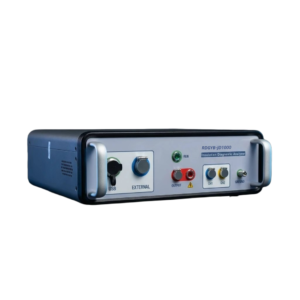
Click the image to know more about Wrindu Frequency Domain Dielectric Response Insulation Diagnostic Analyzer.
What Is a Frequency Domain Dielectric Response Analyzer?
A Frequency Domain Dielectric Response Analyzer is a specialized testing device that measures how electrical insulation materials respond to AC voltage signals at different frequencies.
Every insulation system has unique dielectric properties. When an AC voltage is applied, the insulation produces a current response that changes according to:
- Moisture content
- Insulation aging condition
- Oil conductivity
- Temperature
- Material polarization characteristics
By analyzing these responses, engineers can determine the health condition of transformer insulation.
The main parameters measured by an FDS analyzer include:
- Capacitance
- Dielectric loss factor (tanδ)
- Frequency response curve
- Insulation polarization characteristics
The RDGYB-JD1000 supports dielectric response measurement across a wide frequency range from 0.1mHz to 10kHz, allowing detailed analysis of insulation behavior.
Why Is Frequency Domain Dielectric Response Testing Needed?
Traditional transformer insulation tests remain widely used, including:
- Insulation resistance testing
- Power factor testing
- Capacitance measurement
However, these methods have limitations.
Limited Information From Single-Point Measurements
Traditional tests usually measure insulation characteristics at one frequency.
A single value cannot fully describe:
- Moisture distribution
- Insulation aging level
- Polarization behavior
Difficulty Detecting Early Insulation Problems
Some insulation defects may exist before obvious electrical failures occur.
FDS testing provides more detailed information by analyzing the complete frequency response curve.
Better Transformer Condition Assessment
Frequency Domain Dielectric Response testing helps maintenance teams move from:
Reactive maintenance → Predictive maintenance
By identifying insulation problems early, utilities can:
- Reduce transformer failure risks
- Improve maintenance planning
- Extend equipment service life
How Does a Frequency Domain Dielectric Response Analyzer Work?
The working principle of an FDS analyzer is based on dielectric polarization analysis. The testing process includes several steps.
Step 1: Apply AC Testing Voltage to the Insulation System
During testing, the analyzer applies a controlled AC voltage signal to the transformer insulation.
The applied voltage creates a dielectric response inside the insulation material.
Different insulation conditions produce different current responses.
Step 2: Measure the Current Response
When voltage is applied, the analyzer measures the resulting current flowing through the insulation.
The current contains two main components:
Capacitive Current
This represents normal dielectric polarization behavior.
Loss Current
This represents energy loss caused by:
- Moisture
- Contamination
- Aging
- Increased conductivity
The relationship between voltage and current allows the analyzer to calculate dielectric parameters.
Step 3: Analyze Dielectric Loss and Capacitance
The analyzer calculates important insulation parameters:
Capacitance
Capacitance changes may indicate:
- Insulation structure changes
- Moisture influence
- Mechanical problems
Dielectric Loss Factor (tanδ)
A higher tanδ value often indicates:
- Increased moisture
- Insulation aging
- Higher dielectric losses
The frequency response curve provides additional information that cannot be obtained from traditional single-frequency measurements.
Step 4: Generate Insulation Diagnosis Results
After measurement, the analyzer processes the data and evaluates insulation condition.
The analysis can provide information about:
- Cellulose moisture content
- Oil conductivity
- Insulation aging status
- Moisture distribution
The RDGYB-JD1000 uses advanced analysis models to evaluate moisture content and insulation condition, including cellulose moisture estimation and uneven moisture distribution analysis.
What Technologies Are Used in an FDS Analyzer?
Modern dielectric response analyzers usually combine multiple technologies.
Frequency Domain Dielectric Response (FDS)
FDS measures insulation characteristics in the frequency domain.
Advantages:
- Wide frequency analysis
- Sensitive moisture detection
- Detailed insulation fingerprint
Polarization Depolarization Current (PDC)
PDC evaluates insulation polarization characteristics over time.
It helps analyze:
- Absorption behavior
- Insulation condition
- Moisture influence
The RDGYB-JD1000 combines FDS and PDC technologies in one system, providing more comprehensive diagnostic capability.
How Does FDS Analyzer Detect Transformer Moisture?
Moisture is one of the most important factors affecting transformer insulation life.
In oil-paper insulation systems, moisture mainly exists in:
- Cellulose paper
- Transformer oil
High moisture levels can cause:
- Reduced dielectric strength
- Faster paper aging
- Lower transformer reliability
A Frequency Domain Dielectric Response Analyzer detects moisture by analyzing how moisture affects dielectric polarization behavior.
The low-frequency response region is especially sensitive to moisture changes.
By comparing measured curves with insulation models, engineers can estimate:
- Moisture percentage in cellulose
- Moisture distribution condition
- Oil conductivity
How Does FDS Help Evaluate Transformer Aging?
Transformer aging is closely related to insulation degradation.
During aging:
- Cellulose chains break down
- Mechanical strength decreases
- Dielectric characteristics change
FDS testing identifies aging trends by analyzing changes in:
- Dielectric loss
- Polarization behavior
- Frequency response curves
This information helps utilities determine whether a transformer requires:
- Further inspection
- Oil treatment
- Insulation replacement
- Continued operation
Why Choose RDGYB-JD1000 Frequency Domain Dielectric Response Analyzer?
The RDGYB-JD1000 is designed for accurate and efficient transformer insulation diagnosis.
Integrated FDS and PDC Testing
One device provides:
- Frequency domain analysis
- Polarization/depolarization current measurement
Wide Frequency Range
Technical capability:
- Frequency range: 0.1mHz–10kHz
- Output voltage options: 0–200V, 0–2kV, optional 0–10kV
- Output current: ±50mA
High Measurement Accuracy
The analyzer provides accurate dielectric parameter measurement:
- Capacitance accuracy: ±0.5% of reading + 1pF
- tanδ measurement accuracy optimized across different frequency ranges
Portable Field Testing Design
The compact design makes it suitable for field applications.
Specifications:
- Size: 320mm × 340mm × 110mm
- Weight: 6.2kg (excluding test leads)
What Equipment Can Be Tested With an FDS Analyzer?
A Frequency Domain Dielectric Response Analyzer can be used for:
Power Transformers
Applications:
- Moisture evaluation
- Aging diagnosis
- Insulation condition assessment
Transformer Bushings
Used for:
- Oil-paper insulation testing
- Capacitance measurement
- Dielectric loss analysis
Current Transformers and Instrument Transformers
Used for:
- Insulation performance evaluation
High Voltage Cables
Used for:
- Solid insulation diagnosis
The RDGYB-JD1000 supports transformer, bushing, current transformer, rotating machine, and cable insulation diagnosis applications.
Frequency Domain Dielectric Response Analyzer vs Traditional Testing Methods
| Testing Method | Information Provided | Main Limitation |
|---|---|---|
| Insulation Resistance Test | Basic insulation condition | Limited moisture information |
| Tan Delta Test | Dielectric loss at fixed frequency | Less detailed diagnosis |
| DGA Test | Dissolved gas condition | Requires oil sampling |
| FDS Test | Complete dielectric response | Requires professional analyzer |
FDS provides a more comprehensive view of insulation condition by combining frequency analysis with advanced modeling.
FAQs
What is a Frequency Domain Dielectric Response Analyzer?
A Frequency Domain Dielectric Response Analyzer is a testing instrument that measures insulation dielectric characteristics over multiple frequencies to evaluate transformer health.
What can an FDS analyzer detect?
An FDS analyzer can detect:
- Moisture in transformer insulation
- Oil conductivity changes
- Insulation aging
- Abnormal dielectric behavior
Is FDS testing better than tan delta testing?
FDS provides more detailed information because it analyzes insulation behavior across a wide frequency range instead of measuring only one frequency point.
Can FDS testing measure transformer moisture?
Yes. FDS technology is widely used for estimating moisture content in oil-paper insulation systems.
What frequency range does RDGYB-JD1000 support?
The RDGYB-JD1000 supports a frequency range from 0.1mHz to 10kHz for detailed dielectric response analysis.
Conclusion
A Frequency Domain Dielectric Response Analyzer provides a powerful solution for modern transformer insulation diagnosis.
By analyzing dielectric behavior across multiple frequencies, FDS technology helps detect moisture, insulation aging, and oil condition changes that may not be visible through traditional testing methods.
The Wrindu RDGYB-JD1000 Frequency Domain Dielectric Response Insulation Diagnostic Analyzer combines FDS and PDC technologies, high measurement accuracy, wide frequency capability, and portable design to support reliable transformer condition assessment.
For utilities, transformer manufacturers, and electrical testing companies, FDS testing is becoming an essential tool for improving equipment reliability and extending transformer service life.
