

What Are Dissolved Gas Analysis (DGA) Basics
Learn the basics of DGA for transformer oil. Discover key gases, testing steps, fault interpretation methods, and how Wrindu analyzers ensure accurate dissolved gas analysis.
Transformer failures rarely happen without warning. In most cases, internal faults generate gases long before a breakdown occurs. Dissolved Gas Analysis (DGA) is one of the most powerful diagnostic tools used to detect these early warning signs.
This guide explains DGA in a simple, practical way—what it is, how it works, and why it matters for transformer health.
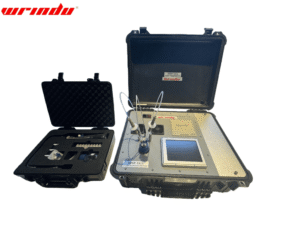
Click the image to know more about Portable DGA Insulation Oil Tester.
What Is Dissolved Gas Analysis (DGA)?
DGA is a testing method used to detect and measure gases dissolved in transformer oil.
When faults occur inside a transformer, they produce specific gases that dissolve into the oil. By analyzing these gases, engineers can identify potential problems early.
Why Is DGA So Important?
DGA helps prevent unexpected transformer failures by providing early fault detection.
It allows operators to:
- Identify internal faults before they become critical
- Plan maintenance proactively
- Reduce downtime and repair costs
- Extend transformer lifespan
What Gases Are Measured in DGA?
Different types of faults generate different gases. The most common gases analyzed include:
- Hydrogen (H₂) – partial discharge
- Methane (CH₄) – low-temperature faults
- Ethane (C₂H₆) – thermal faults
- Ethylene (C₂H₄) – higher temperature overheating
- Acetylene (C₂H₂) – arcing or severe faults
- Carbon monoxide (CO) – insulation degradation
- Carbon dioxide (CO₂) – paper insulation aging
Each gas provides clues about the type and severity of the fault.
How Does DGA Work?
DGA is typically performed using gas chromatography.
The process involves:
- Extracting gases from the oil sample
- Separating the gases inside the instrument
- Measuring the concentration of each gas
The results are reported in ppm (parts per million).
How Do You Perform DGA Step by Step?
1. How Do You Collect the Oil Sample?
- Use a gas-tight syringe or sampling bottle
- Avoid air contamination
- Follow proper sampling procedures
2. How Are Gases Extracted from the Oil?
- The sample is placed in the instrument
- Dissolved gases are extracted using vacuum or headspace methods
3. How Are Gases Analyzed?
- The gas chromatograph separates each gas
- Sensors detect and quantify gas concentrations
4. How Are Results Interpreted?
- Compare gas levels to standard limits
- Analyze gas ratios (e.g., Rogers Ratio, Duval Triangle)
- Identify fault type and severity
What Types of Faults Can DGA Detect?
DGA can identify several internal transformer issues:
- Partial discharge
- Low-energy electrical faults
- High-energy arcing
- Thermal overheating
- Insulation degradation
This makes DGA one of the most comprehensive diagnostic tools available.
What Factors Affect DGA Accuracy?
For reliable results, consider:
- Proper sampling technique
- Avoiding gas leakage
- Instrument calibration
- Timely analysis after sampling
How Wrindu Testers Stand Out
Wrindu DGA analyzers are designed to provide fast, accurate, and reliable gas analysis for transformer diagnostics.
Key Advantages:
1. High-Precision Gas Detection
Accurately measures trace gas concentrations for early fault detection.
2. Advanced Gas Chromatography Technology
Ensures reliable separation and identification of multiple gases.
3. Fast Analysis Time
Delivers quick results to support timely maintenance decisions.
4. User-Friendly Interface
Simplifies operation and data interpretation.
5. Stable and Durable Design
Suitable for both laboratory and field applications.
With Wrindu, utilities gain clear insights into transformer condition and risk levels.
What Are Common Mistakes in DGA Testing?
Avoid these common issues:
- Poor sampling techniques leading to air contamination
- Delayed testing after sample collection
- Misinterpretation of gas ratios
- Lack of trend analysis over time
Accurate DGA depends on both good sampling and correct interpretation.
FAQs About Dissolved Gas Analysis (DGA) (Q&A)
Q1: How often should DGA testing be performed?
A: Typically every 6–12 months, but critical transformers may require more frequent monitoring.
Q2: What is the most dangerous gas in DGA?
A: Acetylene (C₂H₂) is often associated with arcing and indicates serious internal faults.
Q3: Can DGA predict transformer failure?
A: Yes. DGA can detect early fault conditions, allowing preventive action before failure occurs.
Q4: What is the Duval Triangle?
A: It is a diagnostic method used to identify fault types based on gas ratios.
Q5: Why are my DGA results inconsistent?
A: Possible causes include sampling errors, gas leakage, or calibration issues.
Q6: Is online DGA monitoring better than offline testing?
A: Online monitoring provides continuous data, while offline testing is periodic. Both have their advantages depending on application.
Final Thoughts
Dissolved Gas Analysis (DGA) is a critical tool for understanding what’s happening inside a transformer. By detecting fault gases early, it helps prevent costly failures and improves system reliability.
Combined with advanced solutions like Wrindu DGA analyzers, DGA becomes a powerful part of any predictive maintenance strategy.
