

Why Is Reducing Downtime a Critical Goal in Transformer Maintenance
Learn how smart diagnostics reduce transformer downtime through early fault detection, oil analysis, and predictive maintenance. Discover key testing methods and how Wrindu testers improve accuracy, speed, and reliability.
In power systems, downtime is not just an operational inconvenience—it directly translates into financial loss, service disruption, and potential equipment damage. Transformers, as core assets in electrical networks, require highly reliable monitoring and fast diagnostic capabilities to prevent unexpected outages.
Smart diagnostics has emerged as a key solution, enabling operators to detect faults early, locate issues accurately, and take corrective action before failure occurs.
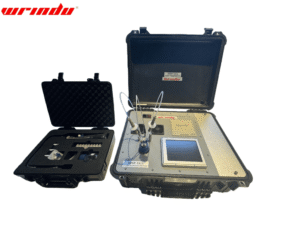
Click the image to know more about Portable DGA Insulation Oil Tester.
What Is Smart Diagnostics in Transformer Maintenance?
Smart diagnostics refers to the use of advanced testing tools, real-time monitoring systems, and data analytics to evaluate transformer health quickly and accurately.
Core components include:
- Online and offline oil testing
- Dissolved Gas Analysis (DGA) interpretation
- Thermal and load monitoring
- Digital fault detection systems
- AI-based diagnostic algorithms
This approach significantly improves decision-making speed and accuracy.
How Do Smart Diagnostics Help Reduce Transformer Downtime?
Smart diagnostics minimize downtime by identifying potential failures before they escalate into serious problems.
Key mechanisms include:
- Early fault detection through gas and oil analysis
- Rapid identification of insulation degradation
- Real-time alerts for abnormal operating conditions
- Prioritized maintenance scheduling
For example, detecting rising acetylene levels early can prevent catastrophic arcing faults and long outages.
What Types of Faults Can Be Detected Early?
Smart diagnostic systems can identify a wide range of transformer issues, including:
- Thermal overheating
- Partial discharge
- Electrical arcing
- Moisture ingress
- Oil oxidation and contamination
- Insulation aging
Early detection allows maintenance teams to act before performance is significantly affected.
Why Is Fast and Accurate Testing Essential for Downtime Reduction?
The speed and accuracy of diagnostics directly influence how quickly corrective actions can be taken.
Fast testing enables:
- Immediate decision-making
- Reduced inspection delays
- Faster fault confirmation
High accuracy ensures:
- Fewer false alarms
- Better maintenance prioritization
- Reliable fault classification
Together, they reduce unnecessary shutdowns and improve operational continuity.
How Does Data Integration Improve Smart Diagnostic Systems?
Data integration allows multiple sources of transformer information to be analyzed together.
Integrated data may include:
- Oil condition parameters
- Load and temperature history
- Gas concentration trends
- Maintenance records
This holistic view helps operators make more informed and timely decisions, reducing unnecessary downtime.
What Challenges Exist in Implementing Smart Diagnostics?
Despite its advantages, implementation can face several challenges:
- High initial investment in monitoring systems
- Complexity of data interpretation
- Integration with legacy infrastructure
- Need for trained technical personnel
Addressing these challenges requires reliable tools and structured maintenance strategies.
How Wrindu Testers Stand Out in Smart Diagnostic Applications
Wrindu provides high-performance testing solutions designed to support fast, accurate, and reliable transformer diagnostics—helping utilities minimize downtime effectively.
Key advantages include:
- Rapid Testing Capability: Enables quick diagnosis of oil condition and faults
- High Precision Results: Ensures reliable detection of early-stage issues
- Field-Ready Design: Suitable for substation and on-site applications
- Wide Testing Coverage: Supports multiple critical oil parameters
- Stable Data Output: Ideal for trend tracking and diagnostic systems
Wrindu testers strengthen smart diagnostic workflows by delivering accurate data that accelerates fault identification and maintenance decisions.
How Can Utilities Implement Smart Diagnostics Effectively?
A successful implementation strategy includes:
- Identifying critical transformers for priority monitoring
- Combining online and offline testing methods
- Establishing clear diagnostic thresholds
- Training maintenance teams for data interpretation
- Integrating testing data into asset management systems
This structured approach ensures maximum downtime reduction.
FAQs: Reducing Downtime with Smart Diagnostics
Q1: What is the main benefit of smart diagnostics in transformers?
A: The main benefit is early fault detection, which helps prevent unexpected outages and reduces downtime.
Q2: How does smart diagnostics reduce maintenance costs?
A: It avoids unnecessary maintenance and prevents costly emergency repairs by addressing issues early.
Q3: Can smart diagnostics completely eliminate downtime?
A: No, but it significantly reduces both the frequency and duration of unplanned outages.
Q4: Which tests are most important for smart diagnostics?
A: Dissolved Gas Analysis (DGA), moisture testing, and breakdown voltage (BDV) are among the most critical.
Q5: Is smart diagnostics suitable for all transformer types?
A: Yes, especially for high-value and critical transformers in transmission and distribution systems.
Q6: How often should diagnostic testing be performed?
A: It depends on asset criticality—ranging from continuous monitoring to periodic offline testing.
By integrating smart diagnostic strategies into transformer maintenance, utilities can significantly reduce downtime, improve reliability, and ensure more stable power system operations.
