

Self-Excited vs Separately Excited Generator: Selection Guide
Compare self-excited vs separately excited generators and learn how to choose the best DC generator type for your application with this practical selection guide.
How to Select the Right Generator for Your Application
Choosing the right generator is critical for ensuring stable performance, cost efficiency, and long-term reliability. Many engineers and buyers face the same question:
👉 Should you choose a self-excited generator or a separately excited generator?
This generator selection guide will help you understand the differences and choose the best DC generator type for your specific application.
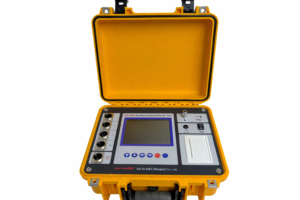
Click the image to know more about Three Phase Capacitance and Inductance Tester.
Self vs Separately Excited Generator: Quick Comparison
| Feature | Self-Excited Generator | Separately Excited Generator |
|---|---|---|
| Field Power Source | Own output | External DC supply |
| Voltage Stability | Moderate | Excellent |
| Control Flexibility | Limited | High |
| Cost | Lower | Higher |
| System Complexity | Simple | More complex |
| Maintenance | Easy | Moderate |
| Best Use | Basic applications | Precision systems |
👉 This self vs separately excited comparison shows that each type has its own strengths.
How to Select the Right Generator?
Selecting the right generator depends on several key factors:
1. Application Requirements
Ask yourself:
- Do you need stable voltage?
- Is precision control required?
- Is the system standalone or grid-connected?
👉 If your application requires high accuracy (e.g., labs, EV systems), choose:
Separately excited generator
👉 If your application is simple (e.g., backup power), choose:
Self-excited generator
2. Voltage Regulation Needs
Voltage regulation is one of the most important selection criteria.
- Self-excited generators may experience voltage drop under load
- Separately excited generators maintain stable voltage
👉 For sensitive equipment:
Separately excited is the better choice
3. Cost and Budget
- Self-excited generators:
- Lower initial cost
- Less wiring
- No external power source
- Separately excited generators:
- Higher cost
- Additional excitation system required
👉 If budget is limited:
Self-excited generator is more economical
4. Control and Flexibility
If your system requires:
- Adjustable voltage
- Fast response to load changes
- Integration with automation
👉 Choose:
Separately excited generator
5. Installation Environment
Consider where the generator will be used:
- Remote/off-grid → self-excited
- Industrial/laboratory → separately excited
Best DC Generator Type for Different Applications
1. For Industrial Use
- Heavy loads
- Continuous operation
👉 Best choice:
Separately excited generator
2. For Laboratory Testing
- High accuracy required
- Stable voltage needed
👉 Best choice:
Separately excited generator
3. For Portable or Backup Power
- Simple operation
- Low cost
👉 Best choice:
Self-excited generator
4. For Renewable Energy Systems
- Off-grid environments
- Independent operation
👉 Best choice:
Self-excited generator
5. For EV and Railway Systems
- Dynamic load changes
- High reliability required
👉 Best choice:
Separately excited generator
Decision-Making Flow (Simple Guide)
You can use this quick logic:
- Need high precision? → Separately excited
- Need low cost? → Self-excited
- Working in lab or EV system? → Separately excited
- Working in remote/off-grid area? → Self-excited
Performance Comparison in Real Conditions
| Condition | Self-Excited | Separately Excited |
|---|---|---|
| Voltage Drop (Full Load) | 10–20% | <5% |
| Stability | Medium | High |
| Control Accuracy | Low | High |
| Startup Requirement | Needs residual magnetism | Instant |
Role of Testing Before Selection
Before choosing a generator, testing and evaluation are highly recommended.
Key tests include:
- Voltage regulation testing
- Load testing
- Insulation testing
- Excitation system analysis
Using professional testing equipment (such as Wrindu solutions) helps ensure the generator meets your real application requirements.
Common Selection Mistakes
Avoid these common errors:
❌ Choosing based on price only
❌ Ignoring voltage stability requirements
❌ Not considering load variations
❌ Skipping testing and validation
👉 These mistakes can lead to:
- System instability
- Higher maintenance costs
- Equipment failure
How Wrindu Helps You Make the Right Choice
Wrindu provides advanced testing solutions that help users:
- Evaluate generator performance
- Analyze excitation systems
- Test voltage stability
- Simulate real load conditions
With accurate data, engineers can confidently select the most suitable generator.
Conclusion
There is no single “best” generator for all situations. The right choice depends on your application needs.
- Choose self-excited generators for simplicity, low cost, and off-grid use
- Choose separately excited generators for precision, control, and stability
By understanding your requirements and using proper testing methods, you can select the most efficient and reliable generator for your system.
