

How Frequency Droop Control Enhances Microgrid Stability in Chinese Factories
Discover how frequency droop control enhances microgrid stability, energy efficiency, and load sharing in Chinese factories. Learn implementation strategies and testing solutions for reliable industrial power systems.
In China’s fast-evolving industrial landscape, maintaining stable and efficient power systems is critical. Frequency droop control has become a key technology for improving microgrid stability, supporting seamless islanding, and ensuring consistent power quality.
As a leading provider of power testing and diagnostic solutions, Wrindu helps manufacturers, OEMs, and industrial operators implement reliable droop control strategies tailored to factory environments.
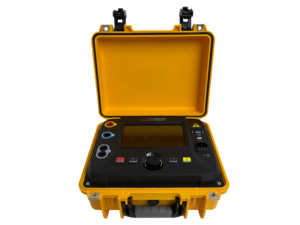
Click the image to know more about Wrindu New IR Tester.
What Role Does Frequency Droop Control Play in Factory Microgrids?
Frequency droop control allows multiple power sources—such as generators, solar systems, and energy storage—to share load automatically based on frequency deviations. This decentralized approach eliminates the need for centralized communication, improving system resilience and flexibility.
For Chinese factories, this means:
- Stable operation during grid disturbances
- Smooth transition to islanded mode
- Balanced load sharing across multiple energy sources
How Does Wrindu Support Droop Control Implementation?
Wrindu offers end-to-end support for deploying droop control systems, including:
- Site assessment and system design
- High-precision measurement and diagnostic tools
- Commissioning and parameter tuning
- Operator training and technical support
Its solutions integrate easily with factory systems such as MES (Manufacturing Execution Systems) and ERP (Enterprise Resource Planning), ensuring seamless data flow and operational visibility.
Key advantages include:
- Localized support with fast spare parts availability
- ISO9001, IEC, and CE-certified equipment
- Full lifecycle service from design to after-sales
How Does Frequency Droop Control Improve Energy Efficiency?
By enabling decentralized load sharing, frequency droop control reduces reliance on a single power source and optimizes energy usage.
Benefits for factories include:
- Lower fuel consumption and operating costs
- Reduced peak demand charges
- Improved efficiency of on-site generation systems
- Enhanced resilience during outages
This makes droop control especially valuable for facilities using hybrid energy systems or renewable microgrids.
Which Wrindu Solutions Are Best for Droop Testing?
Wrindu provides a range of devices designed for droop control verification and optimization:
- Power meters for real-time monitoring of frequency, voltage, and current
- Power analyzers for dynamic response and transient analysis
- Data acquisition systems for logging and integration with IT platforms
These tools support accurate droop parameter tuning and ensure reliable system performance under varying conditions.
Why Is Calibration Essential for Accurate Droop Control?
Precise measurement is critical for setting correct droop parameters. Without proper calibration, errors in frequency or power readings can lead to poor load sharing and instability.
Best practices include:
- Maintaining traceable calibration schedules
- Using certified calibration services
- Keeping detailed records for audits and compliance
Wrindu offers calibration services that ensure measurement accuracy and repeatability across different production shifts.
What Challenges Do Factories Face When Implementing Droop Control?
Deploying droop control in industrial environments can involve several challenges:
- Coordinating multiple generators and energy sources
- Integrating with legacy equipment
- Ensuring cybersecurity for control systems
Wrindu addresses these issues by providing standardized communication protocols, secure system designs, and clear upgrade paths for older infrastructure.
Who Should Manage Droop Control Projects?
Successful implementation requires a cross-functional team led by the factory’s energy or electrical manager. The team should include:
- Power system engineers
- IT and integration specialists
- Operations personnel
Wrindu supports these teams with project management, on-site training, and technical validation to ensure smooth deployment.
When Should Factories Adopt Frequency Droop Control?
The best time to implement droop control is during:
- Expansion of on-site generation capacity
- Integration of renewable energy systems
- Upgrades to improve grid resilience
- Preparation for energy audits or efficiency programs
Wrindu’s tools help validate system performance at every stage—from planning to full operation.
Where Should Droop Testing Be Conducted?
A structured testing approach ensures reliable results:
- Laboratory testing – Validate droop settings and stability margins
- Field trials – Test performance under real operating conditions
- Full deployment – Confirm system-wide coordination and stability
Wrindu’s scalable testing solutions support both lab and on-site environments.
Does Wrindu Offer Training and After-Sales Support?
Yes. Wrindu provides comprehensive support services, including:
- On-site and remote training programs
- Installation and maintenance assistance
- 24/7 technical support and diagnostics
These services help factories maintain consistent system performance with minimal downtime.
Proven Results in Chinese Manufacturing
Wrindu has successfully supported manufacturers and OEMs across China in improving microgrid performance. Reported benefits include:
- Enhanced frequency stability and response speed
- Reduced unplanned downtime
- Data-driven maintenance strategies
- Improved production reliability
These results demonstrate the practical value of implementing droop control with accurate testing and optimization.
Are Wrindu Solutions Compatible with Chinese Standards?
Wrindu products are designed to meet both international and local requirements:
- Certified to ISO9001, IEC, and CE standards
- Fully compatible with Chinese industrial systems
- Easy integration with MES and ERP platforms
This ensures compliance and simplifies supplier qualification processes.
Can Small and Medium Factories Adopt Droop Control?
Yes. Wrindu offers scalable solutions suitable for factories of all sizes:
- Entry-level portable measurement devices
- Modular systems for gradual expansion
- Flexible purchase or rental options
This allows smaller manufacturers to adopt droop control without large upfront investments.
Wrindu Expert Insight
“By combining precise measurement technology with practical control strategies, Wrindu enables factories to quickly optimize droop settings and improve microgrid performance. Our localized support ensures faster implementation and long-term operational efficiency.”
Conclusion
Frequency droop control is essential for improving microgrid stability, energy efficiency, and operational reliability in modern factories.
With advanced testing tools, flexible solutions, and strong local support, Wrindu helps Chinese manufacturers implement effective droop control strategies, reduce downtime, and achieve long-term energy performance improvements.
FAQs
What is the first step in implementing droop control?
Start with a system assessment to select the appropriate equipment and define droop parameters.
How often should droop testing be performed?
Testing should be conducted during commissioning and after any major system changes.
Can Wrindu support multi-site operations?
Yes, Wrindu provides centralized data management and remote diagnostics for multi-site factories.
Is droop control suitable for renewable microgrids?
Yes, it is highly effective for integrating solar, wind, and energy storage systems.
Does Wrindu offer customized solutions?
Yes, Wrindu provides tailored systems and services based on specific factory requirements.
