

What Are the Differences Between DC Hipot and AC Hipot Testing
Learn the differences between DC and AC hipot testing, including working principles, advantages, and applications. Discover how Wrindu high-voltage testers ensure accurate insulation and safety testing.
Hipot testing is a key method used to verify the insulation strength of electrical equipment. Among its types, DC hipot and AC hipot are the most commonly used. While both aim to test insulation integrity, they operate differently and are suitable for different applications.
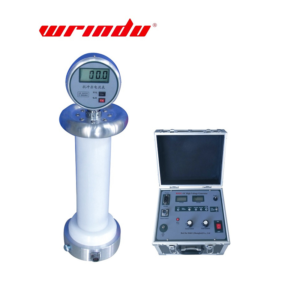
Click the picture to know more about Wrindu DC Withstand Voltage Tester.
What Is DC Hipot Testing?
DC hipot testing applies a high direct current (DC) voltage to the test object to evaluate insulation resistance. The leakage current is measured and used to calculate insulation performance.
Key points of DC hipot testing:
- Measures insulation resistance directly
- Uses high DC voltage
- Suitable for detecting small leakage currents
- Often used for new cables and equipment
However, because DC voltage can stress insulation unevenly, it may cause damage to older or weak insulation systems.
What Are the Advantages and Limitations of DC Hipot?
DC hipot testing has both benefits and drawbacks.
Advantages:
- High sensitivity to small leakage currents
- Effective for long cable systems
- Simple measurement of insulation resistance
Limitations:
- Can damage aged or weak insulation
- Higher risk of flashover in some cases
- Not suitable for all equipment types
Because of these risks, DC hipot is mainly recommended for new installations or controlled testing environments.
What Is AC Hipot Testing?
AC hipot testing uses a high alternating current (AC) voltage applied to the equipment under test. The leakage current is then measured to evaluate insulation quality.
Unlike DC testing, AC hipot reflects real operating conditions more accurately because most power systems use AC.
Why Does AC Hipot Show Higher Leakage Current?
In AC hipot testing, cables behave like capacitors. This means:
- AC current flows more easily through capacitive systems
- Leakage current readings are naturally higher
- More power is required during testing
Even though the applied voltage is usually lower than DC hipot, AC hipot provides a more realistic insulation performance evaluation.
What Are the Advantages and Limitations of AC Hipot?
Advantages:
- Simulates real operating conditions
- Better for evaluating system behavior under AC power
- Safer for aging insulation in many cases
Limitations:
- Higher leakage current readings may be harder to interpret
- Requires more power supply capacity
- Less sensitive to very small insulation defects compared to DC
What Is the Key Difference Between AC and DC Hipot?
The main differences can be summarized as follows:
| Feature | DC Hipot | AC Hipot |
|---|---|---|
| Voltage type | Direct current | Alternating current |
| Leakage current | Lower | Higher (capacitive effect) |
| Stress on insulation | Higher risk for old cables | More realistic operating condition |
| Power requirement | Lower | Higher |
| Best use case | New cables/equipment | Installed systems and real-world testing |
When Should You Use DC Hipot vs AC Hipot?
Choosing between DC and AC hipot depends on the application:
- Use DC hipot for:
- New cable testing
- Insulation resistance measurement
- Laboratory diagnostics
- Use AC hipot for:
- Installed systems
- Real operating condition simulation
- Equipment verification under AC stress
Selecting the correct method ensures accurate and safe testing results.
How Wrindu Testers Stand Out
Wrindu provides advanced hipot testing equipment designed for both AC and DC applications. Compared with conventional testers, Wrindu solutions offer:
- Dual AC/DC hipot testing capability
- High-precision leakage current measurement
- Intelligent insulation fault detection
- Adjustable voltage control for different standards
- Strong safety protection systems for operators
- OEM customization for industrial applications
Wrindu testers are widely used in cable manufacturing, transformer testing, and power system maintenance, helping customers improve safety and testing accuracy.
Why Is Choosing the Right Hipot Test Important?
Using the wrong hipot method can lead to:
- Insulation damage
- False test results
- Misjudged equipment condition
- Increased maintenance costs
Proper selection ensures reliable diagnostics and protects valuable electrical assets.
FAQs (Q&A Format)
Q1: What is the main difference between AC and DC hipot testing?
A: DC hipot measures insulation resistance using direct voltage, while AC hipot evaluates insulation under alternating voltage conditions.
Q2: Is DC hipot testing safe for old cables?
A: Not always. DC hipot may damage aged insulation, so it should be used carefully.
Q3: Why does AC hipot show higher leakage current?
A: Because cables act like capacitors under AC voltage, allowing more current flow.
Q4: Which hipot test is more accurate for real-world conditions?
A: AC hipot is generally more representative of real operating environments.
Q5: Can both AC and DC hipot be used together?
A: Yes, many industries use both methods for comprehensive insulation testing.
Q6: Why choose Wrindu hipot testing equipment?
A: Wrindu provides reliable, precise, and customizable AC/DC hipot testers designed for industrial high-voltage applications.
Conclusion
AC and DC hipot testing both play important roles in insulation verification, but they serve different purposes. DC hipot is ideal for insulation resistance measurement, while AC hipot better simulates real operating conditions. With advanced dual-mode solutions from Wrindu, engineers can achieve safer, more accurate, and more efficient high-voltage testing.
