

Why Circuit Breakers Trip at Night or Under Specific Condition
Discover why circuit breakers trip at night, during rain, or under specific conditions. Learn about load changes, moisture effects, voltage fluctuations, and hidden electrical faults. Explore troubleshooting tips and Wrindu testing solutions for accurate diagnosis.
Circuit breakers are designed to protect electrical systems by automatically disconnecting power when abnormal conditions occur. However, many users notice a confusing situation: the breaker trips only at night, during rain, or under certain operating conditions.
This behavior is usually not random. It is often linked to load changes, environmental factors, or hidden electrical faults that become more noticeable at specific times.
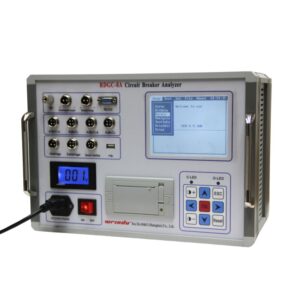
Click the image to know more about Circuit Breaker Comprehensive Tester.
Why Does a Circuit Breaker Trip More Often at Night?
Nighttime tripping is a common issue in residential and industrial systems. The cause is usually related to load variation or hidden faults that appear when system conditions change.
Possible Reasons:
- Sudden increase in appliance usage (air conditioners, heaters, chargers)
- Voltage fluctuations in the power grid
- Weak insulation becoming more sensitive under lower load conditions
- Moisture accumulation during cooler nighttime temperatures
What to Check:
- Compare daytime and nighttime load patterns
- Inspect high-power appliances
- Monitor voltage stability during peak hours
Why Does a Circuit Breaker Trip During Rainy Weather?
Rain and humidity can significantly affect electrical systems, especially outdoor or poorly sealed installations.
Common Causes:
- Water entering electrical panels or junction boxes
- Increased leakage current due to moisture
- Reduced insulation resistance in damp conditions
- Corrosion of terminals or connectors
What You Should Do:
- Inspect outdoor wiring and enclosures
- Improve waterproof sealing
- Dry affected electrical components
- Perform insulation resistance testing
Why Does a Breaker Trip When High-Power Devices Start?
Many electrical systems experience tripping when motors, compressors, or large equipment start.
Explanation:
These devices create a high inrush current during startup, which can temporarily exceed the breaker rating.
Typical Examples:
- Air conditioners
- Water pumps
- Industrial motors
- Refrigeration systems
Solutions:
- Use time-delay or motor-rated breakers
- Upgrade breaker capacity if necessary
- Separate high-load devices into different circuits
Why Does Temperature Affect Circuit Breaker Performance?
Temperature changes can influence both electrical resistance and breaker sensitivity.
High Temperature Effects:
- Increased conductor resistance
- Reduced breaker current tolerance
- Faster thermal tripping
Low Temperature Effects:
- Condensation forming inside panels
- Increased leakage current risk
- Material contraction affecting contacts
Why Does a Breaker Trip Only After Long Operation Time?
Delayed tripping often indicates thermal overload conditions.
Possible Causes:
- Continuous heavy load
- Poor heat dissipation in electrical panels
- Aging wiring or loose connections
- Accumulated heat in breaker contacts
What to Check:
- Measure long-term load current
- Inspect panel ventilation
- Check terminal tightness
Can Hidden Electrical Faults Cause Intermittent Tripping?
Yes. Some faults are not immediately visible but become active under certain conditions.
Examples Include:
- Aging insulation that breaks down under heat or humidity
- Intermittent ground faults
- Loose wiring connections that shift with vibration
- Partial short circuits inside equipment
These faults are often difficult to detect without proper testing.
How Can Electrical Testing Help Identify Hidden Problems?
Visual inspection alone is not enough for diagnosing intermittent breaker issues.
Key Diagnostic Tests:
- Insulation resistance testing
- Leakage current measurement
- Contact resistance testing
- Load monitoring over time
- Thermal imaging inspection
These tests help reveal problems that only appear under specific conditions.
How Wrindu Testers Stand Out
Wrindu provides professional electrical testing equipment designed to detect hidden faults and improve system reliability in real-world conditions.
Key Advantages:
- Accurate detection of intermittent faults
- Stable performance in field environments
- Fast and reliable measurement results
- Supports preventive maintenance strategies
- Easy operation for engineers and technicians
Wrindu solutions are widely used for:
- Circuit breaker fault diagnosis
- Insulation and leakage testing
- Power system condition monitoring
- Transformer and cable testing
- Electrical maintenance and troubleshooting
FAQs
Why does my breaker trip only at night?
It may be due to higher load usage, voltage fluctuations, or temperature-related insulation changes.
Can humidity really cause breaker tripping?
Yes. Moisture increases leakage current and reduces insulation resistance.
Why does the breaker trip when I turn on air conditioning?
Air conditioners have high startup current, which can overload the circuit momentarily.
Is intermittent tripping dangerous?
Yes. It often indicates hidden electrical faults that may worsen over time.
How do I find hidden electrical faults?
Electrical testing instruments are required to detect insulation, leakage, and load issues.
Can temperature changes affect breakers?
Yes. Both high and low temperatures can impact breaker performance and sensitivity.
Should I replace a breaker that trips occasionally?
Not immediately. First identify whether the issue is caused by load, wiring, or environmental conditions.
What is the best way to prevent random tripping?
Regular inspection, load balancing, and electrical testing are the most effective prevention methods.
