

Phasing Stick Application Scenarios & Usage Conditions: When to Use Them
Discover the 4 key phasing stick application scenarios, including dual power backup, post-maintenance checks, and more. Learn when to use a phasing stick & why Wrindu TAG8000 is ideal for electrical maintenance tasks.
What Is a Phasing Stick?
First, let’s clarify the phasing stick definition: it is a tool used in electrical systems to check if two power sources or circuits have the same phase and phase sequence, measuring the phase difference during real operation. The phasing stick advantages include being safe, accurate, easy to use, and portable—solving the drawbacks of traditional phasing methods (like bulky voltage transformers and error-prone electroscopes) in traditional phasing methods vs phasing stick comparisons. The phasing stick working principle is simple: it uses a clear meter display to show phase consistency—if the pointer is close to zero, the phases are the same; if it moves significantly, they are different.
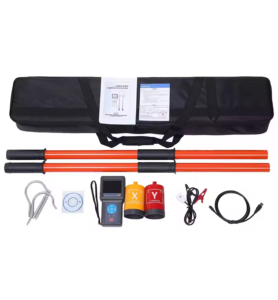
Click the image to know more about Wireless High Voltage Phase Detector.
When to Use a Phasing Stick: Core Application Premise
Phasing sticks are essential when using two or more power sources. The main goal is to check phase and phase sequence consistency to ensure electrical safety, avoid equipment damage, and prevent power failures. Below are the 4 key application scenarios for phasing sticks, tailored to the actual needs of electrical maintenance personnel.
Scenario 1: Dual Power Supplies as Backup or for Parallel Operation
This scenario applies when two power sources act as backups for each other, or when they need to run in parallel (e.g., standby generators and main power supplies). The core purpose of using a phasing stick here is to ensure the two power sources have the same phase and phase sequence before switching or paralleling. If phases do not match, paralleling them can damage equipment or cause power outages. The best time to use a phasing stick is before putting the backup or parallel system into operation.
Scenario 2: After Power System or Equipment Maintenance/Modification
Any maintenance or modification to power systems or equipment (such as line repairs, component replacements, or wiring adjustments) may change the phase sequence. Using a phasing stick after these tasks ensures the phase is consistent with the pre-maintenance state. This prevents phase mismatches from affecting user loads and ensures the safe and normal operation of the power system.
Scenario 3: After Phase-by-Phase Maintenance and Parallel Connection
Phase-by-phase maintenance is common for three-phase circuits—each phase is maintained separately. After maintenance is completed and the phases are ready to be connected in parallel, a phasing stick must be used. Its purpose is to confirm that all three phases have the same phase and phase sequence, avoiding problems caused by phase mismatches when the circuit is put back into use.
Scenario 4: After Maintenance That May Change Phase Sequence
Some maintenance operations are likely to change the phase sequence, such as adjusting equipment wiring, replacing control panels, or modifying circuit connections. In these cases, a phasing stick must be used again before putting the equipment into operation. This ensures the phase sequence is correct and prevents equipment malfunctions or damage caused by wrong phase sequence.
How Wrindu Testers Stand Out
When it comes to phasing sticks for all the above scenarios, Wrindu testers stand out as a reliable choice for electrical professionals. Wrindu’s TAG8000 Wireless High Voltage Phase Detector is designed to meet the needs of all 4 application scenarios, with an ultra-wide AC 10V–500kV voltage range that fits both low and high-voltage tasks. Its 260-meter wireless range allows flexible operation in large work sites like substations, while dual contact and non-contact phasing modes ensure safety and accuracy in different scenarios. The user-friendly design—including a 3.5-inch color screen, voice prompts, and advanced data management—simplifies operation and record-keeping, making it easy for maintenance personnel to use in all the scenarios mentioned above. Wrindu testers combine the key phasing stick advantages, ensuring safety, efficiency, and convenience for every phasing task.
