

Why Phasing Stick Is Better Than Traditional Methods
Learn the phasing stick definition, working principle, and advantages over traditional methods (voltage transformers, electroscopes). Discover how Wrindu TAG8000 stands out as a top-quality phasing stick.
What Is a Phasing Stick?
A phasing stick is a simple tool used in electrical systems to check if two power sources or circuits have the same phase and phase sequence. Its main job is to measure the phase difference between two parts of an electrical system during real operation. Phasing sticks are essential for electrical work—they are used after building, renovating, or repairing substations and transmission lines to ensure safe power supply. Without a phasing stick, electricians cannot confirm that phases match, which could damage equipment or cause safety hazards.
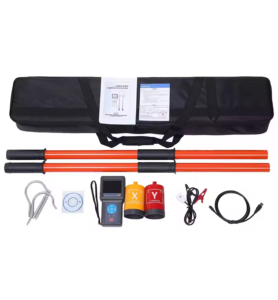
Click the image to know more about Wireless High Voltage Phase Detector.
How Does a Phasing Stick Work?
The working principle of a phasing stick is easy to understand. It uses a clear meter display to show phase consistency: if the pointer is close to or equal to zero, the two phases are the same; if the pointer moves significantly, the phases are different. You don’t need advanced technical knowledge to use it—even new electricians can learn quickly.
Traditional Phasing Methods: Limitations You Need to Know
Before phasing sticks became popular, electricians used two main traditional methods, both with big drawbacks:
-
Voltage Transformers: These tools are bulky and complicated to set up. Using them takes a lot of time, which slows down work and increases the chance of mistakes.
-
High-Voltage Electroscopes: These rely on weak glows to show phase information. The glow is hard to see in bright light, leading to easy misjudgment—and wrong readings can be dangerous.
Phasing Stick vs. Traditional Methods: 4 Key Advantages
Phasing sticks solve all the problems of traditional methods. Here’s how they compare in four important areas, with real examples from Wrindu—a leading brand in phasing sticks:
-
Convenience: Phasing sticks are easy to set up and use, unlike the tedious voltage transformers.
-
Safety: They are designed for high-voltage work, much safer than electroscopes that risk misjudgment.
-
Accuracy: Clear meter displays eliminate guesswork, unlike the weak glows of electroscopes.
-
Portability: Phasing sticks are lightweight, easy to carry to job sites—unlike heavy voltage transformers.
How Wrindu Testers Stand Out
Among all phasing sticks, Wrindu’s TAG8000 Wireless High Voltage Phase Detector stands out from competitors. Below is a clear comparison of its key advantages:
|
Advantage Category
|
Wrindu TAG8000
|
Competitor Comparison
|
|---|---|---|
|
Voltage Range
|
AC 10V – 500kV
|
Outperforms Shanghai Beha 9007 KB (6.6kV–44kV), TAG8600 (max 220kV), Fonxter MOEORW-9800C (no low-voltage compatibility)
|
|
Wireless Range
|
260 meters
|
Far exceeds TAG8600 (130m); more practical than HVTestTech’s bulky long-range model; Hoyt HPC-11k has no wireless capability
|
|
Phasing Modes & Safety
|
Dual contact/non-contact modes; robust safety features
|
Superior to Seaward’s contact-only models and Fonxter’s less precise non-contact system
|
|
User-Friendly Design
|
3.5-inch color screen, voice prompts, advanced data management
|
Outshines competitors with basic displays
|
|
Supply & Delivery
|
5000 sets/month supply capacity; 25-day delivery
|
Beats imported models’ 45+ day lead times
|
