

What Is Overcurrent and How Can It Improve Electrical System Safety and Efficiency
Learn what overcurrent is, its causes, types, and protection methods. Discover how fuses, circuit breakers, relays, and smart monitoring systems improve electrical safety, reliability, and power system efficiency.
Overcurrent is one of the most common electrical problems that can lead to equipment damage, system outages, and even electrical fires. Understanding what overcurrent is, why it happens, and how to control it is essential for keeping electrical systems safe and reliable. Whether in homes, factories, substations, or power grids, effective overcurrent protection plays a critical role in maintaining stable operations.
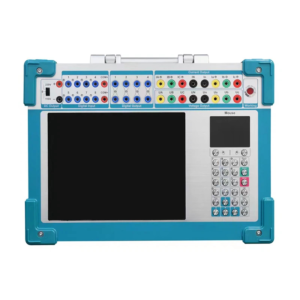
Click the picture to know more about relay protection testing equipment.
What Is Overcurrent in an Electrical System?
Overcurrent occurs when the electrical current flowing through a conductor exceeds its designed carrying capacity.
There are two main types of overcurrent:
- Overload Current – Happens when a circuit carries more current than it is designed for over a long period.
- Short-Circuit Current – Occurs when conductors at different voltage levels accidentally connect, causing a sudden surge of current.
Other conditions such as ground faults, arc faults, and equipment failures can also create overcurrent situations.
Excessive current generates heat, which can damage insulation, melt conductors, weaken electrical components, and increase the risk of fire. For this reason, overcurrent protection is one of the most important functions in electrical power systems.
What Causes Overcurrent in Electrical Circuits?
Several factors can cause overcurrent, including:
- Overloaded circuits
- Aging or damaged equipment
- Short circuits
- Poor installation practices
- Ground faults
- Electrical surges caused by lightning
- Switching operations
- Electromagnetic interference
Motor circuits often experience temporary high starting currents. Protection devices must distinguish between normal inrush current and actual fault conditions.
Engineers generally classify overcurrent into three categories:
- Continuous overloads
- Temporary fault currents
- Severe short-circuit faults
Each type requires different protection methods and response times.
How Do Overcurrent Protection Devices Work?
Modern electrical systems use multiple layers of protection to detect and interrupt dangerous currents before damage occurs.
Common overcurrent protection devices include:
| Device | Main Advantage | Typical Application | Current Rating |
|---|---|---|---|
| Fuse | Fast response and simple design | Residential circuits, small motors | Up to 600V |
| MCB (Miniature Circuit Breaker) | Reusable and easy reset | Lighting and household circuits | Up to 125A |
| MCCB (Molded Case Circuit Breaker) | Adjustable settings and higher capacity | Industrial systems and motor control | 100A–2500A |
| Protection Relay with Circuit Breaker | Accurate fault detection and selective protection | Substations and transmission systems | Up to 100kA |
These devices monitor current levels and disconnect faulty circuits before overheating or equipment damage occurs.
Why Are Protection Relays Important for Overcurrent Protection?
Modern protection relays use microprocessor technology to monitor:
- Current
- Voltage
- Phase angle
- Harmonics
- Waveform distortion
Advanced algorithms quickly identify abnormal conditions and locate faults with high accuracy.
Proper coordination between relays and circuit breakers ensures that only the faulted section is disconnected while the rest of the system continues operating normally.
How Do Smart Monitoring Systems Prevent Overcurrent Problems?
With the growth of smart grids and Industry 4.0, electrical systems are becoming more intelligent.
Modern monitoring solutions include:
- Smart sensors
- IoT-enabled circuit breakers
- Automated load balancing systems
- Cloud-based monitoring platforms
These technologies continuously track electrical parameters such as current, voltage, and temperature. They can identify abnormal trends early and help prevent failures before they occur.
Predictive maintenance also reduces downtime and improves overall system reliability.
How Is Wrindu Supporting Electrical Testing and Protection?
Wrindu (RuiDu Mechanical and Electrical (Shanghai) Co., Ltd.) is a global supplier of electrical testing and diagnostic equipment.
Established in 2014, Wrindu develops testing solutions for:
- Transformers
- Circuit breakers
- Surge arresters
- Power cables
- High-voltage electrical systems
Its equipment is used in more than 80 countries to help engineers verify system performance, improve protection reliability, and support preventive maintenance programs.
What Are the Latest Trends in the Overcurrent Protection Market?
According to industry research, the global overcurrent protection market is expected to exceed USD 12 billion by 2030.
Several factors are driving growth:
- Expansion of renewable energy projects
- Growth of data centers
- Smart manufacturing development
- Electric vehicle infrastructure
- Power grid modernization
Utilities and industrial companies are increasingly investing in:
- Solid-state circuit breakers
- Arc fault detection systems
- Intelligent protection relays
- IEC 61850 digital communication technologies
The Asia-Pacific region remains one of the fastest-growing markets due to major infrastructure investments in China, India, and Southeast Asia.
How Is Overcurrent Managed in Industrial and Power Distribution Systems?
Effective overcurrent management starts with proper system design.
Important practices include:
- Accurate load calculations
- Correct conductor sizing
- Proper equipment selection
- Protection coordination studies
- Routine maintenance and testing
In high-voltage systems, protection relays continuously compare current and voltage measurements. When a fault is detected, circuit breakers can operate within milliseconds to isolate the problem.
In industrial facilities, selective coordination helps minimize production interruptions by disconnecting only affected equipment.
Motor protection relays, overload relays, and thermistors are commonly used to protect motors from overheating and damage.
What Real Benefits Can Companies Gain from Better Overcurrent Protection?
Organizations that upgrade their protection systems often see measurable improvements.
Examples include:
- Reduced equipment failures
- Lower maintenance costs
- Improved energy efficiency
- Longer equipment lifespan
- Faster fault recovery
- Increased operational reliability
Digital monitoring and automatic fault recording also help maintenance teams identify root causes more quickly and prevent future problems.
What Is the Future of Overcurrent Protection?
The future of overcurrent protection is becoming more digital, intelligent, and predictive.
Emerging technologies include:
- Solid-state circuit breakers with microsecond response times
- Artificial intelligence for fault prediction
- Adaptive protection systems
- Smart microgrids
- Real-time cloud-based monitoring
As industries continue to electrify transportation, manufacturing, and infrastructure, advanced overcurrent protection will become even more important for ensuring safety, reliability, and energy efficiency.
FAQs About Overcurrent Protection
Q1: What is overcurrent and why is it dangerous?
A: Overcurrent happens when electrical current exceeds the rated capacity of a circuit. It can cause overheating, insulation failure, equipment damage, and electrical fires if not properly controlled.
Q2: What are the most common causes of overcurrent in electrical systems?
A: Common causes include overloaded circuits, short circuits, ground faults, equipment failures, lightning strikes, and improper electrical installations.
Q3: How do circuit breakers protect against overcurrent?
A: Circuit breakers monitor current flow and automatically disconnect the circuit when current exceeds safe limits, preventing damage to equipment and wiring.
Q4: What is the difference between overload current and short-circuit current?
A: Overload current develops gradually when equipment draws excessive current, while short-circuit current occurs suddenly when conductors make unintended contact and create a low-resistance path.
Q5: How do overcurrent relays detect electrical faults?
A: Overcurrent relays continuously measure electrical current. When the current exceeds a preset threshold, the relay sends a trip signal to the circuit breaker to isolate the fault.
Q6: Which overcurrent protection device is best for industrial applications?
A: MCCBs and protection relays are widely used in industrial systems because they provide adjustable settings, high current capacity, and accurate fault detection.
Q7: Can smart monitoring systems reduce overcurrent failures?
A: Yes. Smart monitoring systems use sensors, IoT technology, and data analytics to detect abnormal conditions early and help prevent equipment failures.
Q8: What electrical standards govern overcurrent protection?
A: Common standards include NEC Article 240, IEC 60947, UL standards, and IEC 61850 communication standards for modern protection systems.
Q9: How often should overcurrent protection devices be tested?
A: Testing frequency depends on system requirements, but utilities and industrial facilities typically perform regular inspections and maintenance to ensure reliable operation.
Q10: Why is overcurrent protection important for transformers and power systems?
A: Proper protection prevents transformer damage, reduces downtime, improves system reliability, and protects personnel and equipment from electrical hazards.
