

What is Transformer Oil and Why Does It Matter
Learn how transformer oil Tan Delta (DDF) testing evaluates insulation health. Discover BDV, resistivity, moisture impact, high-temperature testing methods, and how to detect oil contamination early to prevent transformer failures.
Think of transformer oil as the lifeblood of high-voltage electrical equipment. Found in transformers, circuit breakers, and switches, this specialized fluid serves two critical purposes: cooling and insulating.
While the oil itself blocks electrical currents, it also seeps into the transformer’s paper insulation, dramatically boosting its overall protective strength. Furthermore, it shields the internal components from oxygen, preventing harmful oxidation. Because it works under intense conditions, keeping this oil stable and clean is vital to preventing sudden power grid failures.
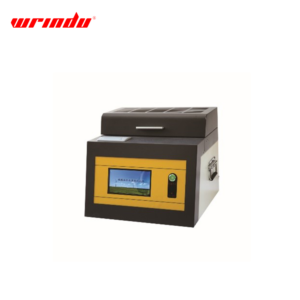
Click the image to know more about Wrindu BDV Tester.
How Do We Check the Health of the Oil?
Engineers use a variety of diagnostic puzzles to piece together the condition of a transformer. These tests look at the physical, chemical, and electrical traits of the fluid:
-
Visual Color: Checking for darkening, which indicates aging.
-
Moisture Content: Measuring water levels via specialized chemical testing.
-
Acidity & Interfacial Tension: Detecting chemical degradation and sludge buildup.
-
Dielectric Breakdown Voltage (BDV): Testing how much electrical stress the oil can take before it fails.
-
Tan Delta & Resistivity: Advanced electrical tests that find hidden impurities.
What Exactly is Oil Tan Delta?
Oil Tan Delta—also widely known as the Dielectric Dissipation Factor (DDF) or Power Factor—is a highly sensitive test used to judge oil quality.
In a perfect world, clean oil acts like a flawless capacitor. When you apply AC voltage, the electrical current shifts by a perfect 90 degrees, meaning energy is cleanly stored and released without losses. However, when impurities enter the mix, the oil’s natural resistance drops. This creates a leaking “resistive current.” The angle of this deviation is called the Loss Angle ($\delta$).
The Simple Rule: A Tan Delta of 0% means zero energy loss (perfect oil). As contamination increases, the percentage rises, signaling that the oil is deteriorating.
How Does Resistivity Help Us Spot Contamination?
While Tan Delta uses AC voltage, Resistivity is measured using DC voltage. It calculates how strongly the oil fights against the flow of a direct electrical current.
If the oil has low resistivity, it means electrical charges can move through it easily—which is bad news for an insulator. Together, a high Tan Delta and low resistivity point to the presence of polarized contaminants like moisture, stray particles, or microscopic fibers.
Why is Testing at High Temperatures Essential?
Testing oil at room temperature ($25^\circ\text{C}$) doesn’t always tell the whole story. Some aggressive contaminants remain hidden until the oil heats up. This is why standard guidelines recommend testing at both ambient temperature and a high temperature like $90^\circ\text{C}$ or $100^\circ\text{C}$.
Comparing these two results acts as a brilliant diagnostic tool:
-
High Tan Delta at room temp, but normal at high temp: This usually points to moisture, as the water evaporates and disperses with heat.
-
High Tan Delta at both temperatures: This points to chemical contamination or severe oil degradation.
What Triggers False Test Results?
Oil testing is highly sensitive, and even tiny external factors can ruin the data. Laboratories must carefully guard against:
-
Accidental contamination during oil sampling or handling.
-
Incomplete cleaning of the test equipment cells.
-
Leaving the oil samples exposed to sunlight for too long during storage.
International standards like IEC 60247, IEC 60422, and IEEE C57.106 provide precise boundary limits for new, in-service, and reclaimed oils to help engineers interpret their findings accurately.
FAQs
Q1: What happens if a transformer’s Tan Delta levels are ignored?
When Tan Delta levels rise, it means the oil is losing energy in the form of heat. This extra heat accelerates oil oxidation, creating more degradation, which in turn generates even more heat. This dangerous loop can eventually cause the transformer to overheat catastrophically or even explode under heavy loads.
Q2: Can an oil purification process fix a bad Tan Delta reading?
Yes. Tracking Tan Delta and resistivity is an excellent way to monitor the progress of oil purification or reclamation. It helps operators verify whether the filtration has successfully pulled out the polarized contaminants and restored the oil’s insulating properties.
Q3: Why do we need to short-circuit the test cells during a resistivity test?
Because resistivity tests apply a DC voltage, the oil and electrodes can become electrically polarized. Standard guidelines require short-circuiting the test cell for a specific amount of time between switching polarities (direct to reverse) and between different tests to clear out residual charges and ensure accurate data.
