

Transformer Condition Monitoring Using Partial Discharge Systems
Learn why transformer monitoring is important for power grids and how partial discharge (PD) systems improve reliability. Discover the difference between online and offline testing, the role of sensors, and how multi-channel PD systems enhance transformer diagnostics.
Why Is Transformer Monitoring Important for Power Grids?
Transformers are critical assets in power transmission systems.
Any insulation failure can lead to costly outages and system downtime.
That is why utilities use advanced monitoring systems like those from Power Diagnostix Systems GmbH.
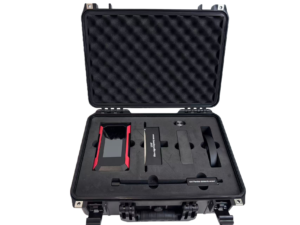
Click the picture to learn more about the Wrindu Handheld Partial Discharge Tester.
How Does Partial Discharge Help in Transformer Monitoring?
Partial discharge activity reflects insulation aging inside:
- Windings
- Bushings
- Tap changers
- Core insulation
Systems like the ICMmonitor continuously track PD patterns and provide alarm-based warnings.
What Makes Online Monitoring Different from Offline Testing?
Offline testing:
- Performed during maintenance shutdown
- High-voltage applied test
- Used for acceptance testing (FAT/SAT)
Online monitoring:
- Continuous operation monitoring
- No system shutdown required
- Detects real-time insulation degradation
How Does Multi-Channel PD Measurement Improve Accuracy?
Multi-channel systems allow simultaneous monitoring of multiple transformer points.
The ICMsystem Generation 5 supports up to 10 channels with:
- Parallel acquisition
- Pattern comparison
- Fast acceptance testing
What Role Do Sensors Play in Transformer Monitoring?
Sensors detect PD signals at different points:
- Coupling capacitors
- Current transformers
- Acoustic sensors
- UHF sensors
These inputs are processed to identify defect location and severity.
How does partial discharge monitoring work in transformers?
Partial discharge (PD) monitoring in transformers works by continuously detecting small electrical discharges that occur inside the insulation system. These discharges are usually caused by weak points such as voids, moisture, or insulation aging. Sensors are installed on key transformer parts like bushings or windings to capture these signals. The data is then analyzed to identify the severity and location of insulation defects. Modern systems can even track PD activity trends over time, helping engineers understand how the transformer condition is changing during operation.
What is the best system for transformer condition monitoring?
The best transformer condition monitoring systems are those that combine multiple diagnostic methods in one platform. Online PD monitoring systems are widely considered the most effective because they provide real-time insulation assessment. Advanced solutions such as multi-channel PD analyzers and integrated monitoring platforms from systems like Power Diagnostix Systems GmbH allow continuous tracking of transformer health. These systems can combine PD detection, spectrum analysis, and trend monitoring to give a complete view of insulation condition.
Why is online PD monitoring better than offline testing?
Online PD monitoring is better than offline testing because it works while the transformer is operating under real conditions. This means faults can be detected immediately without shutting down the system. Offline testing only provides a snapshot of the transformer condition during maintenance, while online monitoring provides continuous protection. It also helps detect early-stage defects that might not appear during short offline tests, improving reliability and reducing unexpected failures.
How do multi-channel PD systems improve transformer diagnostics?
Multi-channel PD systems improve diagnostics by allowing simultaneous monitoring of different points inside a transformer. Instead of measuring one location at a time, these systems collect data from multiple sensors in parallel. This helps identify where the discharge is coming from and how it spreads inside the insulation system. It also improves accuracy by comparing signals from different channels. As a result, engineers can diagnose problems faster and make more precise maintenance decisions.
FAQs
Why is transformer PD monitoring important?
It prevents unexpected failures and improves asset lifespan.
What is the difference between PD testing and monitoring?
Testing is periodic; monitoring is continuous.
Can PD monitoring detect early transformer faults?
Yes, it identifies insulation deterioration at an early stage.
