

FDS vs Traditional Tan Delta Test: Which Method Provides Better Transformer Insulation Diagnosis?
Compare Frequency Domain Dielectric Response (FDS) and traditional tan delta testing for transformer insulation diagnosis. Learn how Wrindu RDGYB-JD1000 provides advanced moisture, aging, and insulation condition analysis.
Power transformers are among the most valuable assets in electrical networks. Their insulation system directly determines operational safety and service life.
During long-term operation, transformer insulation can deteriorate because of:
- Thermal aging
- Moisture absorption
- Oil oxidation
- Electrical stress
- Environmental conditions
If insulation problems are not detected early, they may cause:
- Increased dielectric loss
- Partial discharge
- Insulation breakdown
- Unexpected transformer failure
For many years, tan delta testing has been one of the most common insulation diagnostic methods. However, with the development of advanced diagnostic technologies, Frequency Domain Dielectric Response (FDS) testing has become an increasingly important solution for transformer condition assessment.
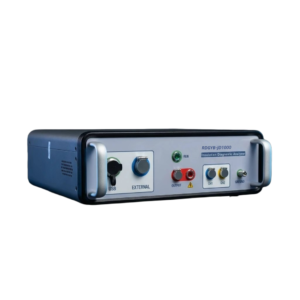
Click the image to know more about Wrindu Frequency Domain Dielectric Response Insulation Diagnostic Analyzer.
So, what is the difference between FDS and tan delta testing? Which method provides better insulation information?
What Is Traditional Tan Delta Testing?
How Does Tan Delta Testing Work?
Tan delta testing, also known as dielectric loss testing or power factor testing, measures the energy loss of insulation under an AC electrical field.
A higher tan delta value usually indicates:
- Increased insulation loss
- Moisture contamination
- Insulation aging
- Oil deterioration
The test result is normally measured at power frequency, such as:
- 50Hz
- 60Hz
Traditional tan delta testing provides an important indication of insulation condition.
What Are the Advantages of Tan Delta Testing?
Tan delta testing remains popular because it offers:
Simple Operation
The test procedure is relatively straightforward.
Fast Measurement
A single-frequency measurement can usually be completed quickly.
Wide Industry Acceptance
Tan delta testing is commonly used for:
- Transformers
- Bushings
- Cables
- Rotating machines
It is still an important routine maintenance test.
What Are the Limitations of Traditional Tan Delta Testing?
Can One Tan Delta Value Fully Represent Insulation Condition?
No.
A single tan delta value only represents insulation behavior at one frequency.
However, transformer insulation condition is affected by many factors:
- Moisture level
- Temperature
- Insulation material
- Aging degree
- Oil condition
Two transformers may have similar tan delta values but completely different internal insulation conditions.
Why Can Tan Delta Miss Early Insulation Problems?
Some insulation defects develop internally before they significantly affect the power frequency tan delta value.
Examples include:
- Early moisture accumulation
- Localized aging
- Uneven moisture distribution
Therefore, more advanced diagnostic methods are needed for detailed insulation evaluation.
What Is Frequency Domain Dielectric Response (FDS) Testing?
How Does FDS Technology Work?
Frequency Domain Dielectric Response (FDS), also known as Dielectric Frequency Response (DFR), measures insulation characteristics over a wide frequency range.
The analyzer applies AC voltage signals at different frequencies and measures:
- Capacitance
- Dielectric loss
- Power factor
- Frequency response curves
The results provide a complete insulation fingerprint.
The RDGYB-JD1000 integrates:
- Frequency Domain Dielectric Spectroscopy (FDS)
- Polarization/Depolarization Current (PDC)
to provide advanced insulation diagnosis.
Why Does FDS Provide More Information Than Tan Delta?
How Does Frequency Response Improve Insulation Diagnosis?
Different insulation problems affect different frequency ranges.
For example:
- Moisture mainly affects low-frequency response
- Aging changes polarization characteristics
- Oil conductivity influences dielectric loss behavior
By analyzing the complete frequency response curve, engineers can identify more detailed insulation conditions.
FDS can evaluate:
- Cellulose moisture content
- Oil conductivity
- Insulation aging
- Uneven moisture distribution
FDS vs Tan Delta: What Are the Main Differences?
| Comparison | Tan Delta Test | FDS Test |
|---|---|---|
| Measurement method | Single frequency | Multiple frequency analysis |
| Main output | One dielectric loss value | Complete dielectric response curve |
| Moisture evaluation | Limited | Quantitative analysis |
| Aging diagnosis | Basic indication | Detailed condition assessment |
| Insulation model analysis | Limited | Advanced software analysis |
| Fault identification | General | More detailed |
| Data interpretation | Manual experience required | Automatic analysis support |
Why Is FDS Better for Transformer Moisture Detection?
How Does Moisture Affect Transformer Insulation?
Transformer paper insulation absorbs moisture over time.
Moisture causes:
- Faster cellulose aging
- Lower mechanical strength
- Higher dielectric loss
- Reduced transformer reliability
Because moisture changes polarization characteristics, FDS can detect these changes through frequency response analysis.
The RDGYB-JD1000 uses advanced models to calculate insulation moisture content and evaluate insulation condition.
How Does FDS Evaluate Uneven Moisture Distribution?
Why Is Uneven Moisture a Hidden Risk?
Moisture is not always distributed evenly inside insulation.
Some areas may contain higher moisture levels because of:
- Local heating
- Oil circulation problems
- Insulation structure differences
This can create hidden weak points.
The RDGYB-JD1000 provides uneven moisture distribution analysis, especially for equipment with voltage grading foils, such as condenser bushings and instrument transformers.
How Does RDGYB-JD1000 Combine FDS and Tan Delta Testing Advantages?
The RDGYB-JD1000 is not designed to simply replace traditional testing methods.
Instead, it combines advanced dielectric response analysis with power frequency measurement capability.
The system provides:
- FDS testing
- PDC testing
- Power frequency tan delta results
- Automatic insulation analysis
This allows engineers to obtain both traditional parameters and deeper insulation condition information.
Why Choose Wrindu RDGYB-JD1000 Instead of Traditional Testing Equipment?
Does RDGYB-JD1000 Provide Better Testing Accuracy?
Yes.
The system offers:
- High accuracy capacitance measurement
- Reliable tan delta measurement
- Strong anti-interference capability
The best measurement accuracy can reach 0.02%, with good noise immunity for HV and EHV substations.
Can RDGYB-JD1000 Reduce Transformer Downtime?
Yes.
The analyzer uses multi-frequency measurement technology to improve testing efficiency.
Benefits include:
- Shorter testing period
- Reduced outage time
- Faster condition assessment
Is RDGYB-JD1000 Suitable for Field Applications?
Yes.
The compact design allows onsite testing in:
- Substations
- Transformer yards
- Power plants
- Industrial facilities
The system is portable and designed for practical field operation.
Which Test Method Should Utilities Choose: FDS or Tan Delta?
The answer depends on the diagnostic requirement.
For Routine Maintenance:
Tan delta testing remains useful for:
- Quick condition checks
- Regular inspection
- Basic insulation assessment
For Advanced Condition Diagnosis:
FDS is recommended when engineers need:
- Moisture evaluation
- Aging analysis
- Detailed insulation assessment
- Remaining life estimation
For modern transformer maintenance strategies, FDS provides more comprehensive information.
Why Is Frequency Domain Dielectric Response the Future of Transformer Testing?
Modern power systems require:
- Higher reliability
- Longer equipment lifespan
- Lower maintenance costs
Condition-based maintenance depends on accurate diagnostic data.
FDS technology supports this goal by providing:
- More detailed insulation information
- Better fault prediction
- More reliable maintenance decisions
Wrindu RDGYB-JD1000 helps utilities move from traditional testing toward intelligent insulation condition monitoring.
FAQs
What is the difference between FDS and tan delta testing?
Tan delta testing measures insulation loss at one frequency, while FDS analyzes dielectric behavior across multiple frequencies to provide deeper insulation information.
Is FDS better than tan delta testing?
FDS provides more detailed insulation diagnosis, especially for moisture and aging evaluation. However, tan delta remains useful for routine testing.
Can FDS replace tan delta testing?
FDS can provide tan delta information at different frequencies but is usually used as an advanced diagnostic method together with traditional tests.
Which test is better for transformer moisture detection?
Frequency Domain Dielectric Response testing is generally more effective because moisture significantly affects low-frequency dielectric behavior.
Why use Wrindu RDGYB-JD1000?
RDGYB-JD1000 combines FDS, PDC, and intelligent analysis software to provide accurate transformer insulation diagnosis with portable field operation.
