

CT Testing Standards and Best Practices for Substation Commissioning
Learn CT testing standards, commissioning steps, and best practices for verifying current transformer performance in substations and power systems.
Why Are CT Testing Standards Important?
Current transformers (CTs) provide current signals for protection relays, meters, and monitoring systems.
During substation commissioning, engineers need to confirm that CTs work according to the project requirements.
A proper CT testing process helps engineers verify:
- Correct installation
- Accurate measurement
- Reliable protection performance
- Long-term equipment operation
Following testing standards also helps different teams use the same evaluation method.
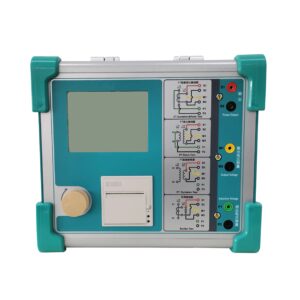
Click the image to know more about Wrindu CT and PT Analyzer.
What Should Engineers Check Before CT Testing?
Good preparation improves testing quality.
Before starting CT tests, engineers should review:
- CT nameplate information
- Wiring diagrams
- Protection requirements
- Manufacturer specifications
- Test equipment settings
Important CT information includes:
- Rated primary current
- Rated secondary current
- Accuracy class
- Rated burden
- Knee point voltage
- Serial number
Correct information helps engineers compare test results with the expected values.
What Are the Main Steps of CT Commissioning Tests?
A complete CT commissioning process usually includes several stages.
Visual Inspection Before Testing
Engineers should first check the physical condition of the CT.
The inspection includes:
- Terminal condition
- Cable connection
- Grounding connection
- Mechanical damage
- Nameplate information
Visual inspection helps identify installation problems before electrical testing.
Wiring Verification During CT Commissioning
Incorrect wiring can create inaccurate test results.
Engineers should confirm:
- Primary terminal connection
- Secondary terminal connection
- Polarity marking
- Cable identification
- Shorting link condition
Correct wiring is especially important for protection CT applications.
Electrical Performance Testing
After basic inspection, engineers perform electrical tests.
Common commissioning tests include:
- Ratio verification
- Polarity verification
- Excitation test
- Knee point test
- Secondary resistance test
- Burden measurement
Each test checks a different part of CT performance.
Which Standards Guide CT Testing?
Different regions and projects may use different standards.
Common references include:
- IEC standards
- IEEE standards
- National electrical standards
- Utility specifications
These standards define requirements for:
- Accuracy classes
- Protection performance
- Test methods
- Acceptance criteria
Engineers should always follow the standard required by the project.
How Does IEC 61869 Affect CT Testing?
What Is IEC 61869?
IEC 61869 defines requirements for instrument transformers, including current transformers.
It covers:
- Design requirements
- Accuracy performance
- Testing methods
- Classification requirements
Many international projects use IEC 61869 as a reference for CT evaluation.
Why Is Accuracy Class Important?
The accuracy class defines how much measurement error a CT can have under specified conditions.
Common CT classes include:
- Measurement classes
- Protection classes
Measurement CTs focus on accurate energy measurement.
Protection CTs focus on maintaining reliable signals during fault conditions.
What Are the Best Practices for CT Testing?
Record All Test Information
Complete records help engineers track CT condition over time.
A good test report should include:
- Equipment information
- Test date
- Environmental conditions
- Test results
- Engineer information
Historical records help maintenance teams compare performance changes.
Use the Correct Test Equipment
The test instrument should match the CT application.
A suitable CT analyzer should support:
- Required test functions
- Correct measurement range
- Necessary accuracy level
- Data storage capability
Using unsuitable equipment may lead to unreliable conclusions.
Keep Test Conditions Consistent
Test conditions affect measurement results.
Engineers should consider:
- Temperature
- Test frequency
- Connection method
- Cable length
Keeping conditions consistent improves result comparison.
Verify Results Before Equipment Energization
Before a substation enters operation, engineers should review all CT test results.
They should confirm:
- Test values meet requirements
- No abnormal results appear
- Protection settings match CT characteristics
This final check helps reduce commissioning risks.
How Do Utilities Manage CT Testing During Maintenance?
CT testing does not only happen during commissioning.
Utilities also perform regular inspections during operation.
Maintenance testing helps detect:
- Aging problems
- Performance changes
- Connection issues
- Insulation concerns
Regular testing supports reliable power system operation.
How Can Digital CT Analyzers Improve Commissioning Work?
Traditional CT testing often requires multiple instruments and manual calculations.
A digital CT analyzer combines several functions into one system.
It can help engineers:
- Complete multiple CT tests
- Calculate results automatically
- Save test records
- Generate reports
For example, the Wrindu RDHG-E CT and PT Analyzer supports CT ratio testing, polarity testing, excitation testing, knee point testing, resistance measurement, and burden testing.
This makes commissioning work easier for field teams.
What Should a CT Test Report Include?
A professional CT test report usually contains:
Equipment Information
Including:
- CT model
- Manufacturer
- Ratio
- Accuracy class
- Serial number
Test Information
Including:
- Test method
- Test equipment
- Test date
- Environmental conditions
Test Results
Including:
- Measured values
- Acceptance judgment
- Abnormal findings
Complete reports provide useful references for future maintenance.
CT Testing Standards and Commissioning FAQs
When should engineers perform CT commissioning tests?
Engineers should test CTs before energization, after installation, and after major maintenance work.
Why is CT testing required before substation operation?
CT testing confirms that protection and measurement systems receive correct current signals.
Which CT tests are important during commissioning?
Common tests include ratio, polarity, excitation, knee point, resistance, and burden tests.
Do all CTs require the same testing procedure?
No. Testing requirements depend on CT type, application, protection needs, and project standards.
How can engineers improve CT testing efficiency?
Using a multifunction CT analyzer, preparing test data in advance, and following a standard workflow can improve efficiency.
What happens if CT testing does not meet the required standard?
Engineers should investigate the cause, repeat the test if necessary, and correct installation or equipment issues before operation.
