

Transformer Oil Testing: Methods, Standards, and Best Practices
Learn how transformer oil testing works, compare key test methods and standards, understand test results, and choose suitable oil testing equipment.
Transformer oil plays an important role in the safe operation of oil-filled transformers. It provides electrical insulation and helps remove heat from internal components. Over time, moisture, oxidation, particles, and other contaminants can reduce oil performance.
Transformer oil testing helps maintenance teams assess oil condition and identify possible problems before they lead to equipment failure. Different tests examine different properties, so no single test can provide a complete picture of oil quality.
This guide explains the main transformer oil testing methods, relevant standards, test results, common problems, and equipment selection considerations.
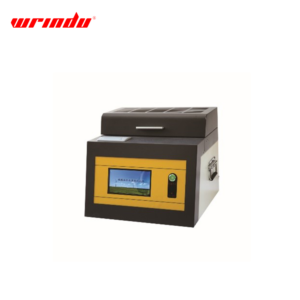
Click the image to know more about Wrindu Oil BDV Tester.
Why Is Transformer Oil Testing Important?
Transformer oil is exposed to heat, electrical stress, oxygen, and contact with insulating materials. These conditions can gradually change its properties.
Regular testing helps maintenance teams:
- Evaluate the oil’s electrical insulation performance.
- Identify moisture and contamination.
- Monitor oxidation and oil aging.
- Detect changes that may require further investigation.
- Support decisions about oil filtration, regeneration, replacement, or additional transformer inspections.
Test results should be compared with the applicable standards, oil specifications, equipment requirements, and historical measurements. A single result does not always indicate the overall condition of a transformer.
What Are the Main Transformer Oil Testing Methods?
Different tests measure different physical, chemical, and electrical properties.
| Test method | What it measures | Why it matters |
|---|---|---|
| Breakdown voltage (BDV) | Voltage at which the oil sample electrically breaks down under specified test conditions | Assesses dielectric breakdown performance |
| Water content | Amount of water in the oil, commonly measured in mg/kg or ppm by mass | Helps evaluate moisture contamination |
| Dissipation factor and resistivity | Electrical losses and resistance to current flow | Helps assess insulation quality and contamination |
| Acidity | Acid content, commonly reported as mg KOH/g | Helps monitor oxidation and oil aging |
| Interfacial tension | Tension at the oil-water interface | Can help identify deterioration and polar contaminants |
| Dissolved gas analysis (DGA) | Concentrations of gases dissolved in transformer oil | Helps investigate possible internal electrical or thermal faults |
| Visual inspection | Appearance, color, haze, and visible particles | Provides an initial indication of oil condition |
These methods complement one another. For example, BDV testing may reveal poor breakdown performance, while water content testing can help investigate whether moisture contributes to the problem. DGA serves a different purpose by examining gases that may indicate faults inside the transformer.
What Is Transformer Oil BDV Testing?
Transformer oil breakdown voltage testing measures the electrical voltage at which an oil sample breaks down between two electrodes under defined conditions.
The test cell contains a specified volume of oil. The electrodes are arranged according to the selected standard, and the tester applies an increasing AC voltage. When an electrical breakdown occurs, the instrument records the breakdown voltage.
The result is usually reported in kilovolts (kV).
A higher breakdown voltage generally indicates better resistance to electrical breakdown under the particular test conditions. However, the result does not prove that the oil is free from moisture, aging products, or other problems.
Which Standards Are Used for Oil BDV Testing?
ASTM D1816, ASTM D877, and IEC 60156 are established methods for measuring the breakdown voltage of insulating liquids.
They differ in electrode design, electrode spacing, and testing procedures. Results obtained under different methods should not be compared directly without considering these differences.
ASTM D1816 uses VDE-type electrodes and specifies test conditions for insulating liquids. ASTM D877 uses a different electrode arrangement. IEC 60156 is another widely used method for measuring breakdown voltage at power frequency.
The appropriate method depends on the applicable specification, the oil type, the equipment owner’s requirements, and the purpose of the test.
How Is Transformer Oil BDV Testing Performed?
A reliable result depends on more than the tester itself. Sample collection, handling, test-cell condition, and operating procedure all matter.
Step 1: Collect a Representative Oil Sample
Use a clean, dry sampling container and follow the applicable sampling procedure. Avoid introducing water, dust, fibers, or air bubbles. Clearly identify the transformer, sampling point, date, and other relevant information.
Step 2: Prepare the Test Cell
Clean and inspect the test cell and electrodes. Set the electrode spacing according to the selected standard. Do not use an assumed spacing from another test method.
Step 3: Fill the Cell Carefully
Pour the sample into the test cell without creating unnecessary bubbles. Follow the standard’s requirements for sample conditioning and settling time.
Step 4: Apply the Test Voltage
Set the tester according to the selected method. The instrument increases the voltage under the specified conditions until breakdown occurs.
Step 5: Record and Repeat the Measurements
Record each breakdown value and follow the standard’s requirements for the number of breakdowns and calculation of the reported result. Do not select only the highest reading.
Step 6: Interpret the Result
Compare the result with the applicable acceptance criteria or maintenance guidance. If the result is unusual, review sample handling, electrode condition, test settings, and related oil test results before deciding on corrective action.
What Factors Can Affect Transformer Oil BDV Test Results?
Several factors can change the measured breakdown voltage or increase variation between tests.
Moisture: Water can reduce dielectric strength, particularly when its distribution and physical state favor electrical breakdown.
Particles: Conductive or fibrous contaminants can disturb the electric field between the electrodes.
Air bubbles: Bubbles may create local field conditions that differ from those in the surrounding liquid.
Electrode condition: Dirty, damaged, or incorrectly positioned electrodes can make results less reliable.
Sample handling: Contamination during collection, transportation, or filling can change the condition of the sample.
Testing procedure: Incorrect electrode spacing, inconsistent settling time, or deviations from the prescribed voltage application can affect comparability.
Equipment condition: Poor electrical connections, incorrect settings, or measurement faults may produce unreliable readings.
Mechanical vibration or accidental impact may also disturb the test setup. However, such disturbances should not automatically be described as permanent changes to the oil’s dielectric properties. Investigate the actual cause before drawing conclusions.
How Should Engineers Interpret Oil BDV Test Results?
The interpretation depends on the test method, oil type, transformer application, and applicable acceptance criteria.
A low BDV result may be associated with moisture, particles, bubbles, or other unfavorable sample conditions. It does not identify the cause on its own.
If a result is below the required limit, engineers should consider:
- Rechecking the sample and test-cell preparation.
- Reviewing individual breakdown values for unusual variation.
- Testing moisture content and other relevant oil properties.
- Comparing results with previous measurements.
- Following the transformer owner’s maintenance procedure and the applicable standard.
If results vary significantly between repeated tests, check whether the variation comes from sample condition, test procedure, electrode condition, or equipment operation.
How Often Should Transformer Oil Be Tested?
There is no single testing interval suitable for every transformer. The schedule depends on transformer importance, operating conditions, oil history, age, loading, maintenance requirements, and previous test results.
A maintenance program may include routine oil testing, additional tests after an abnormal event, and follow-up tests when results show a significant change.
For critical transformers, maintenance teams may use trend analysis to identify changes over time. A sudden change in BDV, moisture, acidity, or dissolved gas concentrations may justify further investigation.
Always follow the asset owner’s maintenance program and applicable industry guidance rather than applying one universal interval to all transformers.
How Can Engineers Choose Transformer Oil Testing Equipment?
Equipment selection should begin with the test methods and parameters required by the laboratory or maintenance team.
Consider the following factors:
| Selection factor | What to check |
|---|---|
| Applicable standards | Confirm support for the required method, such as ASTM D1816, ASTM D877, or IEC 60156 |
| Voltage range | Ensure the instrument covers the maximum voltage required by the application |
| Electrode system | Check electrode type, spacing options, and compatibility with the chosen method |
| Voltage control | Review voltage ramp control and breakdown detection |
| Test automation | Check whether automatic testing, repeat measurements, and result calculation are available |
| Data management | Confirm record storage, export options, and report functions if required |
| Maintenance and support | Check calibration arrangements, technical support, spare parts, and warranty terms |
A tester with a higher maximum voltage is not automatically the best choice. Standard compatibility, measurement performance, operating procedure, and after-sales support are also important.
For applications requiring high-voltage oil breakdown testing, engineers can evaluate the Wrindu RDJJD-100kV Oil BDV Tester against their specific requirements. Confirm the model’s supported standards, electrode configuration, measurement functions, and documentation before purchase.
What Common Problems Occur During Oil BDV Testing?
Several issues can reduce repeatability or lead to incorrect conclusions.
| Observed problem | Possible cause | Recommended check |
|---|---|---|
| Large differences between repeated readings | Bubbles, particles, sample variation, or inconsistent procedures | Review sample handling and repeat the test correctly |
| Unexpectedly low BDV | Moisture, contamination, bubbles, or unsuitable test conditions | Check the sample and related oil properties |
| Unstable test operation | Equipment faults, electrical interference, or incorrect setup | Inspect the instrument, connections, and operating conditions |
| Results differ between laboratories | Different standards, electrode arrangements, sampling, or procedures | Confirm that the methods and conditions are comparable |
| Sudden change from historical results | Actual oil condition change or a testing inconsistency | Verify the result and investigate the trend |
A result should not be rejected simply because it differs from expectations. The correct approach is to identify whether the difference reflects a genuine change in oil condition or an issue with measurement.
How Does Wrindu Support Transformer Oil Testing?
Wrindu supplies electrical testing equipment for power equipment inspection and maintenance. For transformer oil testing applications, buyers should select equipment based on the required test method, voltage range, sample throughput, reporting needs, and service requirements.
The RDJJD-100kV Oil BDV Tester is a model to evaluate for oil breakdown voltage testing. Before placing an order, confirm the product configuration and compatibility with the applicable test standard.
For application-specific recommendations, contact Wrindu with your required standard, oil type, voltage range, and testing volume.
Conclusion
Transformer oil testing helps maintenance teams evaluate insulation performance, monitor oil deterioration, and investigate possible transformer problems. BDV testing is an important part of this process, but it should be combined with other relevant tests when a broader assessment of oil condition is needed.
Reliable results require representative samples, clean electrodes, correct test settings, suitable equipment, and consistent procedures. By following the applicable standards and reviewing trends over time, engineers can make better-informed maintenance decisions and select testing equipment that meets their operational requirements.
