

What Is a Cable Fault Surge Generator and How Does It Work?
Learn how a cable fault surge generator applies high-voltage impulses, supports high-resistance fault testing, and works with pinpointing equipment.
A cable fault surge generator is used in underground cable fault testing to apply high-voltage impulses to a cable. It is commonly used when a cable fault cannot be clearly detected with low-voltage testing. Under suitable conditions, the applied voltage can cause a discharge at the damaged insulation point. Technicians can then analyze the resulting signals to estimate the fault distance and locate the fault above ground. A surge generator is often used together with a cable fault pre-locator and an acoustic-magnetic locator.
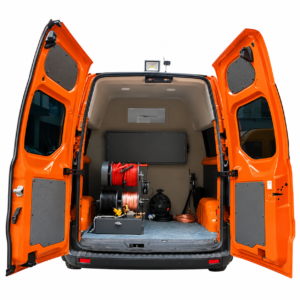
Click the image to know more about Wrindu RDCD-C Vehicle-Mounted Cable Fault Testing System.
What Is a Cable Fault Surge Generator?
A cable fault surge generator is a high-voltage testing instrument that produces voltage impulses for cable fault location. It applies controlled high-voltage pulses to a cable under test. When the voltage reaches the breakdown level of a suitable insulation fault, a discharge may occur at the fault point. This discharge can produce electrical, acoustic, and electromagnetic signals. The signals help technicians perform further fault location work. A surge generator does not independently identify the exact physical position of every cable fault. It is usually part of a complete testing process.
How Does a Cable Fault Surge Generator Work?
The basic working process involves applying a high-voltage impulse and observing the cable response.
The testing process generally includes:
- Connect the high-voltage testing equipment to the cable according to the test procedure.
- Check the cable condition and testing requirements.
- Apply a suitable high-voltage impulse.
- Allow a discharge to occur if the fault condition permits.
- Analyze the resulting waveform or discharge signals.
- Use a suitable pinpointing instrument to narrow down the fault position.
The applied voltage and impulse energy must match the cable and testing requirements. A higher output voltage or energy is not automatically better. Incorrect settings may place unnecessary stress on the cable.
Which Cable Faults May Require a Surge Generator?
A surge generator is mainly used for suitable faults that cannot be clearly identified through low-voltage testing.
| Fault Type | Possible Testing Method |
|---|---|
| Open-circuit fault | TDR testing |
| Low-resistance fault | TDR or another suitable low-voltage method |
| High-resistance fault | High-voltage testing may be required |
| Intermittent fault | A suitable testing method based on the fault condition |
| Flashover fault | High-voltage testing and suitable fault location methods |
The correct method depends on the electrical characteristics of the fault. Not every high-resistance fault can be located simply by applying a surge. Technicians must select the testing method according to the cable condition and equipment specifications.
What Is the Difference Between a Surge Generator and a TDR Tester?
A surge generator and a TDR tester perform different tasks.
| Comparison | TDR Cable Fault Tester | High-Voltage Surge Generator |
|---|---|---|
| Main Function | Estimates fault distance using reflected pulses | Applies high-voltage impulses |
| Test Signal | Low-voltage pulse | High-voltage impulse |
| Typical Application | Cable length measurement and suitable fault pre-location | Suitable high-resistance and discharge faults |
| Fault Detection | Analyzes reflected waveforms | Supports discharge-based fault testing |
| Testing Role | Pre-location | High-voltage testing and discharge triggering |
TDR testing is often used first because it can identify many faults without high-voltage testing. If the waveform does not show a clear fault, technicians may consider a suitable high-voltage method.
Why Is a Surge Generator Used with an Acoustic-Magnetic Locator?
A surge generator can produce a discharge at a suitable cable fault point. This discharge may generate an acoustic signal and an electromagnetic signal. An acoustic-magnetic locator detects these signals above ground.
The two instruments have different roles:
- Surge generator: Applies high-voltage impulses and helps trigger discharge.
- Acoustic-magnetic locator: Detects discharge signals and helps pinpoint the fault position.
Technicians move along the suspected cable route and compare the detected signals to narrow down the location. This method is useful when the fault produces detectable discharge signals.
What Should You Consider When Selecting a Cable Fault Surge Generator?
The equipment should match the cable and the actual testing requirements.
| Selection Factor | What to Check |
|---|---|
| Cable voltage level | Whether the equipment is suitable for the cable under test |
| Output voltage | Whether the voltage range meets the testing requirements |
| Impulse energy | Whether the output energy is suitable for the fault type |
| Operating mode | Whether the equipment supports the required testing method |
| Safety protection | Grounding, discharge, and operating protection arrangements |
| Accessories | High-voltage cables, connection leads, and grounding accessories |
| Portability | Whether the equipment suits the field testing environment |
Do not select a surge generator based only on its maximum output voltage. The cable condition, fault type, and testing procedure are also important.
What Safety Precautions Are Needed During High-Voltage Cable Testing?
High-voltage cable testing requires trained personnel and proper safety procedures.
Before testing, technicians should:
- Identify the cable under test.
- Disconnect and isolate the cable from the power supply.
- Check the cable and test connections.
- Establish a safe working area.
- Follow the equipment operating instructions.
- Use the specified grounding and discharge procedures.
- Confirm that the cable has been safely discharged before handling it.
High-voltage testing should only be performed by qualified personnel using suitable equipment and approved procedures.
Frequently Asked Questions About Cable Fault Surge Generators
Is a surge generator always needed for underground cable fault location?
No. Many cable faults can be detected through low-voltage testing. A surge generator is used when the fault condition requires a high-voltage testing method.
Can a surge generator locate the exact fault position?
It can help trigger a discharge at a suitable fault point, but it does not normally provide the exact ground position by itself. An acoustic-magnetic locator may be used for pinpointing.
Does a higher surge voltage always improve fault location?
No. The output voltage and impulse energy must match the cable and testing requirements. Excessive output may place unnecessary stress on the cable.
What equipment is used with a cable fault surge generator?
A typical setup may include a cable fault pre-locator, a high-voltage surge generator, and an acoustic-magnetic locator. A cable path detector may also be used to identify the cable route.
Can a surge generator test every type of cable?
The equipment must match the cable and test requirements. Its suitability depends on the cable construction, voltage level, fault type, and instrument specifications.
About Wrindu Cable Fault Testing Equipment
Wrindu provides cable fault testing equipment for field testing and underground cable fault location.
The RDCD-C Vehicle-Mounted Cable Fault Testing System combines a high-voltage unit with cable fault pre-location, acoustic-magnetic pinpointing, and cable route detection equipment.
The system is installed inside a vehicle supplied by the customer. Contact Wrindu for available configurations, technical specifications, and installation guidance.
