

Common Problems in Shunt Generators: Causes and Solutions Explained
Learn the most common problems in shunt generators, including voltage drop, poor regulation, armature reaction, and how to solve them effectively.
A shunt generator is a type of self-excited DC generator where the field winding is connected in parallel with the armature. It is widely used because of its simple structure and relatively stable voltage output.
However, like any electrical machine, it has several common operational problems that can affect performance, efficiency, and reliability. This article explains these issues in a simple and practical way.
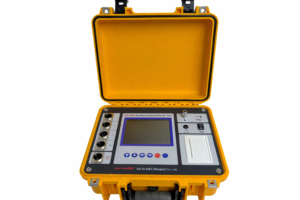
Click the image to know more about Three Phase Capacitance and Inductance Tester.
Why Do Shunt Generators Develop Problems?
Shunt generators rely on their own output voltage to energize the field winding. This means:
- Field current depends on terminal voltage
- Any voltage change affects excitation strength
- The system is sensitive to load and internal conditions
Because of this feedback relationship, small faults can quickly affect overall performance.
E \propto \Phi N
If magnetic flux (Φ) decreases, output voltage also drops.
Why Does Voltage Drop Occur in Shunt Generators?
Voltage drop is one of the most common issues.
Main causes include:
- Increase in load current
- Armature reaction effect
- Internal resistance losses
- Weak field current
When load increases:
- Terminal voltage decreases
- Field current also decreases
- Voltage drops further (feedback effect)
This makes shunt generators less stable under heavy load.
What Causes Poor Voltage Regulation?
Poor voltage regulation means the generator cannot maintain stable voltage.
Reasons:
- Field current depends on output voltage
- Magnetic flux is not independently controlled
- High sensitivity to load changes
Result:
- Voltage varies significantly from no-load to full-load
- Not suitable for precision applications
Why Does a Shunt Generator Fail to Build Voltage?
Sometimes a shunt generator fails to start voltage generation.
Common causes:
- Loss of residual magnetism
- Open field circuit
- Incorrect field resistance
- Wrong rotation direction
If field current cannot start, the generator will not self-excite.
What Is the Effect of Armature Reaction?
The armature reaction effect is another major issue.
What happens:
- Armature current creates its own magnetic field
- This distorts the main field flux
- Effective magnetic field weakens
Result:
- Reduced output voltage
- Poor commutation
- Increased sparking at brushes
Why Do Brushes Spark in Shunt Generators?
Brush sparking is a frequent maintenance issue.
Causes:
- Poor brush contact
- Dirty or worn commutator
- Incorrect brush alignment
- High load conditions
Effects:
- Energy loss
- Commutator damage
- Increased maintenance needs
Why Does Overheating Occur?
Overheating can damage insulation and reduce lifespan.
Causes:
- Excessive load
- High field current
- Poor ventilation
- Electrical losses in windings
Result:
- Reduced efficiency
- Risk of insulation failure
What Happens When Field Resistance Is Incorrect?
Field resistance plays a key role in excitation.
If resistance is too high:
- Field current becomes weak
- Voltage fails to build properly
If resistance is too low:
- Excessive field current
- Overheating and instability
Why Is Load Sensitivity a Problem?
Shunt generators are sensitive to load changes.
When load increases:
- Voltage drops
- Field strength weakens
- Output becomes unstable
This is why they are not ideal for rapidly changing or heavy loads.
How Can These Problems Be Reduced?
To improve performance:
1. Regular Maintenance
- Clean brushes and commutator
- Inspect wiring and connections
2. Proper Load Management
- Avoid sudden heavy loads
- Operate within rated capacity
3. Field Circuit Checks
- Ensure correct resistance
- Verify continuity
4. Use of Protective Devices
- Voltage regulators
- Overload protection systems
5. Routine Testing
Using professional generator testing equipment helps detect issues early, especially in:
- field winding
- insulation condition
- voltage regulation performance
Conclusion
Shunt generators are simple and cost-effective, but they have several common problems such as voltage drop, poor regulation, and sensitivity to load changes.
Most of these issues come from their key limitation: the field current depends on the DC generator’s own output voltage.
With proper maintenance, correct operation, and regular testing, these problems can be significantly reduced, ensuring stable and reliable performance.
