

CT Accuracy Class Explained: How to Choose the Right CT Performance Level
Learn what CT accuracy class means and understand the difference between Class 0.2, 0.5, 5P, and 10P for measurement and protection applications.
Why Does CT Accuracy Class Matter?
Current transformers (CTs) work as the connection between high-current power systems and measurement or protection devices.
However, every CT has a certain level of measurement tolerance.
CT accuracy class defines how much error the CT may have under specified operating conditions.
Choosing the correct accuracy class helps engineers ensure that:
- Energy meters receive reliable data
- Monitoring systems show correct values
- Protection devices receive suitable current signals
Therefore, CT accuracy class is an important factor in CT selection.
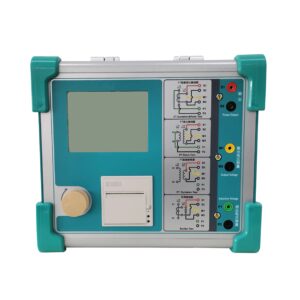
Click the image to know more about Wrindu CT and PT Analyzer.
What Does CT Accuracy Class Mean?
CT accuracy class describes the maximum allowed error of a current transformer.
The class indicates how closely the secondary current follows the actual primary current.
For example:
- A high-accuracy measurement CT provides more precise current values.
- A protection CT focuses on stable performance during fault conditions.
Different applications require different accuracy levels.
How Are CT Accuracy Classes Classified?
CT accuracy classes mainly include two categories:
- Measurement accuracy classes
- Protection accuracy classes
Each category has different performance goals.
What Are Measurement CT Accuracy Classes?
Measurement CTs support devices that need accurate current information during normal operation.
Common applications include:
- Energy meters
- Power meters
- Load monitoring systems
Typical measurement accuracy classes include:
- 0.1
- 0.2
- 0.5
- 1.0
A lower class number means better measurement accuracy.
For example:
A Class 0.2 CT provides higher accuracy than a Class 1.0 CT.
Why Do Energy Systems Use High-Accuracy Measurement CTs?
Power measurement systems often calculate:
- Energy consumption
- Power factor
- Electrical load
Small measurement errors can affect:
- Energy billing
- Power quality analysis
- System monitoring
Therefore, applications with strict measurement requirements usually choose higher accuracy classes.
What Are Protection CT Accuracy Classes?
Protection CTs work with protection relays during abnormal conditions.
They focus on:
- Fault current response
- Reliable relay operation
- Stable performance during high current conditions
Common protection classes include:
- 5P
- 10P
- PX
- PS
These classes describe CT performance during protection conditions.
What Does 5P and 10P Mean?
Protection classes use a different classification method from measurement CTs.
For example:
5P Class CT
A 5P CT allows a maximum composite error of 5% under rated protection conditions.
It is commonly used for:
- Overcurrent protection
- General protection applications
10P Class CT
A 10P CT allows a maximum composite error of 10%.
It is often suitable for applications where extremely high accuracy is not required.
What Is the Difference Between PX Class and Standard Protection Classes?
PX class CTs focus on special protection requirements.
Engineers usually consider:
- Knee point voltage
- Excitation characteristics
- Secondary resistance
PX CTs are commonly used in systems that require accurate fault current reproduction.
Examples include:
- Differential protection
- Generator protection
- Transformer protection
How Should Engineers Select CT Accuracy Class?
Engineers should select accuracy class based on the application.
Selecting CT Accuracy for Metering Applications
For metering systems, engineers should consider:
- Required measurement accuracy
- Meter requirements
- Operating current range
Higher accuracy classes are suitable when measurement precision is important.
Selecting CT Accuracy for Protection Applications
For protection systems, engineers should consider:
- Protection type
- Fault current level
- Relay requirements
- CT saturation performance
A protection CT does not always need the highest measurement accuracy.
Instead, it needs reliable performance during fault conditions.
What Happens If Engineers Choose the Wrong Accuracy Class?
Incorrect CT selection may create system problems.
Possible issues include:
- Incorrect measurement data
- Poor energy calculation
- Protection system performance problems
For example:
A measurement CT may not provide suitable performance for a protection application.
A protection CT designed for faults may not provide the required accuracy for energy measurement.
How Does CT Accuracy Class Affect System Design?
CT accuracy class influences:
- Equipment selection
- Protection settings
- Measurement reliability
- Maintenance planning
Therefore, engineers should consider CT requirements during the early design stage.
How Can Engineers Verify CT Accuracy Class Performance?
Engineers can confirm CT performance through professional testing equipment.
A CT analyzer can evaluate:
- Ratio accuracy
- Phase error
- Excitation characteristics
- Polarity
- Secondary parameters
Test results help engineers compare actual CT performance with design requirements.
CT Accuracy Class FAQs
What does CT accuracy class mean?
CT accuracy class shows the expected error level of a current transformer under specified conditions.
Is a lower CT accuracy class number better?
Yes. For measurement CTs, a lower class number usually means higher accuracy.
What is the difference between Class 0.2 and Class 1.0 CT?
Class 0.2 provides higher measurement accuracy than Class 1.0.
Are protection CT classes the same as measurement CT classes?
No. Protection CTs use classes such as 5P and 10P, while measurement CTs commonly use classes such as 0.2 and 0.5.
Which CT accuracy class is best for protection?
The suitable class depends on the protection application, relay requirements, and system design.
