

How to Select the Right CT for Metering and Protection Applications
Learn how to select the right current transformer for metering and protection applications, including CT ratio, burden, accuracy, and application requirements.
Why Is CT Selection Important?
Current transformers (CTs) connect high-current power systems with measurement and protection devices.
A suitable CT provides reliable current signals for the connected equipment.
However, different applications have different requirements.
For example:
- Metering systems need accurate current measurement.
- Protection systems need reliable performance during abnormal conditions.
Therefore, engineers should select CTs according to the actual application.
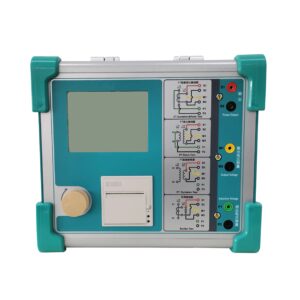
Click the image to know more about Wrindu CT and PT Analyzer.
What Factors Should Engineers Consider When Selecting a CT?
Engineers usually consider several factors before choosing a current transformer.
Important factors include:
- Application purpose
- Rated primary current
- Secondary current
- Accuracy requirement
- Burden requirement
- Installation condition
A correct selection helps the CT work properly throughout its service life.
How Does the Application Affect CT Selection?
The first step is identifying the CT purpose.
CT applications mainly include:
- Metering
- Protection
- Monitoring
Each application has different performance requirements.
How to Select a CT for Metering Applications?
Metering CTs provide current information for measurement equipment.
Common applications include:
- Energy meters
- Power meters
- Load monitoring systems
For these applications, engineers focus on measurement accuracy.
Important selection factors include:
- Accuracy level
- Rated current range
- Operating conditions
- Measurement requirements
A suitable metering CT helps ensure reliable energy measurement.
Why Do Metering Systems Need Accurate CTs?
Metering systems calculate electrical values based on current signals.
Small measurement errors may affect:
- Energy calculation
- Power monitoring
- Load analysis
Therefore, applications related to energy measurement usually require CTs with better accuracy performance.
How to Select a CT for Protection Applications?
Protection CTs provide current signals to protection relays.
Common applications include:
- Transformer protection
- Generator protection
- Busbar protection
- Overcurrent protection
Protection CT selection focuses on reliable performance during fault conditions.
What Should Engineers Consider for Protection CT Selection?
Engineers should evaluate:
- Protection function
- Fault current level
- Relay requirements
- CT performance requirements
A suitable protection CT should provide reliable signals when the power system experiences abnormal conditions.
How Does CT Ratio Influence Selection?
CT ratio determines the relationship between primary current and secondary current.
For example:
A 1000/5 A CT converts:
- 1000 A primary current
- Into 5 A secondary current
Engineers should select a ratio that matches:
- System load
- Equipment requirements
- Protection settings
An unsuitable ratio may affect measurement and protection performance.
How Does Secondary Current Affect CT Selection?
Common CT secondary outputs include:
- 1 A
- 5 A
The selection depends on the system design.
A 1 A secondary current can reduce cable losses in long-distance installations.
A 5 A secondary current is common in many traditional systems.
Engineers should select the secondary current based on the complete circuit design.
How Does CT Burden Influence Selection?
CT burden represents the total load connected to the secondary circuit.
The burden includes:
- Relay input
- Meter input
- Cable resistance
- Connection resistance
A CT should support the expected burden.
If the burden exceeds the CT rating, performance may decrease.
Therefore, engineers should calculate the complete secondary circuit load before selection.
How Should Engineers Select CTs for Different Protection Systems?
Different protection systems have different requirements.
CT Selection for Transformer Protection
Transformer protection often uses CTs for:
- Differential protection
- Overcurrent protection
- Earth fault protection
Engineers should consider:
- Fault current level
- Relay requirements
- CT matching
CT Selection for Generator Protection
Generators require reliable current information during operating changes and faults.
Engineers should evaluate:
- Generator rated current
- Protection scheme
- Fault conditions
A suitable CT helps protection systems respond correctly.
CT Selection for Busbar Protection
Busbar protection compares current signals from multiple CTs.
Engineers should consider:
- CT consistency
- Protection requirements
- System configuration
Correct CT selection helps improve protection reliability.
What Common CT Selection Mistakes Should Engineers Avoid?
Incorrect selection may create performance problems.
Common mistakes include:
- Choosing CTs only by current ratio
- Ignoring burden requirements
- Using measurement CTs for protection applications
- Selecting unsuitable accuracy performance
Engineers should evaluate the complete application before making a decision.
How Can Engineers Confirm CT Selection Before Installation?
Before installation, engineers should review:
- Technical specifications
- Protection requirements
- System design documents
- Manufacturer information
A complete review helps avoid problems after commissioning.
Why Should CT Selection Consider Future Expansion?
Power systems may change after installation.
Future changes may include:
- Additional loads
- New protection devices
- System upgrades
Engineers should consider possible future requirements when selecting CTs.
This approach helps reduce replacement costs and improves long-term system flexibility.
CT Selection FAQs
How do I choose the correct CT ratio?
Engineers should select the CT ratio based on system current, equipment requirements, and application conditions.
What is the difference between metering CT and protection CT?
Metering CTs focus on measurement accuracy, while protection CTs focus on reliable fault signal performance.
Can one CT be used for both metering and protection?
Some CTs may support multiple functions, but engineers should confirm that the performance requirements match both applications.
Why is CT burden important during selection?
CT burden affects the secondary circuit performance. Engineers should ensure the selected CT can support the connected load.
What information is needed before selecting a CT?
Engineers should review primary current, secondary current, application type, accuracy requirements, and installation conditions.
