

FDS vs PDC: Which Insulation Diagnostic Technology Is More Useful for Transformer Condition Assessment?
Compare Frequency Domain Spectroscopy (FDS) and Polarization Depolarization Current (PDC) testing for transformer insulation diagnosis. Learn how combined dielectric response analysis improves condition assessment.
Why Are FDS and PDC Important for Transformer Insulation Diagnosis?
Power transformers are designed for long-term operation, but their insulation systems gradually deteriorate due to:
- Moisture absorption
- Thermal aging
- Oil degradation
- Electrical stress
- Long operating periods
Detecting insulation degradation before failure is one of the most important tasks in transformer maintenance.
Traditional methods such as insulation resistance testing and tan delta measurement provide useful information. However, they may not fully reveal complex insulation conditions.
Two advanced dielectric diagnostic technologies are widely used today:
- Frequency Domain Spectroscopy (FDS)
- Polarization Depolarization Current (PDC)
Both methods analyze insulation polarization behavior, but they work from different perspectives.
The RDGYB-JD1000 Frequency Domain Dielectric Response Insulation Diagnostic Analyzer combines both FDS and PDC technologies to provide comprehensive transformer insulation evaluation.
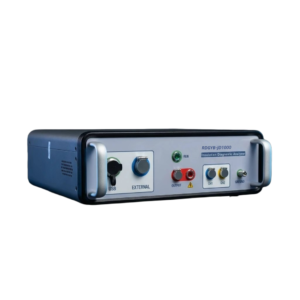
Click the image to know more about Wrindu Frequency Domain Dielectric Response Insulation Diagnostic Analyzer.
What Is Frequency Domain Spectroscopy (FDS) Testing?
How Does FDS Analyze Transformer Insulation?
Frequency Domain Spectroscopy is a dielectric response measurement method that evaluates insulation characteristics at different frequencies.
During FDS testing:
- AC voltage is applied to the insulation system.
- Current response is measured.
- Dielectric parameters are calculated.
- Results are analyzed across a frequency range.
The main measured parameters include:
- Capacitance
- Dielectric loss (tan δ)
- Frequency-dependent insulation response
Unlike traditional tests that provide only one value, FDS creates a complete dielectric response curve.
This curve helps engineers understand insulation behavior under different electrical conditions.
The RDGYB-JD1000 supports a frequency range from 0.1 mHz to 10 kHz, enabling detailed insulation analysis.
What Is Polarization Depolarization Current (PDC) Testing?
How Does PDC Evaluate Transformer Insulation?
PDC is a time-domain dielectric response method.
During PDC testing:
- A DC voltage is applied to insulation.
- Polarization current is measured over time.
- The voltage is removed.
- Depolarization current is recorded.
The current response reveals information about:
- Insulation polarization characteristics
- Moisture condition
- Conductive losses
- Aging effects
Because polarization processes occur over time, PDC provides valuable information about slow insulation behavior.
What Are the Main Differences Between FDS and PDC?
How Do FDS and PDC Analyze Insulation From Different Perspectives?
Although both technologies study dielectric response, their approaches are different.
| Comparison | FDS | PDC |
|---|---|---|
| Measurement domain | Frequency domain | Time domain |
| Applied signal | AC voltage | DC voltage |
| Main output | Dielectric response curve | Polarization/depolarization current curve |
| Sensitive to | Frequency-dependent losses | Time-dependent polarization |
| Main application | Moisture and insulation condition analysis | Polarization behavior analysis |
| Data interpretation | Frequency models | Time models |
FDS and PDC are not competing technologies. They provide complementary information.
Why Does Frequency Domain Analysis Help Transformer Diagnosis?
What Advantages Does FDS Provide Compared With PDC?
FDS has several important advantages.
1. Wide Frequency Information
Different insulation problems appear at different frequencies.
FDS can analyze:
- Very low frequency behavior
- Medium-frequency dielectric loss
- High-frequency characteristics
2. Moisture Assessment
Moisture strongly affects low-frequency dielectric response.
FDS can estimate:
- Cellulose moisture content
- Insulation condition
- Oil conductivity
3. Better Visualization
The dielectric response curve provides an intuitive view of insulation behavior.
Engineers can compare:
- Different transformers
- Different phases
- Historical test results
Why Is PDC Still Useful for Transformer Insulation Testing?
What Information Can PDC Provide That FDS Cannot Easily Replace?
PDC provides valuable time-domain information.
It can show:
- Polarization speed
- Depolarization characteristics
- Insulation absorption behavior
This information helps evaluate:
- Moisture influence
- Aging condition
- Insulation recovery behavior
PDC is especially useful when engineers need to understand how insulation responds over time after voltage application.
Why Does Combining FDS and PDC Provide Better Diagnosis?
Can One Diagnostic Method Fully Describe Transformer Insulation Condition?
Transformer insulation is a complex system.
Different defects affect insulation in different ways.
For example:
- Moisture changes slow polarization behavior.
- Aging changes dielectric loss characteristics.
- Oil degradation affects conductivity.
- Structural differences influence frequency response.
Using only one method may provide incomplete information.
Combining FDS and PDC allows engineers to analyze:
Frequency Characteristics
From FDS:
- Dielectric loss changes
- Frequency response patterns
- Moisture-related behavior
Time Characteristics
From PDC:
- Polarization process
- Absorption behavior
- Depolarization response
The RDGYB-JD1000 integrates both FDS and PDC technologies to improve insulation diagnosis capability.
How Does FDS and PDC Help Detect Transformer Moisture?
Why Is Moisture Analysis a Key Application of Dielectric Response Testing?
Moisture is one of the main causes of transformer insulation aging.
However, moisture distribution inside transformers is complex.
Water can exist in:
- Transformer oil
- Paper insulation
- Pressboard materials
FDS and PDC analyze polarization behavior affected by moisture.
The RDGYB-JD1000 software can evaluate:
- Cellulose moisture content
- Insulation liquid conductivity
- Uneven moisture distribution
This helps maintenance teams understand the real insulation condition.
How Does FDS and PDC Support Transformer Aging Assessment?
Can Dielectric Response Testing Detect Insulation Aging?
Yes.
As transformers age, insulation materials experience:
- Chemical degradation
- Mechanical weakening
- Increased conductivity
- Changed polarization characteristics
FDS identifies changes in dielectric response curves.
PDC identifies changes in polarization and recovery behavior.
Together, they provide a more complete picture of aging development.
Which Technology Is Better for Field Testing?
Is FDS or PDC More Suitable for Substation Applications?
The answer depends on the diagnostic goal.
FDS Is Suitable For:
- Moisture evaluation
- Oil-paper insulation diagnosis
- Bushing assessment
- Detailed condition analysis
PDC Is Suitable For:
- Polarization behavior study
- Time-domain insulation analysis
- Moisture-related investigation
For comprehensive field diagnosis, a system combining both technologies provides greater value.
The RDGYB-JD1000 is designed for field applications with portable structure, noise immunity, and integrated analysis software.
How Does Software Improve FDS and PDC Analysis?
Why Is Analysis Software Important for Dielectric Response Testing?
Modern dielectric response testing is not only about collecting data.
The key challenge is interpreting results correctly.
Advanced software provides:
- Automatic data analysis
- Insulation modeling
- Condition evaluation
- Test report generation
The RDGYB-JD1000 software includes:
- Project management
- Hook-up diagrams
- Real-time data display
- Automatic analysis results
The system can provide information such as:
- Insulation system geometry
- Cellulose moisture content
- Liquid conductivity
- Dielectric loss
- Uneven moisture distribution
What Factors Should Engineers Consider When Choosing FDS or PDC Equipment?
How Should Utilities Select a Dielectric Response Analyzer?
Before purchasing equipment, engineers should consider:
Measurement Range
A wider frequency range provides more diagnostic information.
Accuracy
High accuracy improves confidence in condition assessment.
Noise Resistance
Important for high-voltage substations.
Software Capability
Analysis functions are as important as measurement hardware.
Field Portability
Equipment should support practical maintenance work.
The RDGYB-JD1000 provides a portable solution with advanced diagnostic functions for transformer insulation evaluation.
What Does Field Testing Prove About Dielectric Response Technology?
Can FDS and PDC Provide Reliable Results in Real Substations?
Field application has demonstrated the practical value of dielectric response testing.
A 220kV transformer bushing comparison test evaluated:
- Capacitance
- Dielectric loss
- Cellulose moisture
- Oil condition
The results showed that dielectric response technology could effectively evaluate insulation condition in high-voltage equipment.
This demonstrates the importance of advanced dielectric analysis for modern transformer maintenance.
FAQs
What is the difference between FDS and PDC?
FDS analyzes insulation response in the frequency domain, while PDC analyzes polarization behavior in the time domain.
Which is better, FDS or PDC?
Neither method is universally better. They provide different information and are most effective when combined.
Can FDS and PDC detect transformer moisture?
Yes. Both methods can provide information related to moisture conditions in oil-paper insulation systems.
Why does RDGYB-JD1000 combine FDS and PDC?
Because combining frequency-domain and time-domain analysis provides a more complete understanding of insulation condition.
Can dielectric response testing replace tan delta testing?
Dielectric response testing provides deeper information but does not completely replace traditional tests. Both methods can complement each other.
What equipment is used for FDS and PDC testing?
A dielectric response analyzer such as RDGYB-JD1000 can perform both FDS and PDC analysis.
What transformer components can be tested with FDS and PDC?
Applications include:
- Power transformers
- Bushings
- Instrument transformers
- Inductors
- Rotating machines
- Cables
Conclusion
Transformer insulation diagnosis is becoming more advanced as utilities focus on reliability and asset management.
FDS provides detailed frequency-domain information, while PDC reveals time-domain polarization behavior.
Together, they help engineers evaluate:
- Moisture condition
- Aging level
- Insulation performance
- Long-term reliability
The RDGYB-JD1000 combines these two technologies into one diagnostic platform, helping utilities perform more accurate transformer condition assessment and make better maintenance decisions.
