

How Does Frequency Domain Dielectric Response Testing Detect Transformer Moisture and Aging?
Learn how Frequency Domain Dielectric Response (FDS/DFR) testing detects transformer moisture, insulation aging, and oil deterioration. Wrindu RDGYB-JD1000 provides accurate insulation diagnosis for power transformers and high-voltage equipment.
How Can Transformer Insulation Problems Be Detected Before Failure?
Power transformers are critical components in electrical grids, and their reliability directly affects power system safety and stability. Over time, transformer insulation systems gradually deteriorate due to thermal stress, moisture, oxidation, and electrical aging.
Among all aging factors, moisture in cellulose insulation is one of the most important indicators because it accelerates insulation degradation and reduces transformer service life.
Traditional insulation tests, such as insulation resistance and tan delta testing, provide valuable information but may not fully reveal the internal condition of transformer insulation.
This is why modern utilities increasingly use Frequency Domain Dielectric Response (FDS) technology for advanced transformer condition assessment.
Wrindu RDGYB-JD1000 Frequency Domain Dielectric Response Insulation Diagnostic Analyzer combines FDS and PDC technologies to evaluate transformer insulation moisture, oil conductivity, and aging condition with high accuracy.
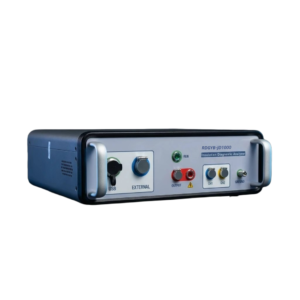
Click the image to know more about Wrindu Frequency Domain Dielectric Response Insulation Diagnostic Analyzer.
Why Is Moisture the Biggest Threat to Transformer Insulation?
A transformer insulation system usually consists of:
- Cellulose paper insulation
- Transformer oil
- Pressboard
- Bushings and other insulating components
During long-term operation, moisture can enter the transformer through:
- Aging seals
- Breathing systems
- Oil oxidation
- Environmental humidity
- Insulation material aging
Even a small increase in moisture content can significantly reduce insulation strength.
Moisture can cause:
- Lower breakdown voltage
- Faster cellulose aging
- Increased dielectric loss
- Reduced mechanical strength of paper insulation
- Higher risk of transformer failure
Therefore, accurate moisture evaluation is essential for transformer maintenance planning.
What Is Frequency Domain Dielectric Response Testing?
Frequency Domain Dielectric Response (FDS), also known as Dielectric Frequency Response (DFR), is an advanced insulation diagnostic technology that evaluates dielectric characteristics over a wide frequency range.
Unlike traditional tests that provide only one measurement point, FDS measures:
- Capacitance changes
- Dielectric loss (tan δ)
- Power factor
- Frequency response characteristics
By analyzing the dielectric response curve, engineers can understand the condition of transformer insulation materials.
The RDGYB-JD1000 extends traditional tan delta and insulation resistance testing by expanding measurement into a wider frequency and time range through FDS and PDC technologies.
How Does FDS Identify Transformer Moisture Content?
How Does Moisture Affect Dielectric Response Curves?
Dry insulation and wet insulation have different dielectric behaviors.
When moisture exists inside cellulose insulation:
- Polarization increases
- Dielectric loss becomes higher
- Low-frequency response changes significantly
Because moisture mainly affects low-frequency dielectric characteristics, FDS can identify moisture levels by analyzing the response curve.
The RDGYB-JD1000 uses advanced analysis models to calculate:
- Cellulose moisture content
- Insulation oil conductivity
- Temperature correction factor
How Does the XY Model Improve Moisture Assessment Accuracy?
Accurate moisture evaluation requires advanced calculation models because transformer insulation is a complex combination of oil and cellulose materials.
The RDGYB-JD1000 uses an XY model combined with cellulose material databases to provide reliable moisture analysis.
The system can evaluate:
- Average moisture content
- Uneven moisture distribution
- Oil conductivity
- Insulation condition
This helps maintenance teams identify whether moisture exists throughout the insulation system or only in localized areas.
Can Frequency Domain Dielectric Response Detect Transformer Aging?
Yes.
Transformer insulation aging changes the dielectric properties of insulating materials.
Aging factors include:
- High operating temperature
- Oxidation of transformer oil
- Long-term electrical stress
- Moisture accumulation
FDS testing analyzes dielectric behavior changes caused by aging and provides information about insulation health.
By monitoring changes over time, utilities can:
- Predict insulation deterioration
- Optimize maintenance schedules
- Avoid unexpected transformer failures
How Does RDGYB-JD1000 Analyze Oil Insulation Condition?
Transformer oil plays an important role in insulation and cooling.
As oil ages, its electrical properties change.
The RDGYB-JD1000 can evaluate:
- Insulation liquid conductivity
- Dielectric loss characteristics
- Oil condition trends
This provides additional information beyond traditional oil tests.
By combining dielectric response data with insulation models, engineers can make more reliable decisions about transformer maintenance.
What Are the Advantages of Using FDS for Transformer Condition Assessment?
Provides More Complete Insulation Information
Traditional insulation tests often focus on single parameters.
FDS provides a complete insulation response curve, allowing engineers to analyze:
- Moisture
- Aging
- Material characteristics
- Insulation defects
Improves Transformer Maintenance Decisions
Accurate insulation diagnosis helps utilities move from:
Reactive maintenance → Condition-based maintenance
Benefits include:
- Reduced unexpected outages
- Longer transformer lifespan
- Lower maintenance costs
Works in High Voltage Substation Environments
Transformer testing is often performed in environments with strong electromagnetic interference.
The RDGYB-JD1000 provides:
- Clean AC voltage output
- Advanced filtering technology
- Strong noise immunity
This ensures reliable measurement results in HV and EHV substations.
Why Choose Wrindu RDGYB-JD1000 for Transformer Insulation Diagnosis?
Wrindu is a professional manufacturer of high-voltage testing equipment, providing reliable testing solutions for global power utilities and electrical industries.
The RDGYB-JD1000 offers several advantages:
Advanced FDS and PDC Technology
The system integrates:
- Frequency Domain Dielectric Spectroscopy (FDS)
- Polarization/Depolarization Current (PDC)
to provide comprehensive insulation analysis.
Wide Frequency Measurement Range
The analyzer supports:
- Frequency range: 0.1mHz – 10kHz
- Optional output voltage up to 10kV
allowing detailed diagnosis of different insulation systems.
Intelligent Analysis Software
The software automatically analyzes test results and provides:
- Cellulose moisture content
- Insulation liquid conductivity
- Tan delta results
- Uneven moisture distribution
- Insulation condition evaluation
Portable Design for Field Testing
The compact design makes the RDGYB-JD1000 suitable for onsite applications.
Key benefits:
- Easy transportation
- Simple operation
- Fast testing setup
- Suitable for substations
The instrument is designed to be portable and robust for field applications.
What Equipment Can Be Tested by Frequency Domain Dielectric Response Analysis?
FDS technology is widely applied to:
Power Transformers
Used for:
- Moisture evaluation
- Insulation aging diagnosis
- Condition assessment
Transformer Bushings
Helps detect:
- Moisture problems
- Insulation deterioration
- Abnormal dielectric behavior
Rotating Machines
Used for:
- Insulation aging evaluation
- Composite insulation analysis
Power Cables
Can identify:
- Water tree aging
- Moisture penetration
- Insulation degradation
The RDGYB-JD1000 supports insulation diagnosis for transformers, bushings, rotating machines, and cables.
FAQs
What is Frequency Domain Dielectric Response testing used for?
Frequency Domain Dielectric Response testing is used to evaluate transformer insulation condition, including moisture content, oil aging, and insulation deterioration.
How does FDS detect moisture in transformer insulation?
FDS detects moisture by measuring dielectric response changes at different frequencies. Moisture changes polarization characteristics, especially at low frequencies.
What is the difference between FDS and insulation resistance testing?
Insulation resistance testing provides a single resistance value, while FDS analyzes insulation behavior across a wide frequency range and provides deeper condition information.
Can FDS testing extend transformer service life?
Yes. By identifying insulation problems early, FDS helps utilities perform preventive maintenance and reduce unexpected failures.
Why is Wrindu RDGYB-JD1000 suitable for transformer testing?
The RDGYB-JD1000 combines FDS and PDC technology, advanced analysis software, high accuracy measurement, and portable design for reliable field insulation diagnosis.
