

How Can Frequency Domain Dielectric Response Testing Reduce Transformer Maintenance Costs?
Learn how frequency domain dielectric response testing helps utilities reduce transformer maintenance costs, prevent unexpected failures, and improve asset management efficiency.
Why Are Utilities Looking for Smarter Transformer Maintenance Methods?
Power transformers are among the most expensive and important assets in electrical networks.
A single transformer failure can result in:
- Unexpected power outages
- Expensive emergency repairs
- Production losses
- Long equipment replacement cycles
- Increased operational risks
For many years, utilities have used scheduled maintenance strategies. Transformers are inspected or tested based on fixed time intervals.
However, this approach has limitations.
A transformer that appears old may still have good insulation condition, while a newer transformer may already experience insulation problems because of:
- High operating temperature
- Moisture contamination
- Overloading
- Poor operating environment
Modern utilities are moving toward condition-based maintenance (CBM), where maintenance decisions are based on actual equipment health.
Frequency Domain Dielectric Response (FDS) testing provides detailed information about transformer insulation condition and helps utilities make better maintenance decisions.
The RDGYB-JD1000 Frequency Domain Dielectric Response Insulation Diagnostic Analyzer combines FDS and PDC technologies to evaluate insulation condition, moisture content, and aging characteristics.
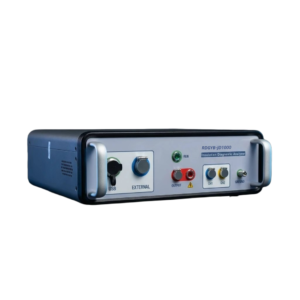
Click the image to know more about Wrindu Frequency Domain Dielectric Response Insulation Diagnostic Analyzer.
Why Is Traditional Transformer Maintenance Sometimes Inefficient?
Can Fixed Maintenance Schedules Increase Operating Costs?
Traditional maintenance usually follows a calendar-based approach:
- Test every few years
- Replace equipment after a certain service period
- Perform repairs based on operating hours
Although this method is simple, it may create unnecessary costs.
Problem 1: Unnecessary Maintenance
Some transformers may still have excellent insulation conditions.
Replacing or repairing them too early increases expenses.
Problem 2: Hidden Problems Between Inspection Periods
A transformer can develop insulation problems after the last scheduled test.
Without continuous condition assessment, early warning signs may be missed.
Problem 3: Emergency Repairs
Unexpected failures usually require:
- Emergency shutdown
- Urgent spare parts
- Additional labor costs
These expenses are much higher than planned maintenance.
FDS testing helps solve these problems by providing a more accurate view of transformer health.
How Does Frequency Domain Dielectric Response Testing Support Predictive Maintenance?
Why Is Condition-Based Maintenance Better Than Time-Based Maintenance?
Condition-based maintenance focuses on the actual condition of equipment instead of only its age.
The strategy is:
- Test transformer insulation condition.
- Analyze diagnostic data.
- Identify potential risks.
- Perform maintenance only when necessary.
FDS testing provides important condition information, including:
- Moisture content
- Insulation aging level
- Dielectric loss characteristics
- Oil conductivity
This allows engineers to understand whether insulation is healthy or deteriorating.
The RDGYB-JD1000 provides insulation condition analysis based on dielectric response characteristics and advanced models.
How Can Early Insulation Detection Prevent Expensive Failures?
Why Is Early Warning Important for Transformer Reliability?
Transformer failures often develop gradually.
Before major damage occurs, insulation may show:
- Increased dielectric loss
- Higher moisture content
- Abnormal polarization behavior
- Aging-related changes
Traditional inspections may detect problems only after they become serious.
FDS testing can identify early changes in insulation behavior.
Early detection allows utilities to:
- Schedule repairs during planned outages
- Prepare spare materials
- Avoid unexpected shutdowns
- Reduce failure consequences
How Does Moisture Assessment Help Reduce Maintenance Costs?
Why Can Transformer Moisture Detection Extend Equipment Life?
Moisture is one of the main causes of transformer insulation aging.
Water inside cellulose insulation can:
- Reduce dielectric strength
- Accelerate paper degradation
- Increase failure probability
Without accurate moisture assessment, utilities may not know when treatment is required.
FDS technology evaluates moisture-related dielectric response changes and helps estimate:
- Cellulose moisture content
- Moisture distribution
- Insulation condition
The RDGYB-JD1000 can analyze cellulose moisture content and uneven moisture distribution to support maintenance decisions.
Can FDS Testing Help Avoid Unnecessary Transformer Replacement?
How Does Better Diagnosis Improve Asset Management?
Transformer replacement is a major investment.
Replacing equipment too early wastes valuable service life.
However, operating damaged equipment creates safety risks.
FDS testing provides additional information to answer important questions:
- Is the insulation still healthy?
- Is aging progressing slowly or quickly?
- Does the transformer need treatment?
- Can operation continue safely?
With accurate diagnostic data, utilities can maximize transformer service life while maintaining reliability.
How Does FDS Reduce Emergency Maintenance Costs?
Can Advanced Insulation Testing Lower Failure Risks?
Emergency transformer failures are extremely expensive.
Costs may include:
- Equipment replacement
- Transportation
- Installation
- Grid restoration
- Customer impact
FDS testing helps reduce these risks by identifying insulation problems before failure.
For example:
A transformer with increasing moisture levels can be monitored more frequently or treated before insulation damage becomes irreversible.
This changes maintenance from:
Failure response → Preventive action
How Does Frequency Domain Analysis Improve Maintenance Planning?
Why Are Diagnostic Data and Historical Records Important?
Effective maintenance requires understanding how transformer condition changes over time.
FDS provides measurable data that can be compared with:
- Previous test results
- Factory test data
- Similar equipment conditions
Engineers can analyze:
- Insulation aging trends
- Moisture changes
- Performance degradation speed
The RDGYB-JD1000 software supports test management, data analysis, and automatic report generation for easier condition tracking.
How Does FDS Improve Transformer Lifecycle Management?
Can Better Diagnosis Extend Transformer Service Life?
Yes.
A transformer does not fail simply because it becomes old.
Failure risk depends on:
- Insulation condition
- Operating environment
- Loading conditions
- Maintenance quality
Accurate insulation assessment helps utilities:
Operate Healthy Equipment Longer
Avoid unnecessary replacement.
Identify High-Risk Equipment
Prioritize maintenance resources.
Improve Investment Decisions
Plan future replacement budgets more accurately.
What Makes RDGYB-JD1000 Suitable for Cost-Effective Transformer Maintenance?
Which Features Help Utilities Improve Maintenance Efficiency?
The RDGYB-JD1000 is designed for professional transformer condition assessment.
Key features include:
Integrated FDS and PDC Technology
Combines frequency-domain and time-domain analysis for comprehensive diagnosis.
Wide Frequency Range
Supports:
- 0.1 mHz–10 kHz measurement range
This provides detailed insulation response information.
Moisture and Aging Evaluation
The system analyzes:
- Cellulose moisture content
- Oil conductivity
- Dielectric loss
- Insulation condition
Field Application Capability
Designed for:
- Substations
- High-voltage equipment testing
- On-site diagnosis
How Can FDS Improve Maintenance Decisions for Aging Transformers?
Is FDS Useful for Older Transformers?
Aging transformers require more detailed monitoring because insulation deterioration becomes more likely.
FDS helps evaluate aging-related changes, including:
- Increased dielectric losses
- Moisture accumulation
- Polarization changes
For older transformers, FDS testing helps answer:
- Should maintenance be performed now?
- Can operation continue?
- Is replacement necessary?
This improves decision-making and reduces unnecessary spending.
What Does Field Testing Show About Practical FDS Applications?
Can FDS Testing Be Used in Real Substation Environments?
Yes.
A 220kV transformer bushing field comparison test evaluated:
- Capacitance
- Dielectric loss
- Cellulose moisture
- Oil conductivity
The results demonstrated that dielectric response testing can provide useful insulation condition information in actual high-voltage equipment applications.
This confirms that FDS technology is suitable for practical maintenance programs.
What Are the Long-Term Economic Benefits of FDS Testing?
How Does Better Diagnosis Create Financial Value?
Implementing FDS testing can provide several long-term benefits.
Lower Emergency Repair Costs
Detect problems before failure.
Reduced Unnecessary Replacement
Use actual condition data.
Longer Transformer Lifetime
Prevent accelerated insulation aging.
Better Maintenance Scheduling
Plan work during convenient periods.
Improved Grid Reliability
Reduce unexpected outages.
FAQs
How does FDS testing reduce transformer maintenance costs?
FDS testing identifies insulation problems early, allowing planned maintenance instead of expensive emergency repairs.
Is FDS testing only for old transformers?
No. FDS can be used for both new and aging transformers to establish condition records and monitor changes.
Can FDS testing prevent transformer failure?
FDS cannot guarantee failure prevention, but it helps identify insulation problems before they become critical.
How does moisture detection reduce transformer costs?
Early moisture detection helps prevent accelerated insulation aging and avoids expensive repairs caused by insulation failure.
What information does FDS provide for maintenance decisions?
FDS can provide:
- Moisture assessment
- Dielectric response curves
- Oil conductivity information
- Insulation condition evaluation
How often should transformers receive FDS testing?
Testing frequency depends on:
- Transformer importance
- Age
- Operating environment
- Previous diagnostic results
Can FDS replace traditional transformer tests?
FDS provides advanced diagnostic information but works best together with traditional tests such as insulation resistance and tan delta measurement.
What equipment is used for transformer FDS testing?
A dielectric response analyzer such as RDGYB-JD1000 can perform FDS and PDC-based insulation diagnosis.
Conclusion
Transformer maintenance is changing from scheduled repair to intelligent condition management.
Frequency Domain Dielectric Response testing helps utilities understand the real condition of transformer insulation by analyzing:
- Moisture level
- Aging behavior
- Dielectric characteristics
- Insulation performance
By detecting problems earlier and supporting better maintenance decisions, FDS technology can reduce operational costs, extend transformer life, and improve power system reliability.
The RDGYB-JD1000 provides a comprehensive solution for transformer insulation diagnosis and helps utilities achieve safer and more efficient asset management.
