

How Do You Identify the Correct Underground Power Cable Before Testing?
Learn how underground cable identification works, including electromagnetic signal tracing, cable route detection, burial depth measurement, and target cable identification.
Underground power networks often contain several cables in the same trench or cable corridor. Identifying the correct cable before testing or excavation is important for maintenance work. So cable route detection equipment helps engineers trace underground cable paths and distinguish the target cable from nearby cables.
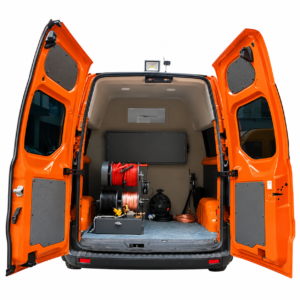
Click the image to know more about Wrindu RDCD-C Vehicle-Mounted Cable Fault Testing System.
Why Is Underground Cable Identification Important?
Several underground cables may run close together in power distribution networks. Their routes may also cross roads, buildings, and other underground facilities. Without proper identification, engineers may connect testing equipment to the wrong cable or excavate the wrong location. Cable identification helps reduce these risks during maintenance and fault location work.
How Does Underground Cable Identification Work?
A cable path detector uses electromagnetic signals to trace an underground cable. And a transmitter introduces a signal into the target cable. A receiver detects the signal above ground and helps the operator follow the cable route.
Three common signal connection methods are:
| Connection Method | Description |
|---|---|
| Direct connection | Connects the transmitter directly to the target cable |
| Clamp coupling | Uses a transmitting clamp to introduce a signal |
| Induction | Introduces a signal without a direct electrical connection |
The suitable method depends on cable accessibility, network conditions, and the testing environment.
How Do You Distinguish One Underground Cable from Another?
Engineers can use cable identification functions to compare signals from nearby cables. The operator connects the transmitter to the target cable and follows the corresponding signal with the receiver. Signal strength, direction, and identification results help distinguish the target cable from surrounding cables. So the operator should also compare the detected route with available cable drawings and site records.
What Information Can a Cable Path Detector Provide?
A cable path detector can provide several types of field information.
| Function | Purpose |
|---|---|
| Route tracing | Identifies the underground cable path |
| Burial depth measurement | Estimates how deep the cable is buried |
| Cable identification | Helps distinguish the target cable |
| Signal strength display | Shows the detected signal level |
| Direction indication | Helps the operator follow the cable |
| Position display | Supports field route tracking |
These functions help engineers understand the cable layout before fault testing or excavation.
How Many Cables Can the R30 Pre-Calibrate?
The WRINDU RDCD-III/R30 cable path detector supports pre-calibration for up to 10 cables. It also supports 10 active frequencies and 2 passive frequencies. Its signal connection methods include direct connection, clamp coupling, and induction. The display provides signal strength, direction, depth, and position information.
When Should Engineers Use Cable Identification Equipment?
Cable identification is useful in several field situations.
| Working Situation | Why Identification Is Needed |
|---|---|
| Several cables in one trench | Distinguishes the target cable |
| Underground cable maintenance | Confirms the cable route before work |
| Cable fault location | Helps locate the correct cable before testing |
| Road excavation | Reduces the risk of damaging nearby cables |
| Industrial cable networks | Helps identify cables in complex cable corridors |
Cable identification is especially useful when underground cable records are incomplete or several circuits share the same route.
What Should Engineers Check Before Using a Cable Path Detector?
Before testing, engineers should:
- Check the available underground cable drawings.
- Confirm the target cable and accessible connection points.
- Select a suitable signal connection method.
- Choose an appropriate active or passive frequency.
- Follow the detected route and compare it with site records.
- Check the displayed depth and identification information.
The operator should follow the equipment manual and local electrical safety procedures during testing.
Frequently Asked Questions
Can a cable path detector measure underground cable depth?
Yes. The RDCD-III/R30 supports underground cable burial depth measurement.
Can a cable locator identify de-energized cables?
The RDCD-III/R30 supports cable identification for both energized and de-energized cables.
What is the difference between active and passive cable detection?
Active detection uses a transmitter to introduce a selected signal into a cable. Passive detection identifies existing signals without introducing a new transmitter signal.
Can cable identification replace cable fault location?
No. Cable identification helps engineers find the correct cable and trace its route. Fault location equipment is needed to estimate and pinpoint cable damage.
Does the RDCD-C include a cable path detector?
Yes. The RDCD-C system includes the RDCD-III/R30 cable path detector for route tracing, burial depth measurement, and cable identification.
About Wrindu Underground Cable Testing Equipment
Wrindu is a Chinese OEM manufacturer of electrical testing equipment and power testing solutions. Established in 2014, the company provides equipment for cable testing, transformer testing, and high-voltage applications.
The RDCD-C integrates the RDCD-III/R30 cable path detector with other instruments for underground cable fault testing.
Contact Wrindu for technical information about the RDCD-C and its cable identification functions.
