

How Do You Maintain and Calibrate a Primary Current Injection Tester?
Learn how to maintain and calibrate a primary current injection tester, check measurement accuracy, inspect test leads, and keep reliable records.
A primary current injection tester must deliver suitable test current and provide reliable measurements for electrical equipment testing. Regular inspection, maintenance, and calibration help users identify potential problems before they affect test results.
Maintenance and calibration serve different purposes. Maintenance checks the instrument’s physical condition and operating status, while calibration evaluates its measurement performance against suitable reference standards. Both should follow the manufacturer’s instructions and the requirements of the testing organization.
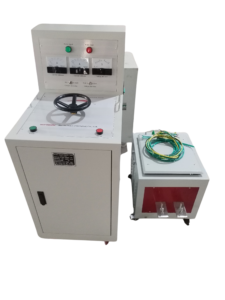
Click the image to know more about 6000A Primary Current Injection Tester.
Why Is Maintenance Important for a Primary Current Injection Tester?
Primary current injection testers operate with high currents and may place considerable thermal and mechanical stress on cables, connectors, and internal components. Regular inspection helps identify damage, loose connections, overheating, and other issues that may affect safe operation.
A maintenance program can help users:
- Identify damaged cables and connectors before testing.
- Check whether the instrument operates as expected.
- Reduce avoidable interruptions during field testing.
- Keep maintenance and calibration records for future reference.
- Support consistent testing practices across different jobs.
The required maintenance frequency depends on the equipment design, operating environment, usage, and manufacturer’s recommendations. A tester used frequently in demanding field conditions may require more frequent inspections than one used occasionally in a controlled laboratory.
Which Parts of a Primary Current Injection Tester Should You Inspect?
Before each test, inspect the components that directly affect electrical connections and safe operation.
| Component | What to inspect | Recommended action |
|---|---|---|
| Test cables | Cuts, damaged insulation, exposed conductors, and overheating | Remove damaged cables from service |
| Output terminals | Loose fittings, contamination, corrosion, and visible damage | Clean or repair according to the manufacturer’s instructions |
| Connectors and clamps | Mechanical damage and poor contact surfaces | Replace damaged parts |
| Control panel | Display condition, switches, and control response | Report abnormal operation |
| Protective functions | Available alarms, interlocks, and emergency stop functions | Verify according to the manual |
| Housing and ventilation | Damage, blocked vents, or signs of overheating | Clean and inspect as permitted |
| Grounding arrangements | Condition and suitability of protective grounding connections | Verify before operation |
Always isolate the equipment from its power source before performing maintenance that requires access to connections or internal components. Do not open the instrument or attempt internal repairs unless authorized and qualified to do so.
How Often Should You Maintain a Primary Current Injection Tester?
There is no single maintenance interval that applies to every tester. Follow the manufacturer’s instructions and establish a schedule based on the operating environment and the consequences of equipment failure.
A practical maintenance plan can include three levels:
| Maintenance level | Typical checks | Timing |
|---|---|---|
| Pre-use inspection | Cables, terminals, housing, power supply, and visible damage | Before each test session |
| Periodic inspection | General condition, controls, ventilation, and documented functional checks | At intervals set by the manufacturer or site procedure |
| Detailed service | Internal inspection, component assessment, and repair where required | According to manufacturer guidance and service needs |
These are general maintenance categories, not a substitute for a model-specific service schedule. The applicable manual and workplace safety requirements take priority.
After unusual overheating, abnormal output, physical damage, or a suspected electrical fault, remove the tester from service until qualified personnel have assessed it.
What Is Calibration for a Primary Current Injection Tester?
Calibration determines how an instrument’s readings compare with reference values under specified conditions. For a primary current injection tester, the calibration scope may include current measurement and, where applicable, timing or voltage measurement.
Calibration does not automatically mean that an instrument has passed every performance requirement. The calibration results must be reviewed against the relevant specifications and acceptance criteria.
For example, if the measured current differs from the reference value, the calibration record should document the result and the associated measurement uncertainty where applicable. An authorized service provider can then determine whether adjustment or repair is necessary.
Do not assume that calibration corrects a faulty instrument. Calibration identifies measurement performance; adjustment and repair are separate activities.
How Do You Know When a Primary Current Injection Tester Needs Calibration?
Calibration should follow the manufacturer’s recommendations, the applicable quality system, and any regulatory or contractual requirements. The interval may also depend on how frequently the tester is used and how critical its measurements are.
Consider arranging an assessment when:
- The scheduled calibration date has arrived.
- The tester has been repaired or adjusted.
- The instrument has suffered impact, overheating, or other unusual conditions.
- Measurements show unexpected differences from a suitable reference.
- The instrument is used for work that requires documented calibration traceability.
- The testing organization requires calibration before a particular project.
A calibration label alone does not establish that every measurement is suitable for a specific application. Check the calibration record, scope, date, and applicable results.
What Should a Calibration Certificate Include?
The required information depends on the calibration provider and the applicable quality requirements. For traceable measurement records, review whether the documentation identifies the instrument, the calibration performed, and the results.
| Record item | Purpose |
|---|---|
| Instrument identification | Links the record to the correct tester |
| Calibration date | Documents when the work was performed |
| Calibration scope | Identifies the measurement functions covered |
| Reference standards | Documents the references used |
| Results and uncertainty | Supports evaluation of measurement performance |
| Acceptance criteria | Shows the basis for determining conformity, when applicable |
| Provider details | Identifies the organization responsible for calibration |
| Next due date or interval | Supports calibration scheduling when specified |
If a project requires calibration from an accredited laboratory, confirm that the laboratory’s accreditation scope covers the relevant measurement and range. Do not assume that every calibration certificate is issued under an accredited scope.
Can You Calibrate a Primary Current Injection Tester Yourself?
Basic functional checks may be possible when the manufacturer provides an approved procedure. These checks can help identify obvious problems, but they are not automatically equivalent to formal calibration.
Formal calibration requires suitable reference equipment, defined methods, controlled conditions, and personnel with appropriate competence. High-current measurements also require equipment and connections rated for the application.
Do not adjust internal components or change calibration settings without authorization and the correct service procedure. Incorrect adjustments may make the tester less reliable or create safety risks.
If the tester fails a functional check, shows abnormal readings, or produces inconsistent results, stop using it for acceptance testing until the issue has been evaluated.
How Do Maintenance and Calibration Improve Test Reliability?
Maintenance and calibration address different sources of risk.
Maintenance helps ensure that cables, connections, controls, and other components remain in suitable condition. Calibration provides evidence about the performance of the instrument’s measurement functions.
Together, they support more dependable test records. However, neither guarantees a valid result by itself. Engineers must still use the correct test method, suitable connections, appropriate test conditions, and applicable acceptance criteria.
A complete testing record should link the instrument identification and calibration status to the test report. This makes it easier to review previous results and investigate unexpected changes during future testing.
What Should You Check Before Using a Wrindu Primary Current Injection Tester?
Before operating a Wrindu primary current injection tester, consult the documentation for the specific model. Confirm the input supply requirements, output ratings, permitted operating duration, connection instructions, and safety precautions.
For example, the RDSL-82-6000D Primary Current Injection Tester has a rated output of 6,000 A at 6 V and a rated capacity of 36 kVA. Its stated power-on time is less than 2.5 minutes, with a working cycle longer than 10 minutes. Operators must follow the product documentation and applicable operating conditions.
These ratings describe the equipment’s stated output capability and duty conditions; they do not replace pre-use inspections or confirm calibration status.
See the RDSL-82-6000D Primary Current Injection Tester for product information. For broader guidance on primary injection principles, applications, and equipment requirements, read the Primary Current Injection Testing Complete Guide.
Frequently Asked Questions
How often should a primary current injection tester be calibrated?
Follow the manufacturer’s recommended interval and the requirements of the applicable quality system or project. Usage, operating conditions, and the consequences of inaccurate measurements may also influence the calibration schedule.
Does calibration guarantee that a tester is working properly?
No. Calibration evaluates measurement performance under specified conditions. Physical inspection and functional checks are also necessary to assess the instrument’s overall condition.
Should a tester be recalibrated after repair?
Repair may affect measurement performance, so an assessment or recalibration may be necessary. Follow the manufacturer’s service instructions and the requirements of the testing organization.
Can damaged test cables affect calibration results?
Damaged or unsuitable cables can affect the test setup and may introduce additional resistance or connection problems. Inspect cables and connections before testing. Cable inspection is not a substitute for calibrating the tester’s measurement functions.
Why should maintenance and calibration records be retained?
Records help track equipment condition, calibration history, repairs, and readiness for use. They also support audits and investigations when test results are questioned.
Contact Wrindu for Primary Current Injection Testing Equipment
Wrindu supplies electrical testing equipment for power utilities, substations, laboratories, and electrical equipment manufacturers. For product documentation or technical support, provide the model number, intended application, and relevant test requirements.
Visit the Wrindu contact page to discuss your application and equipment requirements.
