

How Do You Choose a Primary Current Injection Tester?
Compare output current, rated capacity, voltage, duty cycle, and measurement features. Discover the Wrindu RDSL-82-6000D 6000 A primary current injection tester.
Choosing a primary current injection tester requires more than comparing maximum output current. Engineers should consider the equipment under test, the required current, rated capacity, working cycle, measurement needs, and site conditions.
A suitable tester must deliver the current required by the test procedure while operating within its rated limits.
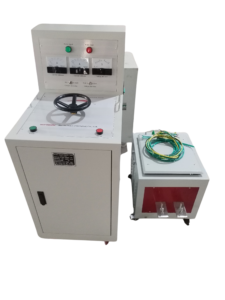
Click the image to know more about 6000A Primary Current Injection Tester.
What Output Current Does the Application Require?
Start with the highest current needed for the planned tests. Circuit breakers, CTs, busbars, and other electrical components may require different current levels.
A tester with a 6000 A maximum output can support applications that need high-current injection. However, the actual output depends on the connected circuit and the tester’s rated operating conditions.
The Wrindu RDSL-82-6000D Primary Current Injection Tester provides a rated output current of 6000 A, a 6 V output voltage, and a rated capacity of 36 kVA. It is designed for power plants, substations, laboratories, and electrical equipment manufacturers.
Why Are Rated Capacity and Output Voltage Important?
Rated capacity and output voltage help engineers assess whether a tester can supply the current required by the test circuit. Cable resistance, contact resistance, and the test object’s impedance affect the voltage needed to maintain the target current.
Check the complete test setup rather than relying on the maximum current figure alone.
For the RDSL-82-6000D, the specified input is AC 380 V, 50 Hz, with an input current of 95 A. The installation must provide a compatible power supply and suitable protection.
How Important Is the Working Cycle?
Primary injection testing can produce substantial heat in the tester, cables, connections, and test object. The working cycle therefore matters, especially when many tests must be completed in succession.
The RDSL-82-6000D uses a short-time working design. Its specifications state that power-on time should be less than 2.5 minutes and the working cycle should be longer than 10 minutes.
Confirm the operating instructions before planning a test schedule. Do not assume that a high-current tester can run continuously at its maximum output.
What Measurement and Control Features Should You Look For?
Clear current readings and straightforward controls help engineers operate the equipment and document test results. Consider whether the tester provides the measurement ranges, timing functions, and data recording required by the application.
The RDSL-82-6000D features two ammeters for large and small range current monitoring. Indicator lights and button controls simplify operation, while its compact, split-type structure supports transportation and positioning.
The published specifications do not state a numerical measurement accuracy, so users should confirm accuracy requirements with the supplier before purchase.
Which Applications Suit the RDSL-82-6000D?
The tester is intended for high-current injection in power plants, substations, electrical equipment manufacturing facilities, scientific research, and laboratories. Typical applications include suitable primary circuit and protection-system tests where the required current falls within the equipment’s capabilities.
Before ordering, confirm the target current, test duration, power supply, site layout, and accessories. Wrindu lists a delivery time of about 15 working days and a stated supply capacity of 5000 sets per month; confirm current lead time and configuration with the supplier.
