

How Do You Verify Primary Current Injection Test Results?
Learn how to verify primary current injection test results using measured current, trip time, repeatability, and applicable protection curves.
Primary current injection testing checks how electrical equipment responds to an injected current. However, completing the test is only part of the process. Engineers must also verify that the recorded current, operating time, and other measurements are suitable for evaluating the equipment.
Reliable verification requires a clear acceptance criterion, accurate measurements, repeatable test conditions, and complete records. These steps help engineers distinguish an actual equipment problem from a measurement or test setup issue.
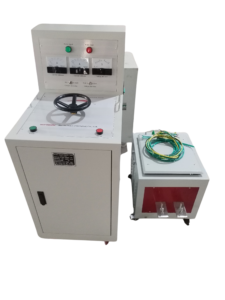
Click the image to know more about 6000A Primary Current Injection Tester.
What Should You Check in a Primary Current Injection Test Report?
The information required in a test report depends on the equipment and the purpose of the test. A useful report should identify the test object, the applied test conditions, the measured results, and the criteria used to evaluate them.
| Report item | Information to record | Why it matters |
|---|---|---|
| Equipment identification | Equipment type, model, serial number, and test location | Links results to the correct asset |
| Test conditions | Test connection, phase, and applicable settings | Helps reproduce the test |
| Applied current | Target current and measured current | Confirms the actual test condition |
| Operating time | Measured trip or response time, where applicable | Shows how the equipment responded |
| Acceptance criteria | Applicable limits or manufacturer specifications | Defines the basis for evaluation |
| Instrument details | Tester identification and relevant calibration status | Supports measurement traceability |
| Test date and operator | Date, operator, and relevant environmental conditions | Provides testing history |
Record only the measurements relevant to the test being performed. For example, a breaker trip-time test and a busbar resistance test require different evaluation criteria.
How Do You Verify the Actual Test Current?
Start by comparing the target current with the current actually delivered during the test. Use the tester’s display or an approved external measurement method, depending on the test setup and the instrument’s capabilities.
Do not assume that the set value always equals the actual current. Circuit impedance, input supply conditions, connection quality, and changes caused by heating can affect the delivered current.
For a valid result:
- Confirm that the tester is configured for the intended test.
- Check that the current measurement method is suitable for the expected range.
- Record the actual current and relevant readings.
- Check whether the current remained sufficiently stable for the required test.
- Investigate any unexpected fluctuation before accepting the result.
If the actual current falls outside the permitted test conditions, the result may not be suitable for evaluating the equipment. Repeat the test only after identifying and correcting the cause, and follow the applicable procedure.
How Do You Evaluate Circuit Breaker Trip-Time Results?
For circuit breaker testing, the measured trip time must be compared with the manufacturer’s applicable time-current curve or specified acceptance limits.
A time-current curve shows the expected operating time at different current levels. Depending on the protection function, the curve may include a permitted band rather than a single exact trip time.
A valid comparison requires the correct breaker model, trip-unit configuration, protection settings, test current, and test method. A result should not be judged against a generic curve that does not match the equipment under test.
| Verification step | What to confirm |
|---|---|
| Identify the breaker | Confirm the model and trip-unit details |
| Check protection settings | Record the relevant pickup and delay settings |
| Confirm applied current | Verify the measured current and test conditions |
| Record trip time | Use the approved timing method |
| Compare with the curve | Use the correct manufacturer data and applicable limits |
| Document the conclusion | Record pass, fail, or further investigation required |
A breaker that trips outside the applicable acceptance limits requires further assessment. Do not change the acceptance criteria simply to make the result pass.
How Can You Check Test Repeatability?
Repeatability describes how closely results agree when the same test is performed under comparable conditions. It helps engineers assess whether a measurement is consistent.
When a repeat test is necessary, keep the relevant conditions consistent. These may include the test current, connection arrangement, protection settings, instrument configuration, and test duration.
Unexpected differences between repeated measurements may indicate:
- Unstable current output
- Inconsistent connections
- Changes in the equipment’s temperature
- Incorrect or inconsistent timing methods
- Instrument measurement limitations
- Changes in the test conditions
Repeatability alone does not prove accuracy. A tester can produce consistent readings while still having a measurement error. Both measurement reliability and compliance with the acceptance criteria matter.
How Does Measurement Accuracy Affect Test Results?
Every measurement system has limitations. The current meter, timing function, sensors, connections, and test setup can all influence the reported result.
Consider a result that lies very close to an acceptance limit. If measurement uncertainty is significant relative to the permitted range, the result may need further review under the applicable test procedure.
Engineers should check the instrument’s stated accuracy and calibration status, use an appropriate measurement range, and follow the manufacturer’s instructions. Do not assume a tester’s accuracy class or uncertainty value unless it is stated in the relevant documentation.
When results are close to a limit, follow the governing standard, equipment manufacturer’s guidance, or site acceptance procedure to determine whether additional testing is necessary.
What Should You Do If a Test Result Fails?
A failed result should trigger a controlled review, not an immediate assumption that the equipment must be replaced.
First, check the test conditions and measurement records. Confirm that the correct current, settings, connections, and acceptance criteria were used. If the test setup was incorrect or the measured current was outside the required range, correct the issue and repeat the test when permitted.
If the test conditions were valid and the result remains outside the acceptance limits, investigate the equipment according to the applicable maintenance or commissioning procedure.
Keep the original result, the follow-up test data, and the reason for any repeat test. This preserves a clear record of the assessment.
How Can a Primary Current Injection Tester Support Result Verification?
A suitable primary current injection tester should provide the output and measurement functions required by the intended application. Depending on the instrument, useful functions may include current indication, timing measurement, data storage, or report export.
Before testing, confirm which functions the selected model supports. Do not assume that every primary current injection tester includes automatic trip-time analysis, digital time-current curves, or built-in report generation.
Wrindu offers primary current injection equipment for electrical testing applications. The appropriate configuration depends on the required current, test object, measurement needs, and operating procedure.
Explore the RDSL-82-6000D Primary Current Injection Tester for its published output specifications, and consult the product documentation to confirm whether it meets your testing requirements.
For the wider testing process, see Wrindu’s Primary Current Injection Testing: Complete Guide.
Frequently Asked Questions
What makes a primary current injection test result valid?
The test must use appropriate equipment, suitable measurement methods, the required test conditions, and the correct acceptance criteria. The actual applied current and relevant measurements should be recorded.
Should a circuit breaker pass every repeated injection test?
Results should meet the applicable acceptance criteria under the specified test conditions. Unexpected differences between repeated tests require investigation rather than automatic acceptance.
Can a test result be accurate but still fail?
Yes. A reliable measurement can show that the equipment does not meet the required operating limits. Accuracy describes the measurement, while pass or fail depends on the applicable acceptance criteria.
Why should engineers keep primary injection test reports?
Reports support commissioning decisions, maintenance planning, troubleshooting, and comparisons with future test results. They also document the test conditions and the basis for the final conclusion.
Get Support for Electrical Testing from Wrindu
Wrindu provides electrical testing equipment for utilities, substations, laboratories, and electrical equipment manufacturers. For assistance with a testing application, prepare the equipment details, required test conditions, acceptance criteria, and measurement requirements before contacting the technical team.
Visit the Wrindu contact page to discuss your testing needs.
