

How Does a Cable Fault Pre-Locator Estimate Underground Fault Distance?
Learn how the RA40 cable fault pre-locator measures cable length, calibrates wave velocity, analyzes reflected signals, and estimates fault distance.
A cable fault pre-locator helps technicians estimate the distance between the test point and an underground cable fault. The Wrindu RDCD-C system uses the RA40 operation console for cable length measurement, wave velocity calibration, fault pre-location, and waveform analysis. The RA40 uses low-voltage pulse testing to analyze reflected signals. This helps technicians identify possible fault positions before carrying out further field testing.
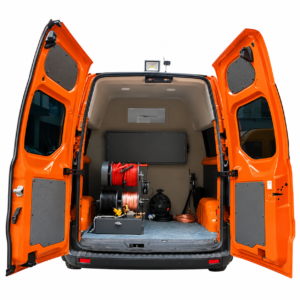
Click the image to know more about Wrindu RDCD-C Vehicle-Mounted Cable Fault Testing System.
What Does a Cable Fault Pre-Locator Do?
A cable fault pre-locator estimates the distance to a possible fault along the cable. It provides an initial reference for technicians before they search for the physical fault position above ground.
The RA40 supports four main tasks:
- Cable length measurement
- Wave velocity calibration
- Fault distance pre-location
- Waveform analysis
These functions help technicians assess the cable and prepare for the next testing stage.
How Does Low-Voltage Pulse Testing Estimate Cable Fault Distance?
Low-voltage pulse testing works by sending an electrical pulse into the cable and analyzing the reflected signal. When the pulse reaches a point where the cable impedance changes, part of the signal may return to the instrument. The RA40 analyzes the reflected waveform to help estimate the distance to the possible fault. The calculated distance depends on the signal travel time and the cable’s wave velocity. Correct wave velocity calibration is therefore important for distance estimation.
Why Is Cable Length Measurement Important Before Fault Location?
Cable length measurement helps technicians understand the cable under test and set up the fault location process. The RA40 supports cable length measurement and wave velocity calibration. These functions provide reference information for subsequent waveform analysis and fault distance estimation. Technicians should use the correct cable information and test settings. Incorrect wave velocity settings can affect the calculated distance.
Which Cable Faults Can Low-Voltage Pulse Testing Help Detect?
Low-voltage pulse testing can help identify faults that produce detectable changes in the reflected signal.
| Fault Type | Low-Voltage Pulse Testing |
|---|---|
| Open-circuit fault | Can help identify the fault through waveform changes |
| Short-circuit fault | Can help identify suitable impedance changes |
| Low-resistance fault | Can help estimate the fault distance when the reflection is detectable |
| High-resistance fault | May not produce a clear reflection |
Some high-resistance faults need a suitable high-voltage testing method. The RDCD-C includes a separate high-voltage unit for this testing stage. The suitable method depends on the cable condition and fault characteristics.
What Is the Difference Between Fault Pre-Location and Fault Pinpointing?
Fault pre-location and fault pinpointing provide different results.
| Comparison | Fault Pre-Location | Fault Pinpointing |
|---|---|---|
| Main purpose | Estimate fault distance along the cable | Narrow down the physical fault position above ground |
| RDCD-C equipment | RA40 | RC11 |
| Main method | Low-voltage pulse testing and waveform analysis | Acoustic and magnetic signal detection |
| Result | Estimated distance from the test point | Ground-level search area |
The RA40 helps technicians estimate where to search along the cable. The RC11 helps locate a suitable discharge fault from the ground surface.
How Does the RA40 Work with Other RDCD-C Equipment?
The RA40 is one component of the RDCD-C Vehicle-Mounted Cable Fault Testing System. For suitable high-resistance faults, the high-voltage unit can provide high-voltage testing support. After a discharge occurs, the RC11 can detect acoustic and magnetic signals to help pinpoint the fault. The R30 cable path detector helps technicians trace the underground cable route and identify the target cable. Each component performs a separate task in the testing process.
What Should Technicians Check Before Using a Cable Fault Pre-Locator?
Technicians should confirm the cable information, test connections, and testing conditions before starting.
| Check Item | Why It Matters |
|---|---|
| Target cable | Confirms that the correct cable is being tested |
| Cable length | Provides a reference for the measurement range |
| Wave velocity | Affects the calculated fault distance |
| Test connection | Helps ensure a suitable signal connection |
| Fault condition | Determines whether low-voltage pulse testing is appropriate |
| Previous test records | Can support waveform comparison |
The test method should match the cable condition. If the reflected signal does not clearly indicate the fault, technicians may need another suitable testing method.
Frequently Asked Questions About Cable Fault Pre-Locators
Does a cable fault pre-locator show the exact ground position of a fault?
No. It estimates the fault distance along the cable. A separate pinpointing method, such as acoustic-magnetic detection, is used to narrow down the physical position above ground.
Can low-voltage pulse testing detect every high-resistance fault?
No. Some high-resistance faults do not produce a clear reflection during low-voltage testing. These faults may require suitable high-voltage testing.
Why does wave velocity affect fault distance measurement?
The instrument uses wave velocity and signal travel time to calculate distance. An incorrect wave velocity setting can lead to an inaccurate result.
What is the role of the RA40 in the RDCD-C system?
The RA40 operation console performs cable length measurement, wave velocity calibration, fault pre-location, and waveform analysis.
About Wrindu RDCD-C Cable Fault Testing System
Wrindu provides cable testing equipment for underground cable measurement and fault location applications. The RDCD-C Vehicle-Mounted Cable Fault Testing System integrates the RA40 operation console, high-voltage unit, RC11 acoustic-magnetic locator, and R30 cable path detector. The equipment is installed inside a vehicle supplied by the customer. Contact Wrindu for system configuration and technical specifications.
