

How Open Circuit Voltage (OCV) and OCP Help Improve Battery Safety and Reliability
Learn how Open Circuit Voltage (OCV) and Open Circuit Potential (OCP) improve battery safety, performance, and reliability. Discover Wrindu’s advanced testing solutions for energy systems.
Open Circuit Voltage (OCV) and Open Circuit Potential (OCP) are key parameters used to evaluate battery condition and electrochemical stability. In modern energy systems, especially lithium batteries and high-voltage storage systems, these measurements are essential for ensuring safety, performance, and long-term reliability. Wrindu provides advanced testing solutions designed for accurate OCV and OCP analysis in industrial applications.
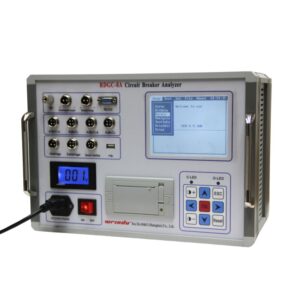
Click the image to know more about Circuit Breaker Comprehensive Tester.
Why Are OCV and OCP Important for Battery Systems?
OCV and OCP provide important insights into how a battery behaves when it is not under load.
- OCV reflects the electrical charge level of a battery
- OCP reflects internal electrochemical balance and stability
Together, they help engineers understand both the electrical and chemical condition of the battery.
How Does OCV Indicate Battery Health?
OCV is widely used to estimate the state of charge (SOC). A higher OCV usually means a more fully charged battery, while a lower value indicates discharge.
OCV helps to:
- Estimate remaining battery capacity
- Detect abnormal discharge behavior
- Identify aging or degraded cells
- Support battery management systems (BMS)
In industrial applications, Wrindu’s OCV testing equipment provides accurate readings for production lines and energy storage systems.
How Does OCP Contribute to Battery Safety?
OCP is used to study the chemical stability inside a battery. It shows how electrodes behave when no current is flowing.
It can help detect:
- Internal corrosion
- Electrochemical imbalance
- Material degradation
- Early-stage failure risks
Even small changes in OCP can indicate long-term safety problems. Wrindu’s OCP testing solutions help manufacturers monitor these changes early.
How Are OCV and OCP Measured in Practice?
Both measurements require careful procedures to ensure accuracy.
OCV Measurement:
- Disconnect battery from all loads
- Wait for voltage stabilization
- Measure terminal voltage using a voltmeter
OCP Measurement:
- Use a three-electrode electrochemical setup
- Ensure no current flow in the system
- Record voltage until equilibrium is reached
Wrindu provides automated testing systems that simplify these processes and reduce human error.
What Role Do OCV and OCP Play in Battery Manufacturing?
In battery production, OCV and OCP are used for quality control.
They help manufacturers:
- Sort battery cells by performance
- Detect defective units early
- Ensure consistency across batches
- Improve production efficiency
Wrindu supplies OEM testing equipment for large-scale battery manufacturers, helping maintain strict quality standards.
How Do OCV and OCP Improve Battery Safety?
Battery safety depends heavily on accurate monitoring of internal conditions.
By using OCV and OCP data, engineers can:
- Prevent overcharging and deep discharge
- Detect unstable cells before failure
- Improve battery management system accuracy
- Reduce risk of overheating or thermal issues
These measurements are especially important in electric vehicles, energy storage systems, and industrial backup power.
What Equipment Is Used for OCV and OCP Testing?
Modern testing systems include:
- High-precision voltmeters
- Potentiostats for electrochemical analysis
- Multi-channel battery testers
- Automated data logging systems
Wrindu designs integrated testing solutions that combine OCV and OCP measurement with temperature compensation and real-time monitoring.
Why Are OCV and OCP Important for Energy Storage Systems?
In large-scale energy storage systems, battery reliability is critical. OCV and OCP help ensure:
- Stable energy output
- Long service life
- Safe operation under load cycles
- Early detection of system imbalance
Wrindu’s solutions are widely used in renewable energy storage, supporting solar and wind power systems.
Conclusion
OCV and OCP are essential tools for improving battery safety and reliability. OCV focuses on electrical charge estimation, while OCP provides insight into electrochemical stability. When used together, they offer a complete view of battery health. Wrindu’s advanced testing systems help industries ensure safer, more efficient, and more reliable energy storage solutions.
FAQs
Is OCV enough to determine battery health?
It helps, but combining it with OCP gives a more complete evaluation.
Can OCP detect battery failure early?
Yes, it can show early signs of chemical instability.
Do all batteries use OCP testing?
It is mainly used in advanced testing and manufacturing processes.
How accurate are modern OCV testers?
High-end systems like Wrindu’s can achieve very high precision for industrial use.
Why is Wrindu equipment used in battery testing?
Wrindu provides reliable, customizable, and high-precision testing solutions for global industries.
