

How to Calculate High Voltage Power Supply Capacity?
Learn how capacitance, voltage, and frequency affect power supply capacity in high voltage testing, with practical formulas and examples.
How to Calculate Power Supply Capacity for High Voltage Testing
Choosing a high voltage power supply is not only about reaching the required test voltage. Engineers must also check whether the power source can supply enough current to the test object.
This is especially important when testing power cables, capacitors, and other objects with high electrical capacitance. A power supply may reach the target voltage under a light load but fail to maintain it when connected to a larger test object.
Understanding the relationship between voltage, current, capacitance, and frequency helps engineers estimate the required power supply capacity before testing.
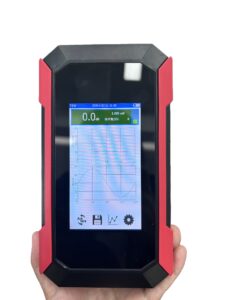
Click the image to know more about Wrindu Handheld PD Tester.
Why Does Load Capacity Matter in High Voltage Testing?
A high voltage test object is not always a simple electrical load. Its behavior depends on its structure and insulation.
For example, a long power cable has capacitance between its conductor and metallic shield. When AC voltage is applied, this capacitance draws current even if the insulation has no serious fault.
If the power supply cannot provide enough current, the output voltage may drop or the equipment may reach its operating limit.
Engineers should therefore consider three main factors:
- The capacitance of the test object
- The required test voltage
- The test frequency
These factors are closely related in AC testing.
How Can Engineers Estimate Capacitive Load Current?
For a capacitive load connected to a sinusoidal AC source, the approximate RMS current can be calculated using:
I = 2πfCV
Where:
- I = capacitive current in amperes (A)
- f = test frequency in hertz (Hz)
- C = capacitance in farads (F)
- V = RMS test voltage in volts (V)
This formula shows that current increases with capacitance, voltage, and frequency.
For example, consider a test object with a capacitance of 0.5 μF. The required test voltage is 10 kV RMS, and the test frequency is 50 Hz.
The estimated current is:
I = 2π × 50 × 0.5 × 10⁻⁶ × 10,000
I ≈ 1.57 A
The capacitive current is approximately 1.57 A under these conditions.
This is an estimate for an ideal capacitive load. Actual current may also include resistive leakage and other losses.
How Does Test Frequency Change the Required Current?
Frequency has a direct effect on capacitive current.
For the same capacitance and voltage, a lower test frequency requires less current.
Consider the same 0.5 μF test object at 10 kV RMS:
| Test frequency | Estimated capacitive current |
|---|---|
| 50 Hz | 1.57 A |
| 0.1 Hz | 3.14 mA |
| 0.05 Hz | 1.57 mA |
| 0.02 Hz | 0.63 mA |
The table illustrates why very-low-frequency (VLF) testing can be useful for large capacitive loads.
However, these values do not mean that every VLF tester can handle the same capacitance. The equipment’s rated voltage, maximum load capacitance, waveform, and operating limits must also be checked.
For VLF testing, engineers should follow the manufacturer’s rated load data rather than selecting equipment based on frequency alone.
How Can Engineers Estimate the Required Reactive Power?
For a sinusoidal AC source connected to an ideal capacitor, reactive power can be estimated using:
Q = 2πfCV²
Where Q is reactive power in volt-amperes reactive (var).
Using the earlier example of 0.5 μF at 10 kV RMS and 50 Hz:
Q = 2π × 50 × 0.5 × 10⁻⁶ × 10,000²
Q ≈ 15.7 kVAR
This value represents the reactive power associated with the ideal capacitive load. It is not necessarily the required input power rating of the complete testing system.
The final equipment rating depends on the power supply design, losses, compensation method, duty cycle, and other system requirements.
For a variable-frequency AC resonant test system, the resonant circuit may reduce the power required from the input source. Engineers should use the system manufacturer’s rated specifications for final sizing.
What Happens If the Power Supply Is Undersized?
An undersized power supply may show several problems during testing.
The Output Voltage Cannot Reach the Target
The power supply may reach its current limit before reaching the required voltage. This is more likely when the connected test object has high capacitance.
The Voltage Drops During Testing
A system may initially reach the target voltage but struggle to maintain it under the actual load.
Engineers should check whether the voltage drop is caused by insufficient capacity, excessive leakage current, cable connections, or a protection limit.
The Test Cannot Run for the Required Time
Some systems can produce a high voltage briefly but cannot maintain the required output for the full test duration.
The rated duty cycle and thermal limits are therefore important, especially during repeated tests.
What Information Should Engineers Check Before Selecting a Tester?
Before choosing a high voltage test system, engineers should collect:
- The rated capacitance or estimated capacitance of the test object
- The required test voltage and waveform
- The test frequency
- The required test duration
- The expected leakage current
- The equipment’s maximum load and duty-cycle limits
Cable length may help estimate capacitance when the manufacturer’s capacitance-per-unit-length data are available. However, the actual cable construction and connected accessories can affect the total load.
For cable testing, a dedicated VLF tester may be more suitable than a conventional power-frequency source, depending on the test standard and procedure.
How Does Wrindu Support Capacitive Load Testing?
Wrindu provides high voltage testing equipment for cable insulation and other electrical applications.
For example, the RDVLF-Z80Y 80 kV VLF AC Withstand Voltage Tester is designed for VLF cable testing.
Engineers evaluating this model should compare its rated voltage, frequency range, supported cable capacitance, and operating limits with the requirements of their actual test objects.
FAQs About High Voltage Power Supply Capacity
Does a higher test voltage always require more current?
For the same ideal capacitive load and frequency, current increases in direct proportion to voltage. Reactive power increases with the square of voltage.
Why does a long cable need more current during AC testing?
A longer cable generally has greater total capacitance. At the same voltage and frequency, greater capacitance produces higher capacitive current.
Can I use the power supply’s maximum voltage to determine its capacity?
No. Maximum voltage alone is not enough. Engineers must also check current capacity, load capacitance, duty cycle, and other operating limits.
Is VLF testing suitable for every high voltage application?
No. VLF testing is used for specific applications, particularly power cable testing. Engineers should follow the applicable testing standard and the cable manufacturer’s requirements.
