

How to Identify PCB-Containing Transformers: A Guide for Electrical Equipment Owners
Learn how to identify PCB-containing transformers using manufacturing records, oil history, nameplates, and laboratory reports in the US, India, and Vietnam.
Why Should Electrical Equipment Owners Identify PCB-Containing Transformers?
Polychlorinated biphenyls (PCBs) were historically used in transformer insulating fluids because of their electrical insulation and thermal properties.
Older transformers and other electrical equipment may contain PCB-based fluids or become contaminated through maintenance and oil replacement activities.
Identifying affected equipment helps utilities and industrial facilities manage environmental risks, maintenance records, and regulatory obligations.
The Stockholm Convention requires participating countries to identify and manage PCB-containing electrical equipment as part of its PCB elimination program.
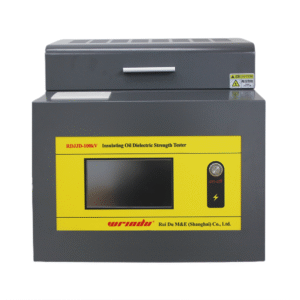
Click the image to know more about Wrindu Oil BDV Tester.
Which Transformers Should Be Prioritized for PCB Identification?
Transformers with incomplete insulating oil records deserve additional attention.
Manufacturing year can help identify equipment that requires investigation, but it cannot independently confirm PCB contamination.
Equipment owners should prioritize the following categories:
| Transformer history | Identification priority | Reason |
|---|---|---|
| Manufactured before 1980 | High | Historical PCB use may be relevant |
| Original insulating fluid unknown | High | Fluid composition is unconfirmed |
| Previous PCB test result available | Based on result | Existing analytical evidence |
| Oil replaced without contamination records | Further review | Residual contamination may remain |
| Original fluid documented as PCB-free | Lower | Supporting documentation is available |
The 1980 date is a preliminary historical screening reference, not a universal regulatory cutoff.
The United States, India, and Vietnam have different PCB regulatory frameworks. Equipment owners should use the applicable national requirements when making final classifications.
What Transformer Records Are Needed to Identify PCB Risks?
Equipment records help establish the original insulating fluid and its maintenance history.
A transformer nameplate alone usually cannot confirm PCB concentration. Owners should combine equipment identification with fluid specifications and laboratory documentation.
| Document | Information to check |
|---|---|
| Transformer nameplate | Manufacturer, model, serial number, manufacturing year |
| Original purchase specification | Original insulating fluid |
| Manufacturer declaration | PCB-related material information |
| Oil replacement record | Previous and replacement oil |
| Maintenance report | Oil additions, repairs, and leaks |
| Laboratory report | Previous PCB analytical results |
| Disposal records | Previous equipment or oil treatment |
If records are incomplete, the equipment should remain classified as requiring further investigation rather than being automatically declared PCB-contaminated or PCB-free.
Can Transformer Oil Replacement Remove All PCB Contamination?
No. Replacing transformer oil does not necessarily remove all PCB residues from the equipment.
PCB compounds may remain in internal insulation, residual oil, seals, and other materials that have contacted the original insulating fluid.
Therefore, three different conditions should be distinguished:
| Assessment item | What it evaluates |
|---|---|
| Current oil PCB concentration | PCB content in the sampled insulating liquid |
| Internal material contamination | PCB residues in solid components |
| Complete equipment status | PCB contamination across relevant equipment materials |
A PCB test on the replacement oil does not automatically establish that every internal component is free from PCB contamination.
The required assessment depends on the intended equipment classification and local regulatory rules.
What PCB Identification Requirements Apply in the United States?
In the United States, PCB management is regulated under the Toxic Substances Control Act (TSCA) and 40 CFR Part 761.
The EPA defines a PCB Transformer as a transformer containing 500 ppm or greater PCBs. Mineral-oil transformers found to contain 50 ppm or greater but below 500 ppm fall into a different regulatory category.
Equipment owners should review:
-
Original transformer documentation.
-
Existing PCB analytical results.
-
Transformer registration requirements, where applicable.
-
PCB marking and inspection obligations.
-
Applicable use and disposal conditions.
The EPA provides a PCB transformer registration form and information about registered PCB transformers.
What PCB Identification Requirements Apply in India?
India introduced the Regulation of Polychlorinated Biphenyls Order, 2016 under the Environment (Protection) Act, 1986.
The Order defines three equipment categories:
| PCB concentration | Indian regulatory definition |
|---|---|
| 500 mg/kg or higher | PCB-containing equipment |
| 50 mg/kg to below 500 mg/kg | PCB-contaminated equipment |
| Below 50 mg/kg | PCB contamination-free equipment |
The Order specified 31 December 2025 as the deadline for completely prohibiting PCB use and 31 December 2028 for disposal of PCB waste and contaminated equipment.
As the 2025 deadline has passed, equipment owners should review the current legal requirements and applicable enforcement guidance rather than assume that previously permitted use can continue.
The Central Power Research Institute (CPRI) also provides PCB management information and national project resources for the Indian power sector.
What PCB Identification Requirements Apply in Vietnam?
Vietnam’s Decision 1598/QĐ-TTg of 2017 established a national implementation plan for the Stockholm Convention.
The plan identifies PCB inventory, equipment management, and safe disposal as important national activities.
Its PCB objectives include:
-
Eliminating the use of equipment containing 50 mg/kg or more PCBs by 2025.
-
Completing environmentally sound treatment of relevant PCB-containing materials, equipment, and waste by 2028.
- Developing inventories and databases for PCB-containing equipment and materials.
The 2025 target has passed. Electrical equipment owners should verify the current Vietnamese environmental requirements and any applicable sector-specific instructions.
How Can Utilities Build a PCB Equipment Identification Register?
A structured register helps utilities identify equipment requiring additional investigation.
The following fields provide a practical starting point:
| Register field | Example |
|---|---|
| Equipment ID | TR-001 |
| Manufacturer | Manufacturer name |
| Serial number | Factory serial number |
| Manufacturing year | 1978 |
| Insulating fluid | Mineral oil / unknown |
| Oil replacement history | Available / unavailable |
| PCB test status | Tested / not tested |
| PCB result | Laboratory-reported value |
| Regulatory category | According to local rules |
| Equipment status | In service / isolated / retired |
Utilities should keep the supporting laboratory reports and manufacturer documents with the register.
Conclusion
Identifying PCB-containing transformers requires a review of equipment records, insulating fluid history, and appropriate analytical evidence. Manufacturing dates and nameplates help prioritize investigations but cannot replace a valid PCB assessment.
For equipment owners in the United States, India, and Vietnam, the final classification should follow the relevant national regulatory framework.
About Wrindu Transformer Oil Testing Equipment
Wrindu is a China-based manufacturer of electrical testing equipment. Its transformer oil testing range covers key parameters such as breakdown voltage, water content, acid value, and dielectric dissipation factor.
The equipment is used for routine oil quality checks by testing laboratories, power companies, and transformer manufacturers.
PCB concentration cannot be measured with these instruments. It requires dedicated analytical equipment and a separate testing procedure.
