

PCB Contamination in Old Transformers: Risks, Testing, and Maintenance
Learn why old transformers may contain PCB, when oil testing is necessary, and how to manage contaminated insulating oil during maintenance and disposal.
PCB contamination in old transformers is an important issue for power utilities, industrial facilities, and transformer maintenance companies.
Polychlorinated biphenyls (PCBs) were previously used in some electrical insulating liquids. Although their use has been restricted in many countries, older oil-filled equipment may still contain PCB-contaminated insulating liquids.
Transformer owners need to identify possible contamination before carrying out oil replacement, equipment maintenance, or disposal.
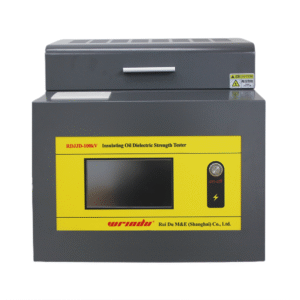
Click the image to know more about Wrindu Oil BDV Tester.
Why May Old Transformers Contain PCB?
Some older transformers were manufactured or filled with insulating liquids containing PCBs.
Contamination may also occur when PCB-containing oil mixes with non-PCB mineral oil during maintenance, storage, or oil transfer.
The following situations deserve attention:
- Transformers with incomplete manufacturing records.
- Equipment purchased from unknown suppliers.
- Older electrical equipment with unknown insulating liquid types.
- Transformers serviced using shared oil storage tanks.
- Equipment that may have received contaminated replacement oil.
The manufacturing year alone cannot confirm whether a transformer contains PCB.
What Are the Main Risks of PCB Contamination in Transformers?
PCB contamination creates several concerns for equipment owners.
| Risk | Potential impact |
|---|---|
| Environmental pollution | PCB can persist in soil and water |
| Occupational exposure | Improper handling may expose workers |
| Equipment maintenance | Contaminated oil requires controlled handling |
| Oil recycling | Contaminated oil may not qualify for ordinary reuse |
| Equipment disposal | Special waste management requirements may apply |
| Regulatory compliance | Owners may need testing, records, and approved disposal procedures |
PCB contamination is primarily an environmental and safety concern. It should not be confused with ordinary transformer oil ageing.
How Can You Identify PCB Contamination in an Old Transformer?
Visual inspection cannot confirm PCB contamination.
Clear oil, dark oil, or oil with unusual color does not provide a reliable PCB result.
A dedicated laboratory analysis is necessary to determine PCB concentration.
The recommended process is:
- Review the transformer nameplate and manufacturing records.
- Check previous oil test reports and maintenance history.
- Identify possible cross-contamination during oil handling.
- Collect a representative oil sample.
- Request PCB analysis using a suitable validated method.
- Compare the laboratory result with applicable environmental regulations.
GC-ECD is commonly used for quantitative PCB analysis in insulating liquids.
When Should Old Transformers Be Tested for PCB?
PCB testing is especially relevant in the following situations.
| Situation | Recommended action |
|---|---|
| Unknown oil history | Arrange PCB analysis |
| Suspected oil mixing | Test for PCB contamination |
| Transformer decommissioning | Check applicable waste regulations and testing requirements |
| Oil recycling | Verify PCB status before processing |
| Environmental inspection | Provide suitable laboratory test results |
| Equipment transfer | Confirm applicable PCB requirements before transfer |
PCB testing is not normally part of every routine transformer oil maintenance schedule.
The decision should depend on equipment history, contamination risk, and local regulations.
Does PCB Contamination Mean Transformer Oil Must Be Replaced?
Not every situation has the same treatment requirements.
The correct action depends on PCB concentration, equipment condition, local environmental rules, and the intended use or disposal of the oil.
Equipment owners should obtain laboratory results before selecting a treatment or disposal method.
PCB-contaminated oil should not be mixed with clean oil to reduce its measured concentration. Such practices can spread contamination and create regulatory problems.
Which Routine Oil Tests Are Still Important for Old Transformers?
Even when PCB contamination is a separate concern, routine oil condition monitoring remains important.
| Test item | Applicable standard | Maintenance purpose |
|---|---|---|
| Breakdown voltage | IEC 60156 | Evaluates dielectric strength |
| Water content | IEC 60814 | Measures moisture |
| Acid value | IEC 62021 | Evaluates oil acidity |
| Dielectric dissipation factor | IEC 60247 | Measures dielectric losses |
| Interfacial tension | ASTM D971 | Evaluates oil-water interfacial properties |
These tests help evaluate oil condition, but they cannot replace PCB analysis.
Which Wrindu Equipment Can Support Old Transformer Oil Maintenance?
Wrindu provides routine transformer oil testing instruments for power utilities, industrial users, and transformer maintenance companies.
The available product options include:
- Oil Dielectric Strength Tester for breakdown voltage testing.
- Transformer Insulation Oil Acid Value Tester for acidity measurement.
- New Insulating Oil Micro-Water Tester for moisture measurement.
- Transformer Tan Delta Tester for dielectric loss measurement.
Wrindu’s instruments support routine oil condition monitoring. Dedicated PCB analysis must be performed separately using appropriate laboratory equipment.
What Should Transformer Owners Do Before Decommissioning Old Equipment?
Before decommissioning a transformer, owners should review its oil history and identify any potential PCB contamination.
If the oil history is unknown or contamination is suspected, arrange PCB testing before draining, transporting, recycling, or disposing of the oil.
Follow local environmental and waste management requirements throughout the process.
For more information, read our guide to PCB in Transformer Oil: Testing, Contamination Risks, and Oil Testing Equipment.
