

PCB Regulations for Electrical Equipment in the US, India, and Vietnam
Compare PCB regulations for electrical equipment in the US, India, and Vietnam. Learn about equipment restrictions, PCB phase-out deadlines, waste management, and compliance requirements.
Which International Regulations Control PCBs in Electrical Equipment?
PCB management is regulated through international environmental agreements and national legislation.
The Stockholm Convention on Persistent Organic Pollutants is the main international framework addressing PCB elimination and environmentally sound waste management.
Its Annex A, Part II covers PCB-containing electrical equipment, including transformers and capacitors.
The Convention establishes important objectives for participating countries:
-
Identify and label PCB-containing equipment.
-
Stop using PCB-containing equipment according to the agreed phase-out requirements.
-
Prevent PCB leakage and environmental release.
-
Manage PCB-containing waste through environmentally sound methods.
The Convention identifies 2025 and 2028 as important milestones for equipment phase-out and waste management, respectively. National governments implement these commitments through their own legislation.
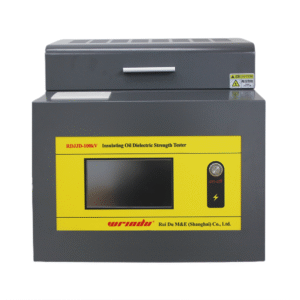
Click the image to know more about Wrindu Oil BDV Tester.
What PCB Regulations Apply to Transformers in the United States?
The United States regulates PCBs under the Toxic Substances Control Act (TSCA).
The EPA administers these requirements through 40 CFR Part 761.
The regulation covers PCB manufacturing restrictions, equipment use, servicing, marking, storage, and disposal.
Important regulatory sections include:
| Regulation | Main subject |
|---|---|
| 40 CFR §761.2 | Definitions and concentration assumptions |
| 40 CFR §761.20 | Prohibitions and exemptions |
| 40 CFR §761.30 | Authorized PCB uses and servicing |
| 40 CFR §761.40 | PCB marking requirements |
| 40 CFR §761.60 | PCB disposal |
| 40 CFR §761.65 | Storage for disposal |
| 40 CFR §761.79 | PCB decontamination |
The EPA distinguishes between different transformer categories:
| Transformer category | PCB concentration |
|---|---|
| Non-PCB transformer | Below 50 ppm, subject to applicable definitions |
| PCB-contaminated mineral-oil transformer | 50 to below 500 ppm |
| PCB transformer | 500 ppm or higher |
These categories have different regulatory implications. The 50 ppm threshold does not mean that every transformer at or above this concentration is subject to identical use and disposal requirements.
What Should US Transformer Owners Know About PCB Transformer Registration?
The EPA requires registration for PCB transformers under the applicable TSCA requirements.
Owners should review the registration obligations and maintain equipment records.
The EPA provides Form 7720-12 for PCB transformer registration. It also maintains information about registered PCB transformers and approved PCB waste storage and disposal facilities.
Transformer owners should pay particular attention to:
-
Transformer PCB classification.
-
Required PCB labels.
-
Inspection and leak prevention.
-
Applicable operating conditions.
-
Storage and disposal records.
For PCB transformers in service, 40 CFR §761.30 includes periodic visual inspection requirements. The specific requirements should be checked against the equipment category and applicable regulatory provisions.
What PCB Regulations Apply to Electrical Equipment in India?
India regulates PCBs through the Regulation of Polychlorinated Biphenyls Order, 2016.
The Order was issued under the Environment (Protection) Act, 1986.
Its requirements include:
| Regulatory requirement | Main provision |
|---|---|
| PCB manufacture and import | Prohibited under the Order |
| Import of PCB-containing equipment | Prohibited |
| PCB equipment identification | Required |
| PCB use | Complete prohibition specified by 31 December 2025 |
| PCB waste disposal | Required by 31 December 2028 |
| Direct discharge of PCB fluids | Prohibited |
The Order also distinguishes PCB-containing equipment from PCB-contaminated equipment based on concentration.
The 31 December 2025 prohibition deadline has passed. Indian equipment owners should therefore review the current legal position and seek guidance from the relevant environmental authorities before continuing any activity involving PCB-containing equipment.
What PCB Management Requirements Apply to the Indian Power Sector?
India has developed national PCB management activities involving the Ministry of Environment, Forest and Climate Change (MoEFCC), the United Nations Industrial Development Organization (UNIDO), and the Central Power Research Institute (CPRI).
CPRI’s PCB management program includes:
-
National PCB inventory activities.
-
Reduction and elimination of PCBs in the power sector.
-
Management of PCB-contaminated transformer mineral oil.
-
Development of PCB treatment and dechlorination capabilities.
These activities provide useful technical and institutional resources for India’s electrical equipment sector.
Transformer manufacturers, utilities, and industrial facilities should check the applicable PCB Order and hazardous waste requirements when managing affected equipment.
What PCB Regulations Apply to Electrical Equipment in Vietnam?
Vietnam has established PCB management objectives through its national implementation of the Stockholm Convention.
Decision 1598/QĐ-TTg, issued in 2017, approved Vietnam’s national implementation plan for the Stockholm Convention.
The PCB management objectives include:
| Management area | National objective |
|---|---|
| Equipment inventory | Identify PCB-containing equipment and materials |
| Import control | Control PCB-containing equipment and waste |
| Equipment phase-out | Eliminate use of equipment containing 50 mg/kg or more PCBs by 2025 |
| Waste treatment | Complete environmentally sound treatment by 2028 |
| Risk management | Control PCB leakage and environmental contamination |
The 2025 phase-out target has passed, while 2028 remains the relevant waste-management milestone in the national plan.
Vietnamese equipment owners should also review the current Environmental Protection Law and implementing regulations when classifying, transporting, and disposing of PCB waste.
How Should Vietnamese Companies Manage PCB-Contaminated Transformer Equipment?
Companies should distinguish PCB-containing equipment from ordinary used transformer equipment.
Vietnam’s environmental waste requirements apply to PCB-contaminated materials and equipment according to their waste classification.
In May 2026, the Vietnamese Ministry of Agriculture and Environment clarified that transformer casings and cores containing waste PCB-contaminated oil may be classified under waste code 19 02 01 in Circular 02/2022/TT-BTNMT.
Where classified as hazardous waste, these materials must be transferred to an organization with the appropriate environmental authorization.
Companies should maintain:
-
Equipment identification records.
-
Relevant PCB analytical reports.
-
Waste classification information.
-
Authorized contractor documentation.
-
Waste transfer records.
-
Final treatment or disposal evidence.
How Do PCB Compliance Requirements Differ Between the US, India, and Vietnam?
The three markets follow the same international environmental objective but use different national legal instruments.
| Comparison | United States | India | Vietnam |
|---|---|---|---|
| Main framework | TSCA | Regulation of PCBs Order, 2016 | Decision 1598/QĐ-TTg and environmental legislation |
| Main authority | US EPA | MoEFCC and relevant authorities | Relevant Vietnamese environmental authorities |
| Key reference | 40 CFR Part 761 | 2016 PCB Order | Stockholm Convention national plan |
| Equipment management | Classification, marking, use controls | Identification and phase-out | Inventory and phase-out |
| Important milestone | Category-specific TSCA requirements | 2025 use prohibition | 2025 phase-out objective |
| Waste management | 40 CFR §§761.60 and 761.65 | 2028 disposal deadline under the Order | 2028 national treatment objective |
The table provides a general regulatory comparison, not a complete legal compliance checklist.
Companies operating across multiple markets should maintain separate regulatory records for each country.
What Should International Transformer Manufacturers Include in PCB Compliance Documents?
Manufacturers and equipment suppliers should provide clear information about insulating fluids and relevant materials.
This helps buyers evaluate equipment against local environmental and procurement requirements.
| Document | Recommended information |
|---|---|
| Product specification | Insulating fluid type |
| Material declaration | Relevant material composition |
| PCB declaration | Scope of the PCB-free or PCB-related statement |
| Manufacturing record | Model and serial number |
| Oil specification | Applicable oil characteristics |
| Test documentation | Relevant analytical evidence, where available |
| Maintenance instructions | Oil replacement and handling requirements |
A general product declaration should not be presented as an analytical PCB test certificate.
For projects requiring confirmed PCB concentrations, buyers should obtain reports from laboratories with appropriate analytical methods and testing capabilities.
How Can Companies Maintain Long-Term PCB Regulatory Compliance?
PCB compliance should be managed throughout the equipment lifecycle.
Companies should establish procedures for equipment procurement, maintenance, oil replacement, environmental assessment, and waste management.
A practical management structure includes:
| Business activity | Compliance action |
|---|---|
| Equipment procurement | Review insulating fluid documentation |
| Equipment operation | Maintain equipment and leakage records |
| Oil sampling | Arrange appropriate testing when required |
| Equipment maintenance | Record oil additions and replacements |
| Asset management | Maintain equipment history |
| Decommissioning | Verify PCB classification and disposal requirements |
| Environmental reporting | Retain supporting documentation |
Regular reviews help companies identify missing records and update their management plans when regulations change.
Conclusion
PCB regulations affect transformer manufacturers, electrical utilities, industrial facilities, and environmental laboratories in different ways.
The United States uses TSCA and 40 CFR Part 761, India applies its Regulation of PCBs Order, 2016, and Vietnam implements its Stockholm Convention commitments through national environmental policies and regulations.
Companies should verify the requirements in their operating country instead of applying one country’s PCB thresholds or disposal procedures internationally.
About Wrindu Transformer Oil Testing Equipment
Wrindu is a Chinese OEM manufacturer of electrical testing equipment and transformer testing solutions. The company supplies instruments for routine transformer oil testing, including breakdown voltage, moisture content, acid value, and dielectric dissipation factor measurement.
Wrindu’s equipment supports electrical laboratories, transformer manufacturers, and power utilities in their routine oil condition testing programs.
These instruments are not designed to measure PCB concentration. PCB analysis requires a separate analytical method and suitable laboratory instrumentation.
