Oil Purification Methods for Transformers: How to Restore Insulating Oil Quality
Explore effective transformer oil purification methods including vacuum dehydration, filtration, and centrifuging. Learn when oil needs treatment, benefits of purification, and how Wrindu testers ensure accurate oil condition evaluation.
Transformer oil naturally degrades over time due to moisture, gases, and contaminants. Instead of replacing the oil completely, many utilities use oil purification methods to restore its performance and extend transformer life.
👉 But what are the most effective purification techniques, and when should they be used?
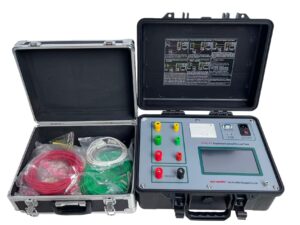
Click the image to know more about Transformer Oil Purifier.
Why Does Transformer Oil Need Purification?
Transformer oil becomes contaminated due to:
- Moisture ingress
- Oxidation and aging
- Dissolved gases from internal faults
- Dust and solid particles
👉 These contaminants reduce dielectric strength, cooling efficiency, and insulation reliability.
What Are the Main Oil Purification Methods for Transformers?
1. Vacuum Dehydration and Degassing
Is this the most widely used method?
Yes. Vacuum treatment removes:
- Moisture
- Dissolved gases (hydrogen, methane, etc.)
👉 It improves dielectric strength (BDV) and restores insulation performance.
2. Oil Filtration System
How does filtration improve oil quality?
Filtration removes:
- Solid particles
- Sludge
- Carbon deposits
👉 It helps improve oil clarity and cooling efficiency.
3. Centrifugal Separation
Can centrifugal force clean transformer oil?
Yes. This method uses high-speed rotation to separate:
- Water
- Heavy impurities
- Sludge
👉 It is effective for heavily contaminated oil.
4. Clay (Fuller’s Earth) Treatment
What role does adsorption play in purification?
Clay treatment removes:
- Acids
- Polar compounds
- Oxidation by-products
👉 It helps reduce oil acidity and aging effects.
5. Combined Multi-Stage Purification
Is combining methods more effective?
Yes. Many modern systems use:
- Vacuum dehydration
- Fine filtration
- Degassing
👉 This ensures maximum restoration of oil quality.
When Should Transformer Oil Be Purified?
Oil purification is recommended when:
- BDV drops below acceptable levels
- Moisture content increases
- Oil becomes dark or turbid
- Dissolved gas levels rise
👉 Early intervention prevents costly oil replacement and equipment failure.
What Are the Benefits of Oil Purification?
Proper purification provides:
- Improved dielectric strength
- Better cooling performance
- Extended transformer lifespan
- Reduced maintenance cost
- Lower risk of unexpected breakdowns
Can All Transformer Oil Be Reused After Purification?
Not always.
- Light contamination → fully recoverable
- Moderate contamination → partial recovery
- Severe oxidation → may require replacement
👉 Oil testing is essential before deciding reuse.
How Wrindu Testers Stand Out
Accurate oil purification decisions depend on reliable diagnostics. Wrindu testers help engineers evaluate oil condition before and after treatment.
1. Precise Oil Quality Assessment
Wrindu devices measure:
- Breakdown Voltage (BDV)
- Moisture content
- Dielectric loss (tan δ)
2. Before-and-After Purification Evaluation
- Compare oil condition pre- and post-treatment
- Verify purification effectiveness
3. Portable Field Testing
- Suitable for substations and maintenance teams
- Fast on-site diagnostics
- Reduces downtime
4. Data-Driven Maintenance Decisions
- Historical trend tracking
- Predictive maintenance support
- Helps optimize purification schedules
👉 Wrindu ensures purification is scientifically validated, not guesswork.
FAQs (Long-Tail Questions)
Q1: What is the best method for transformer oil purification?
Vacuum dehydration combined with filtration is the most effective method for general use.
Q2: Can transformer oil be fully restored after purification?
Yes, if contamination is not severe. Otherwise, partial recovery may be possible.
Q3: How often should transformer oil be purified?
It depends on condition, but typically every 1–3 years or when tests show degradation.
Q4: Does oil purification improve BDV?
Yes. Removing moisture and gases significantly increases breakdown voltage.
Q5: What is the difference between oil filtration and purification?
Filtration removes particles, while purification includes moisture and gas removal as well.
Q6: Is oil purification better than oil replacement?
Yes, when feasible—it is more cost-effective and environmentally friendly.
Q7: How do you know if oil purification is needed?
Through testing parameters like BDV, moisture content, and dissolved gases.
Conclusion
Transformer oil purification is essential for maintaining insulation strength, cooling efficiency, and system reliability. With methods like vacuum dehydration, filtration, and clay treatment, oil can often be restored instead of replaced.
👉 Combined with precise diagnostics from Wrindu testers, utilities can make smarter decisions and ensure long-term transformer health and performance.