

Phasing Stick Wiring Specifications & Common Wiring Errors (Complete Guide)
Learn phasing stick wiring specifications, same-color wiring rules, correct grounding methods, and common wiring errors. Explore how Wrindu testers stand out & check FAQs for nuclear phase rod wiring.
A phasing stick, also known as a nuclear phase rod, is an essential testing tool for high-voltage power systems. Standard wiring is the core premise to ensure testing accuracy and personal safety. Improper wiring will not only cause measurement deviation but also trigger equipment burnout, electric leakage and other safety accidents. This article systematically sorts out the standardized wiring rules of phasing sticks, analyzes frequent wiring faults, and highlights the advantages of Wrindu testers, with detailed FAQs to solve common user doubts.
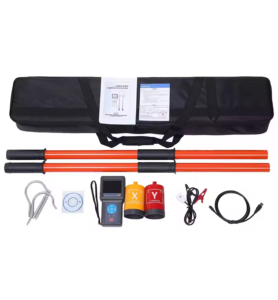
Click the image to know more about Wireless High Voltage Phase Detector.
What Are the Standard Rules for Same-Color Wiring of Phasing Sticks?
Same-color wiring is one of the most basic provisions of nuclear phase rod wiring specifications, which is formulated to avoid phase confusion and ensure circuit consistency. The clear specifications are as follows:
-
Fixed color matching principle: Follow the universal power industry color standard. The live wire adopts yellow, green and red for three-phase classification; the neutral wire is blue; the grounding wire uses yellow-green double color, and it is forbidden to replace the grounding wire with other colored wires arbitrarily.
-
Consistent wiring arrangement: The wires at both ends of the phasing stick must keep the same color sequence, without random crossing or swapping. All wiring interfaces shall be matched with color codes to ensure one-to-one correspondence.
-
Prohibition of mixed wiring: It is not allowed to mix wires of different specifications and colors in the same wiring terminal. Mixed wiring will lead to chaotic phase sequence and affect the nuclear phase judgment result.
How to Complete the Correct Grounding Operation of the Grounding Wire?
Grounding is the key defense line to prevent electric shock accidents during the use of phasing sticks. Non-standard grounding will cause residual voltage on the equipment surface, endangering the safety of operators. The standardized grounding methods are summarized below:
-
Select qualified grounding points: Choose the official grounding busbar or metal grounding pile of the power distribution system. It is forbidden to use simple metal pipes, iron frames and other temporary grounding points with poor conductivity.
-
Optimize grounding connection: Polish the contact position to remove rust, paint and oxide layers to ensure tight fitting. Keep the grounding wire straight without winding, knotting or excessive bending.
-
Control grounding resistance: The grounding resistance of the phasing stick shall be kept below 0.1Ω. Excessive resistance will weaken the leakage conduction effect and cannot release induced electricity in time.
-
Independent grounding requirement: The grounding wire shall be used independently, and it is not allowed to connect multiple phasing sticks in series for shared grounding.
What Common Wiring Errors Occur in Phasing Stick Operation and Their Consequences?
In actual field operation, irregular wiring habits lead to frequent hidden dangers. The typical wiring errors and corresponding hazard consequences are sorted out as follows for risk avoidance:
Common Wiring Error Types
-
Disordered same-color wiring: Randomly swap wires of different colors, resulting in inconsistent phase sequence.
-
Unqualified grounding connection: Loose grounding wire, rusty contact surface or wrong grounding position.
-
Over-tight or loose terminal crimping: Excessive force cracks the wire insulation layer, while loose crimping causes poor contact.
-
Wire mixing and disorderly winding: The internal wires of the phasing stick are intertwined, causing signal interference.
Hazard Consequences of Non-Standard Wiring
-
Measurement failure: Phase sequence confusion leads to wrong nuclear phase data, which misjudges the power grid operation state.
-
Equipment damage: Poor contact generates high temperature at the terminal, burning internal components of the phasing stick and accelerating wire aging.
-
Safety accidents: Unreliable grounding causes residual voltage accumulation, triggering electric shock hazards for operators; in severe cases, it will lead to short circuit and power grid tripping.
How Wrindu Testers Stand Out in Phasing Stick Application?
Against the background of strict nuclear phase rod wiring specifications, Wrindu testers have obvious advantages in structural design, safety performance and operation adaptability, which can effectively reduce wiring errors and improve detection efficiency:
-
Color-coded anti-misplug design: Wrindu testers adopt embedded color identification interfaces, which are completely consistent with the international wire color standard. The anti-misplug structure prevents wrong wiring fundamentally, reducing the error rate of same-color wiring to less than 1%.
-
High-safety grounding system: Equipped with a dedicated grounding monitoring module. Once the grounding resistance exceeds the standard or the grounding wire falls off, the equipment will automatically alarm and cut off the detection circuit to avoid electric shock risks.
-
Durable wiring terminals: The terminals are made of high-conductivity alloy materials, with anti-rust and anti-oxidation coating. It maintains stable contact pressure for a long time to avoid poor contact caused by loose crimping.
-
Intelligent error reminder: Built-in wiring detection program. When phase sequence confusion, virtual grounding and other errors occur, the screen will pop up a text reminder with fault codes to guide users to correct wiring quickly.
-
Wide environmental adaptability: It can maintain stable wiring connection and detection accuracy in high temperature, humidity and outdoor complex power construction scenarios, suitable for all levels of high-voltage power grid nuclear phase tests.
FAQs
Q1: What is the core purpose of implementing same-color wiring for high-voltage phasing sticks in power construction?
A1: The core purpose is to unify the phase identification standard, avoid human judgment errors caused by messy wire colors, ensure the consistency of nuclear phase data, and facilitate later circuit inspection and fault troubleshooting. It is also an essential measure to comply with power safety operation specifications.
Q2: Can I temporarily replace the yellow-green grounding wire with a green wire during emergency phasing test?
A2: It is strictly prohibited. The yellow-green double color is the exclusive identification color of the grounding wire stipulated by the industry. Temporary replacement will lead to grounding identification confusion, and the green wire lacks anti-oxidation grounding coating, which increases grounding resistance and brings potential electric leakage risks.
Q3: Why does the phasing stick still have induced electricity on the surface after connecting the grounding wire?
A3: This situation is mostly caused by non-standard grounding: rust on the grounding contact surface increases resistance, loose wiring terminals cause poor conduction, or the grounding point is unqualified. It is necessary to polish the contact points, re-crimp the wires and replace the official grounding busbar.
Q4: What will happen if the three-phase wires of the phasing stick are randomly connected without following the color sequence?
A4: Random wiring will cause phase sequence disorder, resulting in completely opposite nuclear phase results. In serious cases, it will cause misjudgment of power grid closing conditions, trigger power grid short-circuit impact, burn testing instruments, and even threaten the personal safety of construction personnel.
Q5: What detailed maintenance steps should be taken for Wrindu testers’ wiring terminals after long-term outdoor use?
A5: First, cut off the power and remove the connecting wires; wipe the terminals with a dry cotton cloth to remove dust and moisture; polish oxide layers with fine sandpaper; apply a small amount of insulating anti-rust grease; finally, check the crimping tightness to ensure no looseness.
Q6: How to quickly judge whether the grounding wiring of the phasing stick meets the standard on the construction site?
A6: Use a grounding resistance tester for detection; the resistance value shall not exceed 0.1Ω. Visually check that the grounding wire is yellow-green without damage, the connection point is free of rust and looseness, and no series shared grounding is allowed. Wrindu testers can directly display grounding resistance data in real time for quick judgment.
Summary
Following nuclear phase rod wiring specifications is the basic guarantee for the safe and accurate operation of phasing sticks. Standard same-color wiring, standardized grounding operation and avoidance of common wiring errors can effectively reduce power safety hazards. Wrindu testers optimize wiring structure and intelligent monitoring functions, helping construction personnel standardize wiring operations and improve testing safety factor. In actual work, operators must strictly abide by industry specifications, correct bad wiring habits, and give priority to safety in every nuclear phase test.
