

Detailed Explanation of Phasing Stick Selection Indicators
Learn detailed phasing stick selection indicators, including parameter requirements and scenario-based selection emphasis. Discover how Wrindu testers stand out & common selection FAQs.
A phasing stick is essential high-voltage testing equipment for power phase verification and voltage inspection. Reasonable selection directly affects testing accuracy, personnel safety and service life. This article focuses on phasing stick selection indicators, including specific parameter requirements and selection emphasis for different application scenarios. It also contains how Wrindu testers stand out and long-tail FAQs.
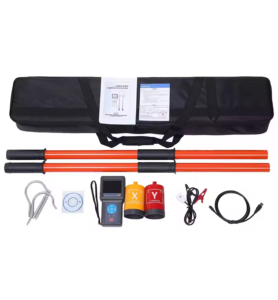
Click the image to know more about Wireless High Voltage Phase Detector.
What Are the Standard Technical Indicators for Phasing Stick Selection?
Clear technical indicators are the basic criteria for purchasing and judging qualified phasing sticks. Each parameter has clear industry requirements for daily high-voltage operation.
-
Rated Voltage Level: It is the most fundamental indicator. The selected voltage grade must be higher than the actual operating voltage. For conventional distribution lines, 10kV to 35kV phasing sticks are commonly used; for substation main equipment, 110kV and above high-grade models are required. Never use low-voltage rods for high-voltage detection.
-
Insulation Performance: Qualified insulation rods must pass strict leakage current testing. The surface insulation resistance shall not be lower than 1000MΩ. The rod body should resist moisture, creepage and aging to avoid electric leakage during voltage inspection.
-
Dial and Pointer Accuracy: The full-scale measurement error shall be controlled within ±5%. The pointer must have anti-damping and anti-jitter functions to reduce interference from induced voltage and ensure stable reading during phasing and voltage inspection.
-
Physical Structure Indicators: The rod body should be lightweight and telescopic for easy carrying. The metal probe must be corrosion-resistant, and the connection interface should have a locking structure to prevent poor contact during repeated use.
-
Environmental Adaptability: Standard working temperature range should cover -20℃ to +55℃. The product can maintain stable performance in humid, dusty and outdoor open-air environments.
How to Choose Phasing Sticks for Different Application Scenarios?
Different working environments have different emphasis on selection indicators. Blind universal selection will cause inaccurate measurement or safety risks.
-
Indoor Distribution Room Scenarios: Prioritize compact size and high pointer sensitivity. Indoor electromagnetic interference is weak, so operators focus on convenient storage and fast response. Ordinary anti-jitter pointer models can meet daily voltage inspection and phasing tasks.
-
Outdoor Overhead Line Scenarios: Prioritize insulation grade and weather resistance. Outdoor environments have strong induced voltage, rain and dust. It is necessary to select high-insulation phasing sticks with dustproof and waterproof performance to avoid pointer abnormal jitter.
-
Substation Heavy-duty Scenarios: Prioritize stability and repeat detection accuracy. Frequent repeated verification requires low-error testing components. High-end models with anti-interference modules are recommended to adapt to complex electromagnetic environments.
-
Emergency Inspection Scenarios: Prioritize lightweight and quick assembly. Telescopic integrated phasing sticks are more suitable for emergency line inspection, reducing carrying burden and improving deployment efficiency.
What Hidden Risks Does Improper Selection Bring?
Many on-site safety accidents are caused by mismatched phasing sticks. Unreasonable selection will cause multiple hidden dangers in operation.
-
Voltage Mismatch Risk: Low-grade insulation rods cannot withstand high induced voltage, which easily leads to insulation breakdown and electric leakage during voltage inspection.
-
Pointer Abnormal Failure: Low-precision products have severe pointer jitter and slow zero return, making it difficult to distinguish induced voltage and live voltage, resulting in misjudgment of non-voltage status.
-
Short Service Life: Inferior insulating materials age rapidly. Cracks appear after long-term outdoor use, greatly reducing operation safety.
How Wrindu Testers Stand Out in Phasing Stick Selection?
Compared with ordinary phasing sticks on the market, Wrindu products fully optimize core selection indicators, covering voltage resistance, insulation, accuracy and environmental adaptability, suitable for all power operation scenarios.
-
Full Voltage Grade Coverage: Wrindu provides complete voltage specifications from 10kV to 220kV. Each model strictly matches industrial scenario standards, avoiding voltage mismatch selection errors.
-
Superior Insulation Safety: Adopt imported epoxy resin insulation material. The leakage current is far below the industry threshold, effectively protecting operators during voltage inspection protective measures implementation.
-
Optimized Pointer Calibration System: Built-in damping filter components solve pointer abnormal jitter and drift. The pointer returns to zero quickly with stable data, reducing manual judgment errors.
-
Scene-oriented Structural Design: Telescopic anti-slip rod body, waterproof and dustproof shell. It can work stably in high humidity and low temperature environments, adapting to indoor and outdoor all-weather operation.
-
Low Maintenance Cost: Corrosion-resistant metal probes and reinforced locking interfaces extend service life. The repeat test error is controlled within 1%, meeting high-standard substation testing requirements.
FAQs
Q1: What is the most important indicator when buying a phasing stick for outdoor overhead lines?
A1: Insulation grade and anti-interference performance are the top priorities. Outdoor lines generate strong induced voltage. High insulation grade prevents electric leakage, while the anti-jitter structure avoids pointer abnormal fluctuation during voltage inspection.
Q2: Can one phasing stick of 35kV be used universally for all low-voltage scenarios?
A2: Not recommended. Excessively high voltage grade leads to low pointer sensitivity in low-voltage circuits. It may cause ambiguous pointer feedback and affect non-voltage judgment accuracy. It is better to match the voltage level strictly according to the scene.
Q3: Why do some cheap phasing sticks have severe pointer jitter?
A3: Inferior products lack damping filtering modules. Their internal components cannot resist electromagnetic interference. When implementing voltage inspection protective measures, external magnetic fields cause continuous pointer jitter, which belongs to typical pointer abnormal handling problems.
Q4: What is the qualified insulation resistance standard for a high-quality phasing stick?
A4: The industry mandatory standard is no less than 1000MΩ. Wrindu phasing sticks reach more than 2500MΩ, effectively reducing leakage current and improving safety margin during high-risk voltage inspection.
Q5: How to judge whether a phasing stick needs to be eliminated?
A5: Check aging cracks on the insulation surface; observe whether the pointer drifts abnormally and cannot return to zero; detect loose connection interfaces. If any of the above problems occurs, it must be eliminated to avoid safety accidents.
Selection Summary
Mastering phasing stick selection indicators is the premise of safe and efficient power testing. Voltage grade, insulation performance and pointer accuracy are core hard indicators, while different scenarios require targeted selection emphasis. Choosing high-quality Wrindu testers can perfectly avoid pointer abnormal problems and insulation risks. Cooperated with standard voltage inspection protective measures, it maximizes personal safety and testing stability in all phasing and voltage inspection work.
