

Practical Operation Details of Phasing Sticks
Learn complete phasing stick practical details, including testing rod connection skills, pointer observation methods and repeat verification standards. Know how Wrindu testers stand out & check phasing operation FAQs.
Phasing stick (nuclear phase rod) operation is a fundamental and essential procedure in high-voltage power systems. It is applied to verify the consistency of phase sequences and ensure safe grid connection of power equipment. This article focuses on three core practical details: testing rod connection skills, pointer observation methods, and repeat verification standards. It also analyzes the advantages of Wrindu testing instruments and summarizes common FAQs for on-site operators.
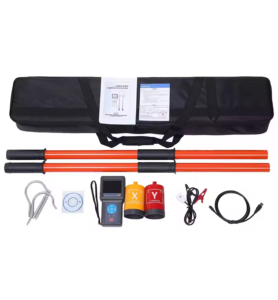
Click the image to know more about Wireless High Voltage Phase Detector.
What Key Connection Skills Are Required for Phasing Sticks?
The connection of the phasing testing rod directly determines the accuracy of measurement results and operational safety. Standard connection steps and practical skills are summarized as follows:
-
Pre-connection Inspection: Check the insulation layer of the testing rod for cracks, scratches or aging damage. Confirm the metal probe is intact without deformation or rust. Ensure the connecting wire has firm wiring terminals to avoid poor contact during testing.
-
Standard Connection Steps: Firstly, connect the grounding wire to the reliable grounding terminal to eliminate induced voltage interference. Then firmly insert the data connection port of the two testing rods into the host interface, and lock the buckle to prevent loose wiring caused by vibration.
-
On-site Operation Tips: Keep the testing rod vertically close to the measured charged equipment, maintain a safe insulation distance, and avoid crossing wires. Do not touch the metal probe with bare hands throughout the operation to prevent electric shock risks.
How to Observe the Pointer Correctly During Phasing Testing?
Pointer observation is the core judgment link of manual phasing operation. Standard observation methods can effectively avoid misjudgment caused by visual deviation and data fluctuation.
-
Static Observation Posture: Keep the phasing rod horizontal and stable after contacting the measured point, and avoid shaking the rod body. Operators shall observe the pointer scale from the front of the dial vertically to eliminate parallax errors.
-
Pointer Judgment Criteria: If the pointer deflects to the maximum scale and fluctuates steadily, it indicates inconsistent phases; if the pointer stays near the zero scale without obvious deflection, it means the two points are in the same phase.
-
Anti-interference Observation: In complex electromagnetic environments, ignore instantaneous jitter of the pointer and take the stable deflection value after 2-3 seconds as the effective judgment data.
What Are the Times and Standards for Phasing Repeat Verification?
Repeat verification is a necessary measure to eliminate accidental errors and ensure phasing accuracy. Unified industry execution standards are formulated for on-site operation:
-
Verification Times: Each group of phase points must be tested repeatedly for 3 times. Do not reduce the verification times for simple working conditions. For high-voltage equipment above 10kV, increase the verification times to 4 times.
-
Qualified Data Standard: The pointer deflection deviation of multiple tests shall not exceed 5% of the full scale. All repeated test results must reach the same phase judgment conclusion; otherwise, recheck the wiring and test again.
-
Data Recording Requirements: Record each test data truthfully, mark the test time, ambient temperature and equipment number, and retain the original data for subsequent inspection.
How Wrindu Testers Stand Out in Phasing Operation?
Wrindu is a professional manufacturer of high-voltage power testing equipment. Its phasing sticks and supporting testing instruments have significant advantages compared with ordinary products, perfectly adapting to complex on-site phasing scenarios:
-
Excellent Anti-interference Performance: Equipped with built-in anti-interference filtering module, Wrindu testers can suppress electromagnetic interference in high-voltage environments, reducing pointer jitter and ensuring stable and intuitive observation data.
-
High-precision Detection Components: Adopt high-sensitivity pointer dial and high-insulation testing rod. The measurement error is controlled within 2%, which is far lower than the industry average, meeting the strict repeat verification standards of phasing work.
-
Safe and Durable Structure: The testing rod is made of high-strength insulating material, which is resistant to aging and high temperature. The locked wiring interface effectively prevents loose contact, adapting to harsh outdoor working conditions.
-
Humanized Operational Design: Equipped with anti-slip insulated grip and clear large-scale dial, it reduces operation difficulty and visual fatigue, greatly improving the efficiency of repeated manual verification.
-
Certified Reliability: All products comply with IEC international electrical testing standards, with stable repeated test results, suitable for long-term continuous phasing operation in power stations and distribution rooms.
FAQs
Q1: What common mistakes should be avoided when connecting phasing sticks in rainy humid environments?
A1: Firstly, do not connect wires with wet hands to prevent leakage. Secondly, avoid rainwater soaking the wiring interface; wipe the metal probe dry before use. In addition, reduce the connection operation time, and keep the testing rod away from water accumulation on the equipment surface to ensure insulation safety.
Q2: Why does the pointer jitter continuously and fail to stabilize during phasing detection?
A2: The main reasons include poor wiring contact, strong surrounding electromagnetic interference, and damp insulation layer. It is recommended to re-lock the connecting port, stay away from high-current equipment, and replace dry qualified testing rods. Wrindu testers can effectively reduce such jitter with built-in filtering modules.
Q3: Is it allowed to stop the test early if the first phasing result is clear?
A3: Not allowed. Accidental interference such as instantaneous voltage fluctuation may affect a single test result. According to the standard, at least 3 repeated verifications are mandatory. Only when all results are consistent can the judgment be confirmed to eliminate accidental errors.
Q4: What is the qualified temperature range for daily phasing stick operation?
A4: The standard working temperature ranges from -20℃ to +55℃. Avoid operation in extreme high temperature or low temperature environment for a long time. Excessively low temperature will make the insulation layer brittle, while high temperature will accelerate material aging and reduce operation safety.
Q5: How to judge whether a phasing stick needs regular maintenance and replacement?
A5: Check the insulation layer for aging discoloration and cracks regularly. If the pointer returns slowly or the deflection error exceeds 5% during repeated tests, the internal components are aging. It is recommended to carry out calibration maintenance; severe damage requires direct replacement to ensure test accuracy.
Operation Summary
Standard connection skills, scientific pointer observation methods and standardized repeated verification are the three core essentials of phasing stick practical operation. Choosing high-performance testing equipment such as Wrindu can further improve test stability, accuracy and on-site safety. Operators must strictly abide by operating standards, record test data completely, and eliminate operational risks to ensure the safe and stable operation of the power grid.
