

Transformer Frequency Response Analysis – A Simple Guide
Learn what transformer frequency response is and how SFRA testing detects winding deformation, core movement, and internal faults. Understand working principles, applications, and when to use frequency response analysis for transformer condition monitoring and maintenance.
What is a transformer’s frequency response?
Every transformer has a unique electrical “fingerprint.” This comes from its internal structure — the windings, the core, and the clamping system. When something inside the transformer changes physically, the frequency response changes too. That’s why this test is so useful.
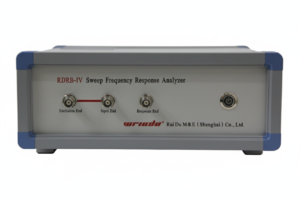
Click the image to know more about Sweep frequency Response Analyzer.
How does frequency response testing work?
Frequency response testing compares the transformer’s current electrical signature to a reference. The reference could be:
- A measurement taken when the transformer was first installed (commissioning)
- A measurement from a similar unit (a “sister” transformer)
- A comparison between different phases of the same transformer
If the two signatures look different, it means something inside has changed.
What problems can this test detect?
Frequency response analysis is one of the most sensitive ways to find:
- Winding deformation — coils that have shifted or changed shape
- Core movement — the internal magnetic core has moved
- Loose clamping — parts that hold the windings in place have come loose
- Shorted turns — electrical shorts between coils
These are problems that other tests often miss.
When should you use frequency response analysis?
You can use this test in several situations:
- After transporting a transformer to a new site
- When investigating a suspected fault
- During routine maintenance checks
The goal is always the same: catch problems early and avoid surprise failures.
What tools does Wrindu offer for this test?
Wrindu provides two main solutions:
- SFRA (Sweep Frequency Response Analysis) — looks at the mechanical condition of the core, windings, and clamping structures
- FRSL (Frequency Response of Stray Losses) — a newer test technique that measures stray losses in transformers
Both help you understand the mechanical health of your transformer so you can plan maintenance with more confidence.
FAQs
Q: Is frequency response testing better than other tests?
A: It’s not “better” — it’s different. It catches mechanical problems that other tests can miss. It works best when used alongside other diagnostic methods.
Q: Do I need special training to run this test?
A: Wrindu’s tools are designed to be clear and easy to use, but understanding the results does require some knowledge of transformer construction and electrical testing.
Q: Can this test predict when a transformer will fail?
A: It can’t give an exact timeline. But it can show you that something has changed inside, which means you can investigate and take action before a failure happens.
Q: How often should I do frequency response testing?
A: At minimum, do a baseline test when the transformer is first installed. After that, test after any major event (like a fault or transport) and as part of regular condition-based maintenance.
Q: What is the difference between SFRA and FRSL?
A: SFRA checks the mechanical structure — windings, core, and clamps. FRSL checks stray losses, which are related to how electrical currents behave outside the main windings. They give you different but complementary information.
Q: What happens if the frequency response changes but I can’t find a visible problem?
A: Even small changes in the frequency response can mean something shifted inside. If you can’t see anything wrong from the outside, you may need to do internal inspections or other electrical tests to find the root cause.
Q: Can I do frequency response testing on a transformer that is still online?
A: No. The transformer must be disconnected and de-energized before testing. This is a offline diagnostic test.
Q: Do temperature and moisture affect the frequency response results?
A: Yes. Temperature and moisture can change the electrical properties of the insulation. For the most accurate comparisons, try to test under similar conditions each time.
Q: How long does a typical SFRA test take?
A: It usually takes between 10 and 30 minutes per transformer, depending on the number of windings and the test setup.
Q: Can frequency response analysis find problems in all types of transformers?
A: It works well on power transformers, distribution transformers, and even some specialty transformers. However, very small transformers may not show clear results because their internal structure is different.
Q: Is there a standard or guideline for interpreting SFRA results?
A: Yes. IEEE C57.149 and IEC 60076-18 are two key standards that provide guidance on how to perform and interpret frequency response measurements on transformers.
