

Transformer Insulation Diagnostic Analyzer Buying Guide: What Should Engineers Check Before Purchase?
Learn how to choose a transformer insulation diagnostic analyzer. Discover key factors including FDS technology, frequency range, accuracy, software, and field performance.
Why Is Choosing the Right Insulation Diagnostic Analyzer Important?
Power transformers are high-value assets that require accurate condition monitoring throughout their service life.
A transformer insulation failure can result in:
- Unexpected power outages
- Expensive repairs
- Long downtime
- Reduced grid reliability
For this reason, utilities and testing companies need reliable diagnostic equipment to evaluate transformer insulation conditions.
A modern transformer insulation diagnostic analyzer should provide more than basic measurement values.
Engineers need equipment that can help answer:
- Is the insulation aging?
- Is moisture affecting the transformer?
- Is the equipment safe for continued operation?
- What maintenance action should be taken?
Frequency Domain Dielectric Response (FDS) technology has become an advanced solution for transformer insulation assessment because it provides detailed information about insulation behavior across different frequencies.
The RDGYB-JD1000 Frequency Domain Dielectric Response Insulation Diagnostic Analyzer combines FDS and PDC technologies to evaluate transformer insulation condition, moisture content, and aging characteristics.
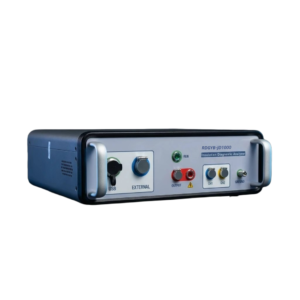
Click the image to know more about Wrindu Frequency Domain Dielectric Response Insulation Diagnostic Analyzer.
What Should Engineers Consider Before Buying a Transformer Insulation Analyzer?
Why Is Equipment Selection More Important Than Just Measurement Range?
Many buyers focus only on basic specifications, such as:
- Voltage output
- Frequency range
- Accuracy
However, professional insulation diagnosis requires considering the complete testing system.
A suitable analyzer should provide:
- Reliable measurement performance
- Advanced diagnostic functions
- Strong field adaptability
- Easy data analysis
- Long-term application value
Choosing the wrong equipment may result in:
- Incomplete diagnosis
- Difficult data interpretation
- Unreliable maintenance decisions
Therefore, engineers should evaluate both hardware capability and software intelligence.
Should Engineers Choose FDS Technology for Transformer Diagnosis?
Why Is Frequency Domain Dielectric Response Technology Becoming Popular?
Traditional insulation tests such as:
- Insulation resistance testing
- Polarization index testing
- Tan delta testing
remain useful.
However, they may not provide enough information about complex insulation systems.
FDS technology analyzes dielectric characteristics at multiple frequencies.
It can provide information about:
- Moisture content
- Polarization behavior
- Insulation aging
- Oil conductivity
Unlike a single measurement value, FDS creates a complete insulation response curve.
This helps engineers understand the actual condition of oil-paper insulation systems.
What Frequency Range Should a Dielectric Response Analyzer Provide?
Why Does Frequency Range Affect Transformer Insulation Diagnosis?
Frequency range is one of the most important specifications of an FDS analyzer.
Different frequency areas provide different information.
Low Frequency Range
Helps analyze:
- Moisture influence
- Polarization processes
- Conductive losses
Medium Frequency Range
Provides information about:
- Dielectric loss characteristics
- Insulation behavior
High Frequency Range
Helps evaluate:
- Capacitance characteristics
- Insulation structure
A wider frequency range allows more complete analysis.
The RDGYB-JD1000 supports a frequency range from:
0.1 mHz to 10 kHz
which allows detailed transformer insulation evaluation.
Why Is Measurement Accuracy Important When Selecting FDS Equipment?
Can Small Measurement Errors Affect Transformer Diagnosis?
Yes.
Dielectric response analysis depends on accurate measurement data.
Small errors may influence:
- Moisture estimation
- Dielectric loss calculation
- Insulation condition evaluation
A professional analyzer should provide:
- Stable output voltage
- Accurate current measurement
- Reliable data processing
The RDGYB-JD1000 provides high-precision measurement capability designed for professional transformer insulation diagnosis.
How Important Is Anti-Interference Capability for Field Testing?
Can All Dielectric Response Analyzers Work in Substations?
No.
Laboratory conditions are very different from real substations.
Field environments often include:
- High electromagnetic fields
- Nearby energized equipment
- Switching noise
- Complex grounding conditions
Low-frequency dielectric measurements are especially sensitive to interference.
Therefore, engineers should consider:
- Noise resistance
- Signal filtering technology
- Measurement stability
The RDGYB-JD1000 is designed for high-voltage field environments with strong anti-interference capability.
Why Should Buyers Consider FDS and PDC Integration?
Is One Diagnostic Method Enough for Transformer Condition Assessment?
Transformer insulation problems are complex.
Different defects affect insulation in different ways.
For example:
- Moisture affects polarization behavior.
- Aging changes dielectric characteristics.
- Oil degradation influences conductivity.
FDS analyzes insulation in the frequency domain.
PDC analyzes polarization behavior in the time domain.
Combining both methods provides more complete information.
The RDGYB-JD1000 integrates:
- Frequency Domain Spectroscopy (FDS)
- Polarization Depolarization Current (PDC)
to improve insulation diagnosis capability.
Why Is Moisture Diagnosis an Important Feature?
Can a Transformer Analyzer Detect Hidden Moisture Problems?
Moisture is one of the biggest threats to transformer insulation.
It can cause:
- Faster cellulose aging
- Lower dielectric strength
- Increased insulation losses
- Higher failure risk
However, moisture is difficult to detect because much of it exists inside solid insulation.
A professional dielectric response analyzer should evaluate:
- Cellulose moisture content
- Oil conductivity
- Moisture distribution
The RDGYB-JD1000 provides analysis of:
- Cellulose moisture content
- Insulation liquid conductivity
- Uneven moisture distribution
What Software Functions Should a Professional Analyzer Have?
Why Is Analysis Software as Important as Hardware?
Collecting data is only the first step.
The real value comes from interpreting results correctly.
A professional system should provide:
Automatic Analysis
Reduces manual calculation errors.
Data Storage
Allows comparison with historical results.
Test Management
Improves project organization.
Report Generation
Creates professional maintenance reports.
The RDGYB-JD1000 software provides:
- Test project management
- Connection diagrams
- Real-time data display
- Automatic analysis reports
Should Portability Be Considered When Buying Insulation Testing Equipment?
Why Is Portable Design Important for Field Engineers?
Transformer testing often happens at:
- Outdoor substations
- Remote power facilities
- Industrial sites
Large and complicated equipment can increase:
- Transportation difficulty
- Setup time
- Testing complexity
Portable equipment improves:
- Field efficiency
- Testing flexibility
- Operator convenience
The RDGYB-JD1000 is designed for practical field applications with portable structure and professional diagnostic capability.
What Types of Equipment Can Be Tested With RDGYB-JD1000?
Is a Dielectric Response Analyzer Only Used for Transformers?
No.
A versatile analyzer can support multiple high-voltage insulation applications.
The RDGYB-JD1000 can be applied to:
- Power transformers
- Transformer bushings
- Inductors
- Instrument transformers
- Rotating machines
- Cables
This makes it suitable for utilities, testing laboratories, and maintenance companies.
How Does Field Experience Help Evaluate an Analyzer?
Why Should Buyers Consider Real Testing Applications?
Technical specifications are important, but practical performance matters more.
A field comparison test was performed on a 220kV transformer bushing.
The evaluation included:
- Capacitance measurement
- Dielectric loss analysis
- Cellulose moisture assessment
- Oil conductivity evaluation
The test demonstrated the practical application value of frequency domain dielectric response technology for high-voltage insulation diagnosis.
What Are the Most Important Buying Factors for an FDS Analyzer?
Which Features Should Engineers Prioritize?
When selecting transformer insulation diagnostic equipment, engineers should check:
1. Diagnostic Capability
Does the equipment evaluate:
- Moisture
- Aging
- Dielectric response
- Insulation condition?
2. Measurement Performance
Does it provide:
- Wide frequency range?
- High accuracy?
- Stable measurement?
3. Field Adaptability
Can it operate in:
- Substations?
- High-interference environments?
- Outdoor conditions?
4. Software Functionality
Does it provide:
- Automatic analysis?
- Reports?
- Data management?
5. Long-Term Value
Can the equipment support future maintenance needs?
Why Is RDGYB-JD1000 a Suitable Choice for Transformer Insulation Diagnosis?
What Makes This Analyzer Different From Basic Testing Equipment?
The RDGYB-JD1000 provides a complete insulation diagnostic solution.
Its advantages include:
Advanced FDS Technology
Provides multi-frequency dielectric analysis.
Integrated PDC Function
Adds time-domain polarization information.
Moisture Assessment
Evaluates cellulose moisture condition.
Wide Frequency Range
Supports 0.1 mHz–10 kHz testing.
Temperature Correction
Improves diagnosis accuracy under different conditions.
Field-Oriented Design
Suitable for practical substation applications.
FAQs
What is a transformer insulation diagnostic analyzer?
It is a testing instrument used to evaluate transformer insulation condition through electrical measurements and advanced diagnostic analysis.
What is FDS testing used for?
FDS testing analyzes dielectric response characteristics across multiple frequencies to evaluate insulation condition, moisture, and aging.
Why is moisture detection important in transformers?
Moisture accelerates cellulose aging and reduces insulation reliability, increasing failure risk.
What frequency range should an FDS analyzer support?
A professional analyzer should support a wide frequency range. RDGYB-JD1000 supports 0.1 mHz to 10 kHz.
Can FDS testing replace tan delta testing?
FDS provides deeper insulation information but is usually used together with traditional insulation tests.
What is the difference between FDS and PDC?
FDS analyzes insulation response in the frequency domain, while PDC analyzes polarization behavior over time.
Can dielectric response testing be used for transformer bushings?
Yes. FDS technology can evaluate transformers, bushings, inductors, and other oil-paper insulated equipment.
How does temperature affect insulation diagnosis?
Temperature changes dielectric characteristics and moisture distribution, so temperature correction improves evaluation accuracy.
Conclusion
Choosing a transformer insulation diagnostic analyzer is not only about purchasing a measuring device.
The right equipment should provide:
- Accurate measurement
- Advanced diagnostic technology
- Moisture assessment
- Reliable field performance
- Intelligent software analysis
Frequency Domain Dielectric Response testing has become an important technology for modern transformer condition assessment.
With integrated FDS and PDC technology, wide frequency capability, temperature correction, and advanced analysis functions, the RDGYB-JD1000 provides a professional solution for utilities and electrical testing companies seeking reliable transformer insulation diagnosis.
