

Underground Cable Fault Types: Causes, Characteristics, and Detection Methods
Learn about common underground cable fault types, their causes, electrical characteristics, and the testing methods used to detect and locate cable faults.
Underground cables can develop different types of faults during operation. Common causes include insulation damage, water ingress, mechanical damage, poor cable connections, and long-term aging.
Before testing a damaged cable, engineers need to understand the fault type. Different faults require different testing methods.
This article covers five common underground cable faults, their causes, and the basic methods used to detect them.
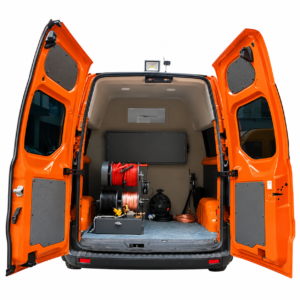
Click the image to know more about Wrindu RDCD-C Vehicle-Mounted Cable Fault Testing System.
What Are the Common Types of Underground Cable Faults?
Underground cable faults can be divided into five main types.
| Fault Type | Description | Common Causes |
|---|---|---|
| Open-circuit fault | The conductor is broken or disconnected | Mechanical damage, broken conductor, loose connection |
| Short-circuit fault | Two conductors make unintended electrical contact | Insulation breakdown, damaged insulation |
| Low-resistance fault | A low-resistance path forms between conductors or between a conductor and earth | Insulation damage, moisture, contamination |
| High-resistance fault | A fault path has relatively high resistance | Carbonized insulation, partial contact, insulation aging |
| Intermittent fault | The fault appears and disappears under certain conditions | Loose connections, vibration, temperature changes |
These faults affect cable operation in different ways. Identifying the fault type helps engineers select the right test method.
What Causes Underground Cable Faults?
Several factors can damage underground power cables.
Insulation aging: Long-term electrical and thermal stress can weaken cable insulation. Damaged insulation may cause leakage current or insulation breakdown.
Mechanical damage: Excavation, drilling, construction work, and improper installation can damage the cable conductor or insulation.
Water ingress: Water can enter through damaged cable layers, joints, or terminations. Moisture can reduce insulation performance and increase the risk of failure.
Poor cable joints: Incorrect installation, loose connections, and contamination can cause abnormal resistance, overheating, or insulation failure.
Overloading: Excessive current increases conductor temperature. Repeated overheating can accelerate insulation aging.
How Do Different Cable Faults Affect the Cable?
Each fault type has different electrical characteristics.
| Fault Type | Electrical Characteristics | Common Signs |
|---|---|---|
| Open circuit | The conductor path is interrupted | No continuity or current flow |
| Short circuit | An unintended conductive path forms | Abnormal current or protection trips |
| Low resistance | A low-resistance fault path exists | Low insulation resistance |
| High resistance | The fault path has relatively high resistance | Difficult detection with some low-voltage tests |
| Intermittent fault | Electrical contact changes over time | Unstable readings or repeated power interruptions |
These signs can help identify a possible fault, but they do not always show its exact location. Additional testing is usually required.
How Are Underground Cable Faults Detected?
The test method depends on the fault type and cable condition.
1. Time Domain Reflectometry (TDR)
TDR sends a low-voltage pulse into the cable and measures the reflected signal.
When the pulse reaches a break or impedance change, part of the signal returns to the tester. The instrument uses the travel time to estimate the distance to the reflection point.
TDR is commonly used to detect:
- Open-circuit faults.
- Many low-resistance faults.
- Cable length and impedance changes.
Some high-resistance faults do not produce a clear reflection. These faults may need other testing methods.
2. High-Voltage Surge Testing
High-voltage surge testing applies a controlled voltage impulse to a suitable cable fault.
If the voltage causes discharge at the damaged point, the resulting signal can help engineers locate the fault.
This method is often used for suitable high-resistance faults that are difficult to detect with low-voltage TDR.
The test voltage and energy must match the cable and equipment requirements.
3. Acoustic and Magnetic Fault Pinpointing
When a suitable fault produces an electrical discharge, it may generate sound and an electromagnetic signal.
An acoustic-magnetic locator detects these signals above the ground. Technicians compare the signals at different positions to narrow down the fault location.
This method requires a detectable discharge. It cannot locate every type of cable fault.
4. Cable Route Detection
A cable path detector identifies the underground cable route.
It helps technicians follow the correct cable and avoid damaging nearby cables during excavation.
Cable route detection is different from fault location. A route detector shows where the cable runs, while a fault locator helps find where the cable is damaged.
Which Test Method Is Suitable for Each Cable Fault?
Different faults require different testing methods.
| Fault Type | Common Testing Method | Purpose |
|---|---|---|
| Open-circuit fault | Continuity test, TDR | Confirm the break and estimate its distance |
| Short-circuit fault | Insulation resistance test, TDR where suitable | Check insulation condition and identify the fault |
| Low-resistance fault | TDR | Analyze the reflected signal |
| High-resistance fault | High-voltage surge testing and suitable pre-location methods | Make the fault detectable and estimate its location |
| Intermittent fault | Repeated testing under controlled conditions | Check changes in the fault condition |
The test method also depends on cable construction, rated voltage, fault resistance, and site conditions. Not every instrument can detect every fault.
Why Is Cable Fault Location Important?
After detecting a cable fault, engineers need to find its location before repair.
Accurate fault location helps maintenance teams:
- Reduce unnecessary excavation.
- Find the damaged cable section faster.
- Reduce repair time and labor.
- Restore power supply sooner.
- Avoid damaging nearby underground cables.
The result depends on the fault type, testing conditions, and equipment used.
What Equipment Is Used for Underground Cable Fault Location?
A complete cable fault testing setup may include several instruments.
| Equipment | Main Function |
|---|---|
| TDR cable fault tester | Estimates fault distance from reflected signals |
| High-voltage surge generator | Applies high-voltage impulses for suitable fault testing |
| Acoustic-magnetic locator | Pinpoints a discharge location above the ground |
| Cable path detector | Identifies the underground cable route |
| Test cables and accessories | Connect the instruments to the cable under test |
Some systems combine these instruments into one setup. A vehicle-mounted system can carry the equipment together and support field testing at different locations.
For example, the Wrindu RDCD-C Vehicle-Mounted Cable Fault Testing System integrates cable testing equipment inside a vehicle supplied by the customer.
The system configuration should be checked against the required testing methods and cable conditions.
Frequently Asked Questions About Underground Cable Faults
What is the most common underground cable fault?
There is no single answer for all cable networks. Fault frequency depends on cable age, installation quality, operating conditions, and external damage.
Can TDR detect all cable faults?
No. TDR can detect many open-circuit and low-resistance faults. Some high-resistance and intermittent faults need additional testing methods.
What is the difference between cable fault detection and cable fault location?
Fault detection identifies whether a cable has an electrical problem. Fault location estimates the distance to the damaged point or helps technicians pinpoint its physical position.
Can technicians locate a cable fault without excavation?
Testing instruments can often estimate the fault distance and narrow down the location before excavation. However, technicians usually need to expose the damaged section for repair.
Does a cable path detector locate cable faults?
No. A cable path detector identifies the cable route. It does not independently locate the electrical fault.
About Wrindu Cable Fault Testing Equipment
Wrindu is a Chinese OEM manufacturer of electrical testing equipment. Its product range includes cable fault testing instruments and integrated cable testing systems.
The RDCD-C vehicle-mounted cable fault testing system combines multiple testing instruments in a customer-provided vehicle. It is designed for field cable testing and fault location work.
For product details, visit the RDCD-C Vehicle-Mounted Cable Fault Testing System.
