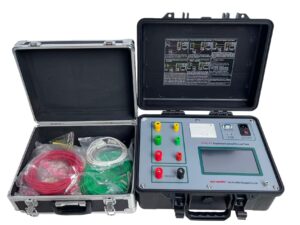
Voltage Transformer Phase Verification Operation Guide
Learn how to perform voltage transformer phase verification safely and efficiently. Discover operation steps, common problems, phase stick advantages, and Wrindu testing solutions.
Voltage transformer phase verification is an important task in substations, power distribution systems, and electrical maintenance work. Correct phase identification helps engineers avoid wrong wiring, relay protection errors, and equipment damage.
This article explains the voltage transformer phase verification operation in simple English and shows how modern phase testing tools can improve efficiency and safety.
What Is Voltage Transformer Phase Verification?
Voltage transformer phase verification is the process of checking whether two electrical systems have the same phase sequence and phase relationship.
Engineers usually perform this test when:
- Connecting new transformers
- Expanding substations
- Replacing cables
- Maintaining switchgear
- Synchronizing power systems
If the phase relationship is wrong, it may cause:
- Short circuits
- Relay malfunction
- Equipment damage
- System instability
Why Is Voltage Transformer Phase Verification Important?
Phase verification helps ensure safe and correct power system operation.
The main purposes include:
- Confirming phase sequence
- Preventing incorrect cable connections
- Ensuring protection systems work properly
- Avoiding electrical accidents
- Supporting safe equipment commissioning
Without proper phase verification, even a small wiring mistake can create serious operational problems.
What Are the Traditional Methods for Voltage Transformer Phase Verification?
Traditional phase verification usually uses:
- Voltage transformers (VT/PT)
- Multimeters
- Test leads
- Relay panels
- Manual calculations
The operator often needs to:
- Connect testing wires
- Measure voltage differences
- Compare phase angles
- Record results manually
- Repeat measurements several times
This process can be slow and complicated, especially in high-voltage substations.
How Is Voltage Transformer Phase Verification Performed?
Below is a simplified operation process.
Step 1: Prepare Safety Equipment
Before testing:
- Wear insulating gloves
- Use protective equipment
- Confirm grounding condition
- Check tester battery and wiring
Safety is always the first priority.
Step 2: Confirm the Voltage Transformer Status
Check whether:
- The voltage transformer is energized
- Secondary wiring is correct
- Fuses are normal
- The circuit diagram matches the field condition
Any abnormal condition should be solved before testing.
Step 3: Connect the Testing Device
Connect the tester to the voltage transformer secondary side according to the operation manual.
Operators should:
- Avoid loose connections
- Verify polarity
- Keep safe distance from live parts
Step 4: Measure the Phase Relationship
The tester measures:
- Phase sequence
- Phase angle
- Voltage difference
The operator compares the measured values between two systems.
If the phase relationship is correct, the systems can be safely connected.
Step 5: Record and Analyze the Results
After testing:
- Save the data
- Compare with design requirements
- Confirm whether synchronization conditions are satisfied
Documentation is important for future maintenance and troubleshooting.
What Problems Commonly Occur During Voltage Transformer Phase Verification?
Several problems may make the operation difficult.
Complicated Wiring
Traditional testing often requires many test leads and repeated reconnections.
This increases:
- Operation time
- Human error risk
- Safety hazards
Difficult Operation in Substations
Substations usually have:
- Limited working space
- High-voltage equipment
- Complex wiring structures
Manual testing can become inconvenient.
Incorrect Phase Judgment
Wrong polarity or poor connections may cause incorrect results.
This can lead to:
- Wrong synchronization
- Relay protection problems
- Equipment damage
Why Are Phase Sticks More Convenient Than Traditional Methods?
Modern phase sticks simplify the operation significantly.
Compared with traditional voltage transformer phase verification methods, phase sticks provide:
| Traditional Method | Phase Stick Method |
|---|---|
| Complex wiring | Simple operation |
| Manual calculation | Automatic judgment |
| Longer testing time | Faster testing |
| Higher error risk | Improved accuracy |
| Difficult field operation | Portable and convenient |
Phase sticks are especially useful for:
- Outdoor substations
- Pole-mounted equipment
- Distribution networks
- Fast maintenance work
They reduce workload and improve efficiency.
How Wrindu Testers Stand Out
Wrindu provides advanced electrical testing equipment designed for power utilities, substations, and industrial maintenance teams.
High Safety Design
Wrindu testers support safe long-distance operation and reduce direct contact with high-voltage equipment.
Fast and Accurate Measurement
Wrindu phase verification devices offer:
- Quick phase identification
- Stable measurement results
- High anti-interference capability
This helps engineers complete testing faster and more reliably.
Portable and Easy to Use
Wrindu testers are designed for field engineers.
Features include:
- Lightweight structure
- Simple interface
- Easy operation
- Durable housing
They are suitable for both indoor and outdoor applications.
Suitable for Multiple Power Applications
Wrindu testing solutions can be used in:
- Substations
- Transformer maintenance
- Cable commissioning
- Power plant testing
- Distribution system inspection
How Can Engineers Improve Voltage Transformer Phase Verification Efficiency?
To improve testing efficiency:
- Use modern wireless phase testers
- Follow standard operating procedures
- Check wiring carefully before testing
- Record test results systematically
- Perform regular equipment calibration
Good preparation reduces mistakes and saves time.
FAQs
What is the purpose of voltage transformer phase verification?
The purpose is to confirm correct phase sequence and phase relationship before connecting electrical systems.
Why is phase verification necessary in substations?
It helps prevent short circuits, relay failures, and equipment damage during system connection.
What is the difference between traditional phase verification and phase sticks?
Traditional methods require complex wiring and manual analysis, while phase sticks provide faster and simpler operation.
Can incorrect phase verification damage equipment?
Yes. Incorrect phase connection may cause severe electrical faults and system instability.
Are wireless phase testers better for field work?
Yes. Wireless testers improve safety, reduce wiring complexity, and increase testing efficiency.
How often should phase verification equipment be calibrated?
Calibration intervals depend on company standards and usage frequency, but regular calibration is recommended for accurate results.
Conclusion
Voltage transformer phase verification is a critical part of electrical system commissioning and maintenance. Traditional methods can be complicated and time-consuming, especially in substation environments.
Modern phase testing tools, including phase sticks and advanced testers, make the process safer, faster, and easier. With reliable testing equipment from Wrindu, engineers can improve operational efficiency while reducing risks in the field.