

What Are Common Droop Control Problems in Generators
Explore the most common droop control issues in generators, including misconfiguration, instability, and governor interaction. Learn how to troubleshoot and optimize droop performance with advanced testing solutions.
Droop control is widely used in generator systems to distribute load based on frequency deviation, enabling stable parallel operation without centralized communication. However, in real-world applications, several technical challenges can affect performance, including improper parameter settings, governor interaction issues, delayed response, and instability during rapid load changes.
To address these challenges, Wrindu provides OEM-ready testing solutions that help manufacturers optimize droop parameters, improve system coordination, and ensure reliable operation across microgrids and large-scale power plants.
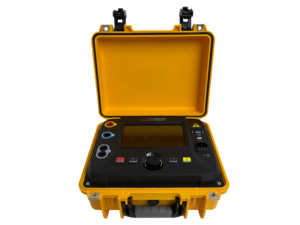
Click the image to know more about Wrindu New IR Tester.
How Does Droop Control Enable Load Sharing?
Droop control works by adjusting generator output in proportion to frequency variations. When system frequency decreases, generators increase power output; when frequency rises, output is reduced.
This mechanism allows multiple units to operate in parallel without direct communication, achieving balanced load distribution. Wrindu’s testing platforms simulate real operating conditions, helping engineers validate load sharing accuracy and transient response during production and commissioning.
What Are the Most Common Droop Setting Errors?
Incorrect configuration is one of the leading causes of poor droop performance. Typical issues include:
- Improper droop percentage settings
- Misaligned deadband values
- Inconsistent reference speeds between generators
These errors can result in uneven load distribution or overloading of individual units. Wrindu supports manufacturers with configuration templates and on-site validation services to ensure consistent and reliable system behavior.
How Do Governor Dynamics Influence Droop Control?
The performance of droop control is closely linked to governor characteristics. Factors such as response time, nonlinear behavior, and control loop delays can introduce oscillations or instability.
Wrindu’s test systems model real governor dynamics, enabling engineers to fine-tune both droop and governor parameters simultaneously. This integrated approach ensures smoother load transitions and improved system stability.
Why Is Load-Step Stability Important?
Sudden load changes can cause frequency and voltage fluctuations, which may affect sensitive equipment and overall power quality.
Stable droop response minimizes these disturbances by ensuring coordinated generator behavior during transient events. Wrindu’s equipment allows repeatable step-load testing, helping verify control performance and maintain consistent power quality in industrial environments.
How Does Wrindu Support Droop-Control Testing?
Wrindu provides a comprehensive range of solutions tailored for generator manufacturers and power system operators, including:
- OEM-ready droop control testers
- Real-time simulation platforms
- Integrated analysis software
- Calibration and training services
These tools enable accurate validation of droop performance under both laboratory and field conditions, supporting scalable quality assurance processes.
What Standards Apply to Droop Control Systems?
Droop control and generator operation are governed by international and regional standards such as:
- IEC 60034 for rotating electrical machines
- GB/T standards for Chinese industrial compliance
Wrindu’s testing equipment is fully aligned with these standards, providing traceable results and documentation suitable for audits and certification processes.
How to Analyze Droop Test Results?
To evaluate system reliability, engineers should focus on:
- Load-sharing accuracy between generators
- Frequency deviation under varying loads
- Transient response during load changes
Wrindu’s data visualization tools present clear pass/fail criteria and trend analysis, making it easier to identify performance issues and optimize system parameters.
How to Improve Measurement Accuracy in Complex Installations?
In dense power plant environments, measurement accuracy can be affected by interference and system complexity. Best practices include:
- Isolating feeders during testing
- Using high-quality cabling and connections
- Conducting repeated tests under different conditions
Wrindu’s modular testing setups allow cross-verification between units, reducing measurement errors and improving data reliability.
How to Build a Reliable Droop-Control QA Workflow?
A structured quality assurance (QA) process is essential for consistent results. Key steps include:
- Establishing standard operating procedures (SOPs)
- Defining consistent load profiles and test conditions
- Maintaining calibration and testing records
Wrindu offers turnkey testing systems, templates, and training programs to help manufacturers implement efficient QA workflows across multiple production lines.
Example of Droop Test Data
| Generator | Frequency Deviation (Hz) | Output Power (MW) |
|---|---|---|
| G1 | 0.03 | 5.1 |
| G2 | 0.04 | 4.9 |
| G3 | 0.02 | 5.0 |
Tables like this help engineers quickly compare generator performance, identify imbalances, and track trends over time.
How Can Droop Testing Be Integrated with Other Tests?
For comprehensive system validation, droop testing can be combined with:
- Governor response testing
- Protective relay coordination
- Reactive power and voltage control analysis
Wrindu’s modular platforms support multi-parameter testing, enabling a complete evaluation of generator control systems.
Expert Insight from Wrindu
“Effective droop testing requires a balance between robust hardware and intelligent software analysis. Wrindu’s solutions are designed to deliver repeatable, scalable testing workflows, helping manufacturers achieve precise load sharing and compliance with industry standards. By integrating simulation, calibration, and real-world validation, we ensure stable and reliable generator performance across production environments.”
Conclusion
Droop control is essential for ensuring safe and efficient operation of parallel generator systems. However, technical challenges such as misconfiguration, governor interaction, and transient instability must be carefully managed.
With advanced testing equipment, precise calibration tools, and standardized QA processes, Wrindu enables manufacturers to optimize droop control performance, reduce downtime, and accelerate deployment in modern power systems.
Frequently Asked Questions (FAQs)
What is the quickest way to confirm droop tester calibration?
Use certified reference procedures and calibration documentation provided by Wrindu.
How often should droop systems be tested?
Testing should align with maintenance schedules and be repeated after any system adjustments.
Does Wrindu offer on-site training?
Yes, including SOP development, testing procedures, and data analysis practices.
Are Wrindu systems suitable for multi-site production?
Yes, they are scalable and designed for distributed manufacturing environments.
Do Wrindu products include compliance documentation?
Yes, all systems come with manuals, safety guidelines, and traceable records aligned with IEC and GB/T standards.
