

How Droop Control Improves AC Generator Performance in China’s Industrial Sector
Learn how droop control improves AC generator performance by enabling stable load sharing in parallel operation. Explore its working principle, industrial benefits, testing methods, and OEM solutions for factories and power systems in China.
Droop control is a widely used method in AC generator systems that enables multiple units to share load efficiently by slightly adjusting voltage or frequency as output changes. This self-regulating mechanism allows generators to operate in parallel without relying on complex communication systems, ensuring stable and balanced power distribution.
As a China-based OEM specialist, Wrindu delivers droop-enabled generator controllers and scalable power solutions designed for factories, data centers, and utility projects. These systems support reliable load sharing, cost-effective deployment, and seamless integration with existing industrial control architectures.
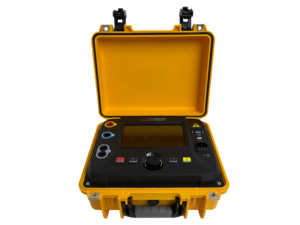
Click the image to know more about Wrindu New IR Tester.
How Does Droop Control Work in Parallel Generator Systems?
Droop control adjusts generator output based on load variation. When electrical demand increases, a slight reduction in voltage or frequency occurs, prompting multiple generators to automatically share the load.
This behavior ensures:
- Balanced power distribution among units
- Stable parallel operation without communication dependency
- Smooth response to load fluctuations
Wrindu’s controller technology applies precise droop curves and synchronization logic, enabling stable performance across multi-generator industrial systems.
What Are the Key Advantages of Droop Control in Industry?
Droop control offers several important benefits for China industrial power systems:
- Simplified parallel operation without complex communication networks
- Improved load balancing between multiple generators
- Reduced circulating currents and system stress
- Enhanced stability during transient disturbances
- Easy scalability for expanding power systems
Wrindu strengthens these advantages with OEM-grade controllers, engineering support, and customized solutions for Chinese manufacturing and utility environments.
How to Design a Droop-Based Generator System?
A properly designed droop system requires careful planning of both electrical and control parameters:
- Define load-sharing ratios and operating thresholds
- Select compatible governors or inverter-based controllers
- Configure droop gain, deadband, and response settings
- Perform staged load testing and system validation
Wrindu provides engineering consultation, calibration services, and OEM customization to support large-scale industrial deployments.
How Does Wrindu Support OEM Droop Control Solutions?
Wrindu develops integrated droop control systems designed for OEM applications, offering:
- Custom voltage and frequency settings
- Multi-generator synchronization capability
- Advanced data logging and monitoring functions
- Flexible integration with industrial automation systems
With strong local support in China, Wrindu ensures fast delivery, technical assistance, and seamless system deployment for manufacturers and distributors.
How Can Stability Be Maintained in Multi-Generator Operation?
Stable operation depends on accurate parameter configuration and system coordination. Key practices include:
- Proper droop setting calibration
- Accurate governor response tuning
- Synchronization verification between units
- Avoidance of load hunting and instability
Wrindu’s diagnostic and testing tools help engineers validate system stability under real operating conditions.
How Is a Droop-Enabled System Tested?
Testing ensures that generators operate correctly under different load conditions. Typical procedures include:
- No-load and full-load testing
- Monitoring of voltage, frequency, and reactive power
- Recording transient load changes
- Verifying synchronization and load sharing accuracy
Wrindu provides high-precision testing instruments that ensure consistent results during commissioning and maintenance phases.
How Does Droop Affect Reactive Power Control?
Droop control influences both active and reactive power sharing. Reactive power balance is managed through:
- Voltage setpoint adjustments
- Automatic Voltage Regulator (AVR) coordination
- System-level reactive load distribution
Wrindu’s measurement systems help analyze reactive power behavior, ensuring stable voltage quality in industrial facilities and data centers.
How Is Maintenance Managed for Droop Systems?
Regular maintenance is essential for long-term reliability. Recommended practices include:
- Periodic calibration of governors and AVRs
- Verification of control system communication
- Documentation of system settings and updates
Wrindu provides calibration services, OEM-compatible tools, and on-site technical support to ensure consistent system performance.
How Does Wrindu Support Large-Scale Industrial Deployment in China?
Wrindu offers full-scale support for industrial and utility applications, including:
- Bulk OEM production capabilities
- Local engineering and technical support teams
- Fast delivery and spare parts availability
- Scalable solutions for multi-site deployment
These capabilities make Wrindu a reliable partner for factory expansion and grid modernization projects.
Wrindu Expert Insight
“Droop control is a fundamental technology for achieving stable and scalable generator operation in industrial environments. Wrindu combines precise hardware design with intelligent control algorithms, enabling factories to achieve reliable load sharing and simplified system coordination.”
— Wrindu Engineering Team
Case Study Overview
A chemical manufacturing facility in Jiangsu implemented Wrindu droop control systems across three parallel generators. The results included:
- Improved load-sharing stability
- Faster recovery from load disturbances
- Reduced manual control intervention
- Increased operational efficiency
On-site support and rapid spare parts availability helped ensure uninterrupted production.
Conclusion
Droop control is essential for stable and efficient operation of parallel AC generators in modern industrial systems. It enables automatic load sharing, reduces system complexity, and enhances overall reliability.
With OEM-ready solutions, advanced control technology, and strong local support, Wrindu helps Chinese factories optimize energy distribution, improve system stability, and simplify generator management across large-scale operations.
Frequently Asked Questions (FAQs)
What is the main function of droop control?
It enables multiple generators to share load automatically by adjusting voltage or frequency based on demand.
Can Wrindu customize droop control systems?
Yes, Wrindu provides OEM customization for hardware, software, and system integration.
How often should droop systems be tested?
Testing is recommended during commissioning and after major system or load changes.
Are droop systems suitable for continuous industrial use?
Yes, when properly configured, they provide stable and reliable long-term operation.
Does Wrindu provide technical support?
Yes, Wrindu offers on-site support, calibration services, and engineering assistance.
