

What Equipment Is Needed for Underground Cable Fault Location?
Learn about cable fault pre-locators, surge generators, acoustic-magnetic locators, and cable path detectors used for underground cable fault location.
Underground cable fault location usually requires more than one testing instrument. Different devices perform different tasks, such as measuring cable length, estimating fault distance, locating the fault on the ground, and tracing the cable route.
The equipment depends on the fault type and testing conditions. A basic setup may use a cable fault pre-locator, while a complete field system may also include a high-voltage surge generator, an acoustic-magnetic locator, and a cable path detector.
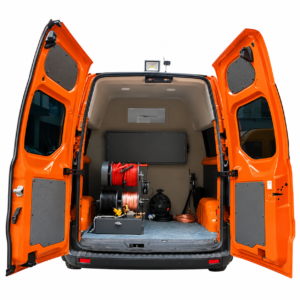
Click the image to know more about Wrindu RDCD-C Vehicle-Mounted Cable Fault Testing System.
What Equipment Is Used for Underground Cable Fault Location?
The main equipment used for underground cable fault location includes:
| Equipment | Main Function | Typical Use |
|---|---|---|
| Cable fault pre-locator | Estimates the distance to a fault | Initial fault location |
| TDR cable fault tester | Analyzes reflected electrical pulses | Open-circuit and suitable low-resistance faults |
| High-voltage surge generator | Applies high-voltage impulses | Suitable high-resistance and flashover faults |
| Acoustic-magnetic fault locator | Detects discharge signals above ground | Precise fault pinpointing |
| Cable path detector | Traces underground cable routes | Cable identification and route detection |
These instruments do not replace each other. Each one handles a different part of the testing process.
What Does a Cable Fault Pre-Locator Do?
A cable fault pre-locator estimates the distance between the test point and the fault.
Many pre-locators use Time Domain Reflectometry (TDR). The instrument sends a low-voltage pulse into the cable and records the reflected signal.
When the pulse reaches an impedance change, part of the signal returns to the instrument. The tester uses the travel time and cable wave velocity to calculate the distance.
Pre-location equipment is commonly used for:
- Measuring cable length.
- Detecting open-circuit faults.
- Finding many low-resistance faults.
- Estimating the distance to a suitable fault.
Some high-resistance faults do not produce clear reflections during low-voltage testing. These cases may require high-voltage testing or another suitable method.
What Is a High-Voltage Surge Generator Used For?
A high-voltage surge generator applies controlled voltage impulses to a cable during fault testing.
It is mainly used when a suitable insulation fault cannot be clearly detected with low-voltage pulse testing.
When the applied voltage reaches the breakdown level of the damaged insulation, a discharge may occur at the fault point. The resulting waveform can help estimate the fault distance.
A surge generator is generally used for:
- Testing suitable high-resistance faults.
- Triggering discharge at a fault point.
- Supporting fault distance estimation.
- Preparing for acoustic-magnetic pinpointing.
The output voltage and impulse energy must match the cable and testing requirements. A higher output does not automatically mean better results.
What Is an Acoustic Cable Fault Locator?
An acoustic cable fault locator helps technicians find the physical position of a cable fault above ground.
When a suitable high-voltage discharge occurs at the fault point, it produces sound and an electromagnetic signal. An acoustic-magnetic locator detects these signals.
The magnetic signal helps the operator identify the discharge event. The acoustic signal helps narrow down the fault position.
Technicians move along the cable route and compare the detected signals at different positions.
This method is useful for pinpointing suitable discharge faults. It cannot locate every type of cable fault. For example, a simple open-circuit fault may not produce the discharge needed for acoustic detection.
What Is a Cable Path Detector Used For?
A cable path detector identifies the route of an underground cable.
It helps technicians follow the target cable before and during fault location work. This is important when several cables run close together or share the same trench.
A cable path detector may support different signal connection methods:
- Direct connection: Connects the transmitter to an accessible cable conductor.
- Clamp coupling: Uses a transmitting clamp to introduce a signal.
- Induction: Sends a signal into the cable without a direct electrical connection.
Depending on the instrument, the receiver can display cable direction, signal strength, burial depth, and relative position.
A cable path detector does not independently locate an electrical fault. It identifies the cable route and helps technicians work on the correct cable.
How Do These Cable Fault Testing Instruments Work Together?
A complete cable fault location process may involve several instruments.
| Testing Stage | Equipment | Purpose |
|---|---|---|
| Cable identification | Cable path detector | Find the correct underground cable |
| Cable length measurement | Cable fault pre-locator | Measure cable length and calibrate wave velocity |
| Fault pre-location | TDR tester | Estimate the distance to the fault |
| High-voltage testing | Surge generator | Trigger discharge at suitable faults |
| Fault pinpointing | Acoustic-magnetic locator | Narrow down the fault position above ground |
For example, when technicians find a suspected high-resistance fault, they may first use a pre-locator to check the cable. If the reflection is unclear, they can use a suitable high-voltage method. After a discharge occurs, an acoustic-magnetic locator can help pinpoint the position.
The actual sequence depends on the fault condition and the equipment configuration.
What Equipment Is Included in the Wrindu RDCD-C System?
The Wrindu RDCD-C Vehicle-Mounted Cable Fault Testing System combines several instruments for underground cable testing and fault location.
| System Component | Main Function |
|---|---|
| RDCD-C/RA40 Operation Console | Cable length measurement, wave velocity calibration, fault pre-location, and waveform analysis |
| High-Voltage Unit | Supplies high voltage for suitable cable fault testing |
| RDCD-III/RC11 Cable Fault Locator | Detects acoustic and magnetic signals for ground-level pinpointing |
| RDCD-III/R30 Cable Path Detector | Traces underground cable routes, measures depth, and identifies cables |
| Cables and Accessories | Connect the equipment to the cable under test |
The RA40 handles cable measurement and fault pre-location. The high-voltage unit supports high-voltage testing. The RC11 and R30 perform separate tasks: one helps pinpoint discharge faults, while the other traces the cable route.
The system is installed inside a vehicle supplied by the customer. The vehicle itself is not included with the RDCD-C.
For system details, see the Wrindu RDCD-C Vehicle-Mounted Cable Fault Testing System.
How Do You Choose Cable Fault Location Equipment?
Before selecting equipment, check the cable conditions and the testing tasks you need to perform.
| Selection Factor | What to Check |
|---|---|
| Cable voltage level | Whether the equipment matches the cable and test requirements |
| Fault types | Open circuit, short circuit, low resistance, or high resistance |
| Pre-location method | TDR or other supported methods |
| High-voltage output | Output voltage and impulse energy |
| Fault pinpointing | Whether acoustic-magnetic detection is required |
| Cable route detection | Whether route tracing and depth measurement are needed |
| Portability | Whether portable instruments or an integrated vehicle-mounted system is more suitable |
| Accessories | Test cables, clamps, probes, and grounding equipment |
| Technical support | Installation guidance, training, and after-sales service |
A portable tester may be enough for a team that only needs one testing function. A combined system is more suitable when technicians need to perform several testing stages in the field.
Frequently Asked Questions About Cable Fault Location Equipment
Can one instrument locate every type of cable fault?
No. Different faults produce different electrical signals. A TDR tester can detect many open-circuit and low-resistance faults, while some high-resistance faults require additional testing methods.
What is the difference between a cable fault pre-locator and a pinpointing instrument?
A pre-locator estimates the distance from the test end to the fault. A pinpointing instrument helps technicians find the physical position of a suitable fault above ground.
Is a high-voltage surge generator always necessary?
No. Many faults can be detected with low-voltage testing. High-voltage testing is used when the fault condition and test requirements call for it.
Does a cable path detector find the fault location?
No. It traces the cable route and helps identify the correct cable. A separate fault testing method is needed to locate the electrical fault.
Why do technicians use both TDR and acoustic-magnetic detection?
TDR estimates the fault distance along the cable. Acoustic-magnetic detection helps narrow down the physical position of a suitable discharge fault. The two methods perform different tasks.
What is the advantage of an integrated cable fault testing system?
An integrated system combines several instruments in one setup. It reduces the need to transport separate equipment for each testing stage and helps technicians complete field testing in a more organized way.
About Wrindu Cable Fault Testing Equipment
Wrindu is a Chinese OEM manufacturer of electrical testing equipment and power testing solutions. The company designs and manufactures instruments for cable testing, transformer testing, and high-voltage applications.
The RDCD-C Vehicle-Mounted Cable Fault Testing System combines fault pre-location, high-voltage testing, acoustic-magnetic pinpointing, and cable route detection. It is installed inside a customer-provided vehicle.
Contact Wrindu for product specifications, system configuration, and vehicle installation guidance.
